
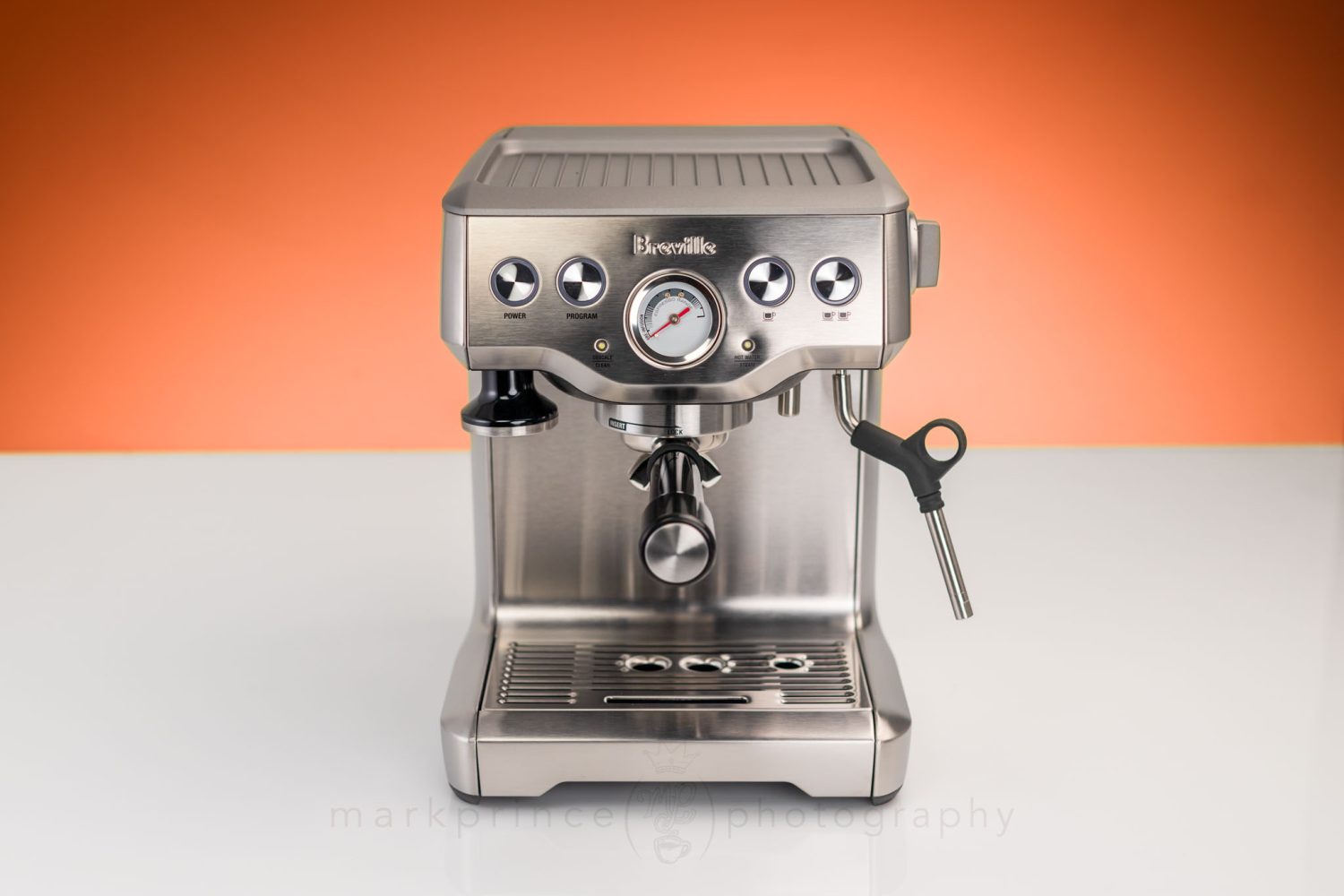







There’s an espresso machine that’s a bit of an insider’s secret—one that many people don’t know about. In many ways, it is the secret machine in Breville’s extensive espresso brewing lineup. It’s the Breville Model # BES840XL, also known as the Breville Infuser.
Breville doesn’t market the Infuser much. It’s not pushed on vendors as a SKU to carry. You rarely see it on department store shelves. In fact, this past year, Breville even removed it from their main USA website, and transitioned the machine to an Amazon only SKU.
This borders on being a true espresso tragedy, considering its features, build quality, and price. In my opinion, the Breville Infuser could be the best machine in Breville’s lineup, with everything – including price – taken into account.
That’s a pretty big boast, I know. I hope to explain this fully below. But I also have another reason for this coverage of the Breville Infuser, and it’s time sensitive. You see, the Infuser, for as long as I’ve been aware of the machine, has never really gone on sale. At best, you could snag one for $50 off.
Well, something has changed in the past few years.
Last year for the first time ever, the Infuser was seen on a deep discount on Amazon, hitting $399 and even for a brief day during a Prime sale, dipped down to $349. That is a full $200 (or even $250) off the MSRP of $599 for this machine, making it quite literally one of the best deals on an espresso machine… well, ever. And now the same has happened this year: the machine, as of this publication date, is on for a nearly $200 discount, selling for $399 in the US, in both the silver, and black units.
Even at the full retail of $599, I think I’d pick this over the Barista Express, which is $100 more at full MSRP ($699). Because of the grinder. So let’s get into that some more.
The World’s Best-Selling Espresso Machine
For more than a decade, the Breville Barista Express has held the title of the planet’s most popular espresso machine. While Breville guards its sales figures closely, we know from industry sources that in some years, the company sold as many as thirty Barista Express machines for every single Rancilio Silvia that left the factory.
A significant part of its appeal is the convenience of a built-in grinder, but the machine’s success story is much deeper than that. It boasts a sleek, contemporary design and gets to temperature quickly. Under the hood, a PID system provides stable temperature control, while its feature set is impressively robust: a dedicated hot water spout, a rapid switch to steam (especially for a thermoblock machine), and an impressively powerful steam wand. Even the details are well-considered, from the deep drip tray to a top-mounted cup warmer that actually functions. There is an abundance of things to appreciate about this machine, which we explore completely in our full review.
In short, the Barista Express earned its top spot by offering an excellent combination of features, build quality, and value.
If the machine has an Achilles’ heel, however, it is that same integrated grinder. While not entirely incapable, it has been outpaced by the significant advancements in espresso grinding technology over the last several years. The timer-based dosing system feels particularly archaic; its adjustment dial jumps in increments of several seconds, making the fine-tuning required for great espresso a frustrating exercise. Breville’s suggested workaround, using their “Razor” tool to level the dose, simply results in wasted coffee.
So, what if you could have the core of the Barista Express, with all its excellent brewing functionality, but without the compromised grinder? What if you could pair that capable espresso-making side with a much better grinder of your own choosing?
As it turns out, you can. That machine is the Breville Infuser.
Some History on the Infuser
The Infuser has a bit of a backstory: it even has a “father” machine: the “Die Cast Automatic” espresso machine, model BES820XL, released back in 2009. At the time, it was basically a grinder-less version of the first Barista Express, but neither machine was particularly impressive. This was before Breville hired Phil McKnight, who would go on to revamp their entire espresso lineup.
The BES820XL chugged along for about five years. Meanwhile, Breville introduced some game-changing machines: the Dual Boiler in 2011, and in 2013, both the updated (and still current) Barista Express and The Oracle, their fully automated espresso machine. These were all major leaps forward for the company.
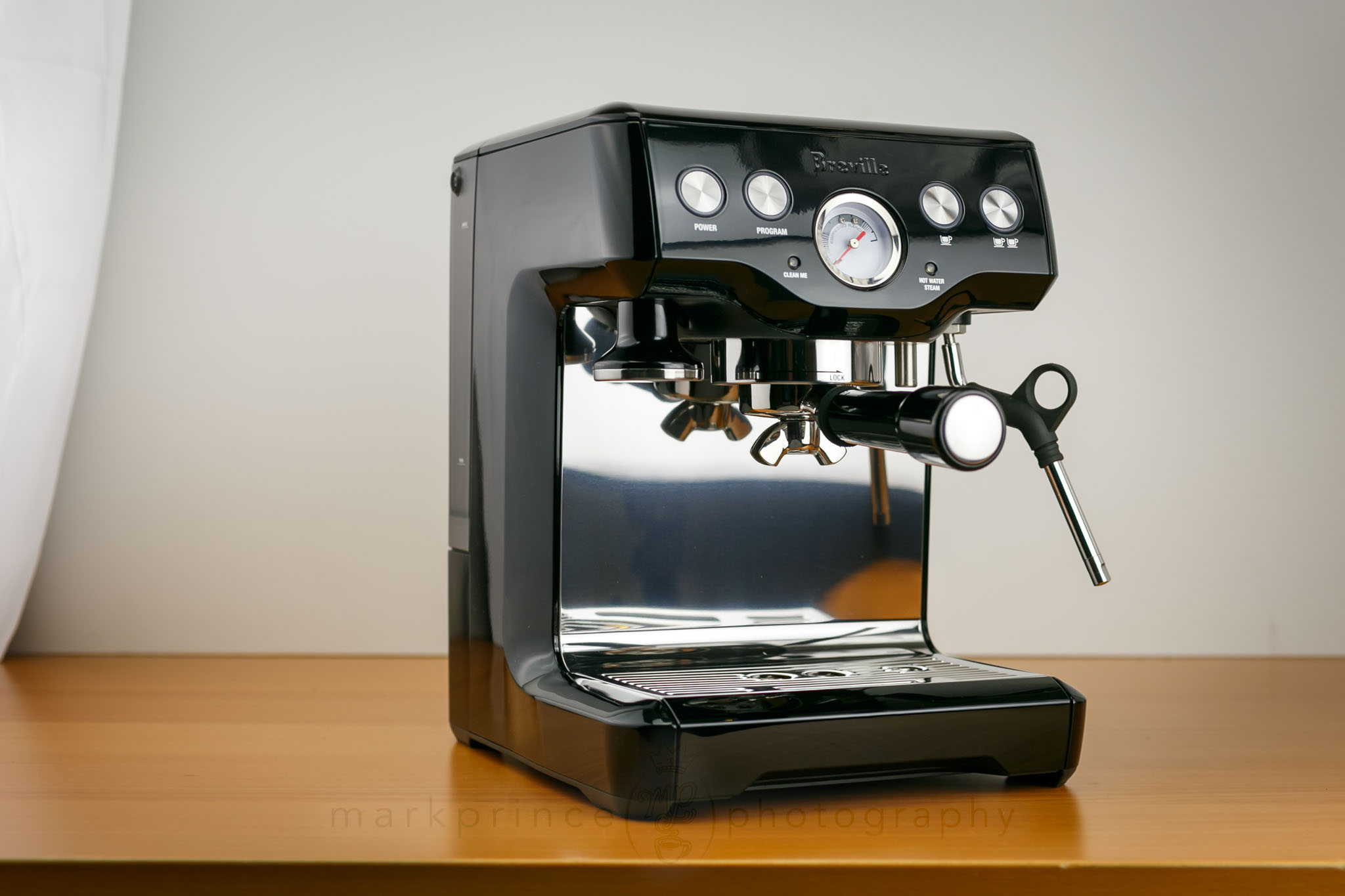
Then, in early 2014, Breville quietly introduced the Infuser (model BES840XL) as a replacement for the BES820XL. It didn’t get much attention at first, but it was a solid upgrade. Initially, the Infuser came in Breville’s classic Brushed Steel finish, and later on, they offered a slick Piano Black version, which looked stunning with its shiny black finish, mirror backsplash, and drip tray. We got our hands on the Piano Black model in 2014, and it was a real beauty.
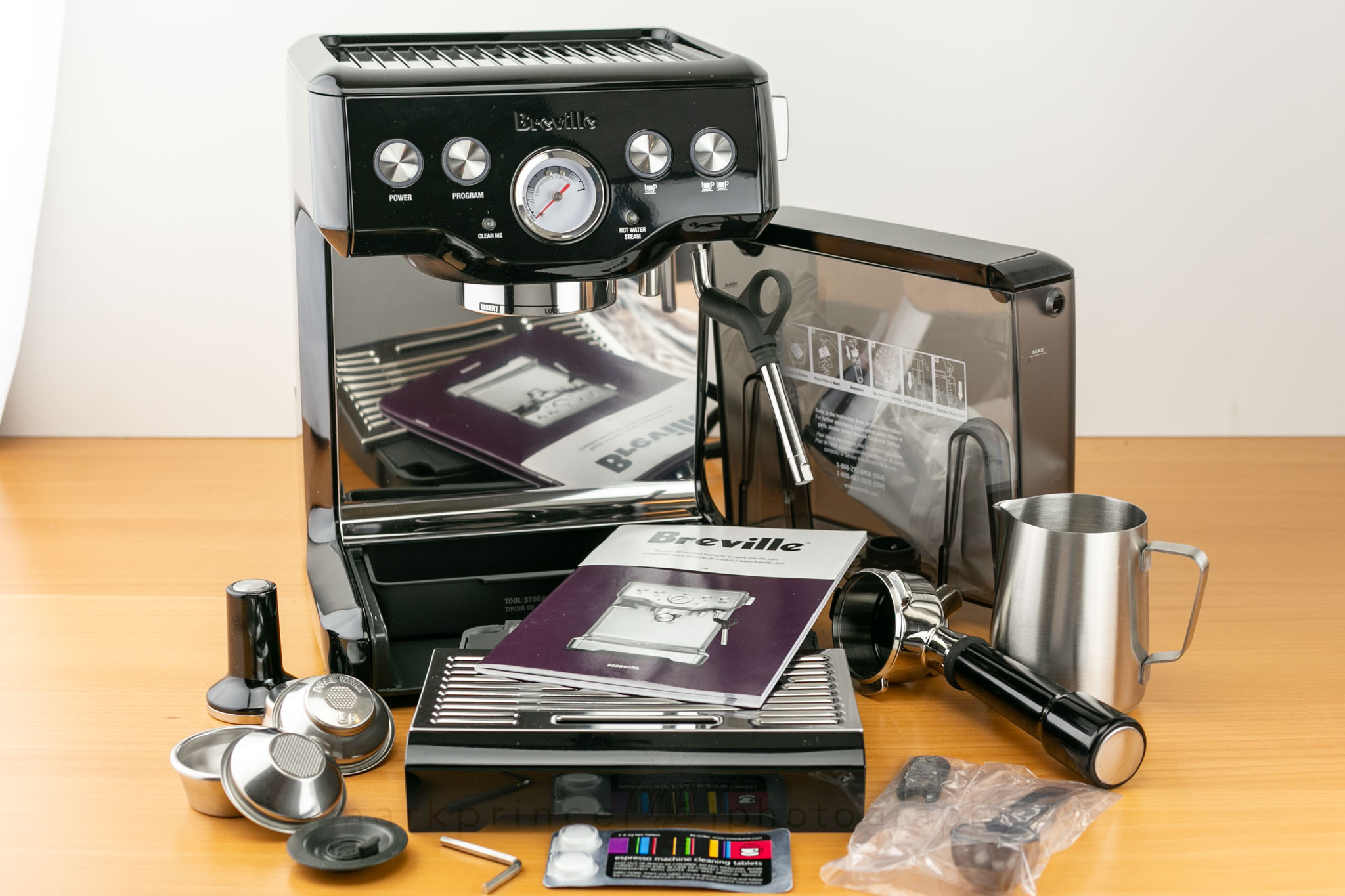
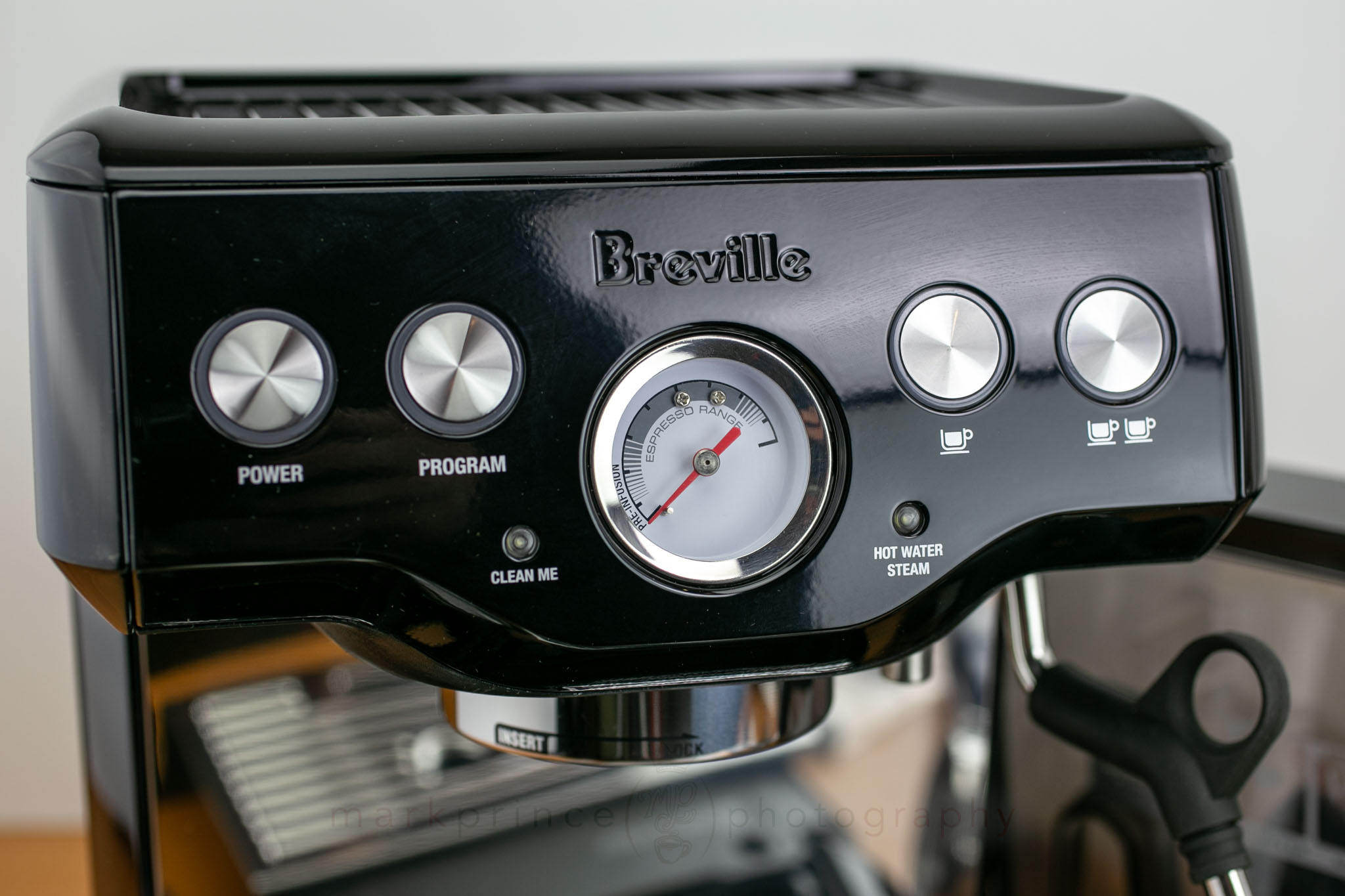
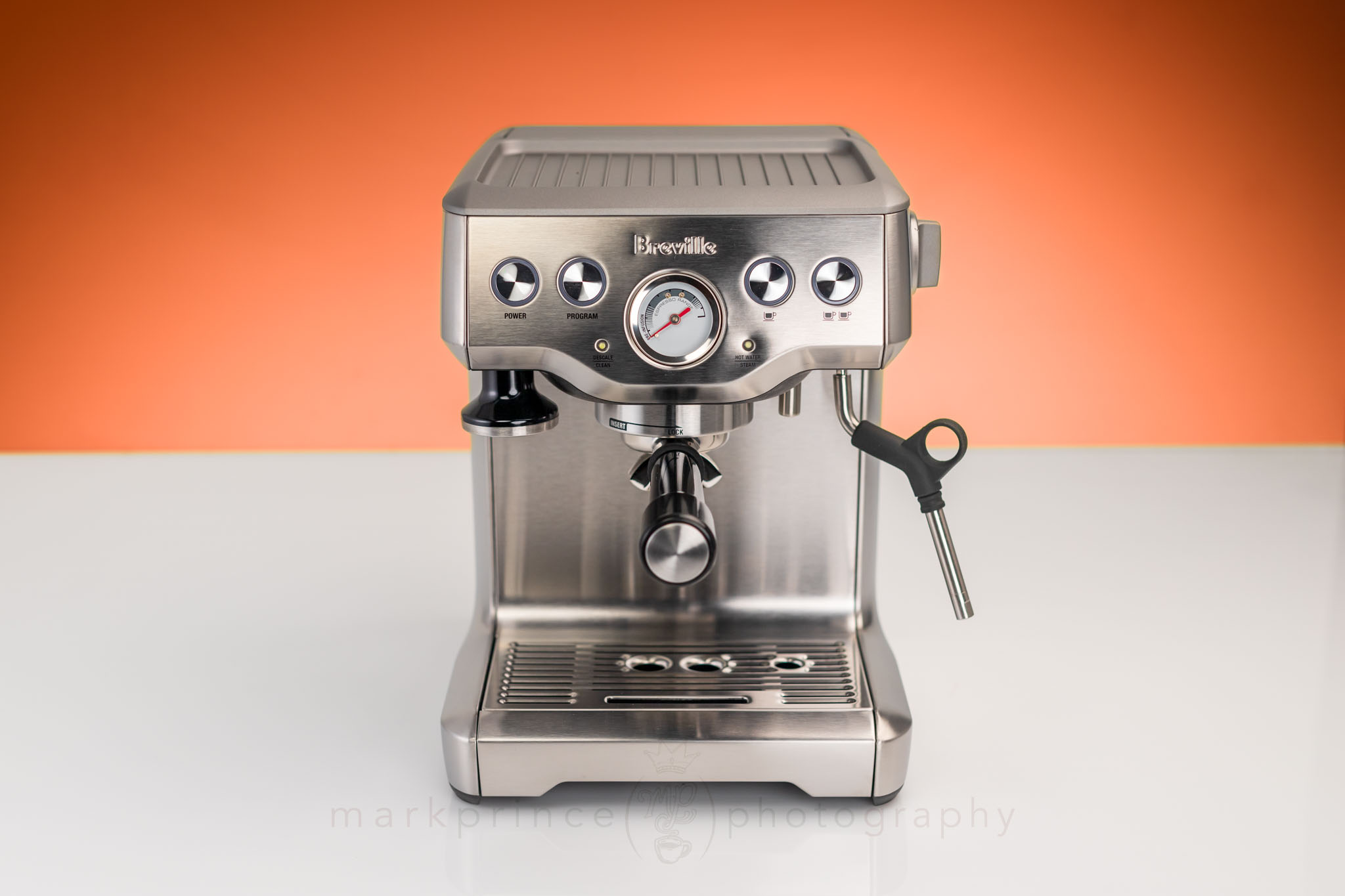
Everything about the Infuser feels polished and well thought out. The water reservoir is easy to access and spacious, and the coated cup warming tray does its job and makes cleaning a sinch. The machine’s front panel is simple, with just four control buttons, two indicator lights, and a pressure gauge. It has an articulating steam wand and even a magnetized tamper built into the machine. Nothing feels unfinished or out of place.
Under the hood, the Infuser is packed with the same brewing system, volumetric controls, pump, and electronics as the Barista Express. Since it doesn’t have a built-in grinder, it’s more compact, making it a better fit for smaller kitchen counters, The machine is only a bit wider than a Gaggia Classic or Rancilio Silvia, yet feels spacious and can accommodate a much wider range of cup sizes.
What’s great about the Infuser is that nearly every accessory or upgrade designed for the Barista Express works with it. That means you can easily find better dispersion screens, filter baskets, tampers, portafilters, and even lever-style arms for the steam and hot water controls.
Pair the Infuser up with any of the grinders from our Best of Budget Grinders Guide, and you will have a winning combination capable of exceptional, hand crafted espresso, and a wide range of milk based espresso drinks.

The Price
One big knock against the Infuser is that some feel the price is too close to the Barista Express pricing to justify its cost. This may have been more true in the past, when the Infuser was $599, and the Barista Express was $649, a difference of just $50.
Today, the list price for the Barista Express is $699, and the Infuser is $599, or a difference of $100. For me personally, that’s enough of a discount to definitely buy it over the Express, and use that $100 (plus another $100 or so) to buy a grinder that’s 2x better than the one built into the Barista Express.
What grinder to consider? Pair this machine up with the MiiCoffee DF54, and you’ll have a killer combo that, to be honest, would rival $3,000 setups from just a few years ago (yeah, the DF54 is that good). Even at full retail, the expenditure is $800 for the combo, and it could be the last espresso machine and grinder you may ever buy. Or you could pair the machine up with almost any of the grinders listed on our Best Manual Grinders Guide, and have a full retail setup with exceptional grind quality for under $700.
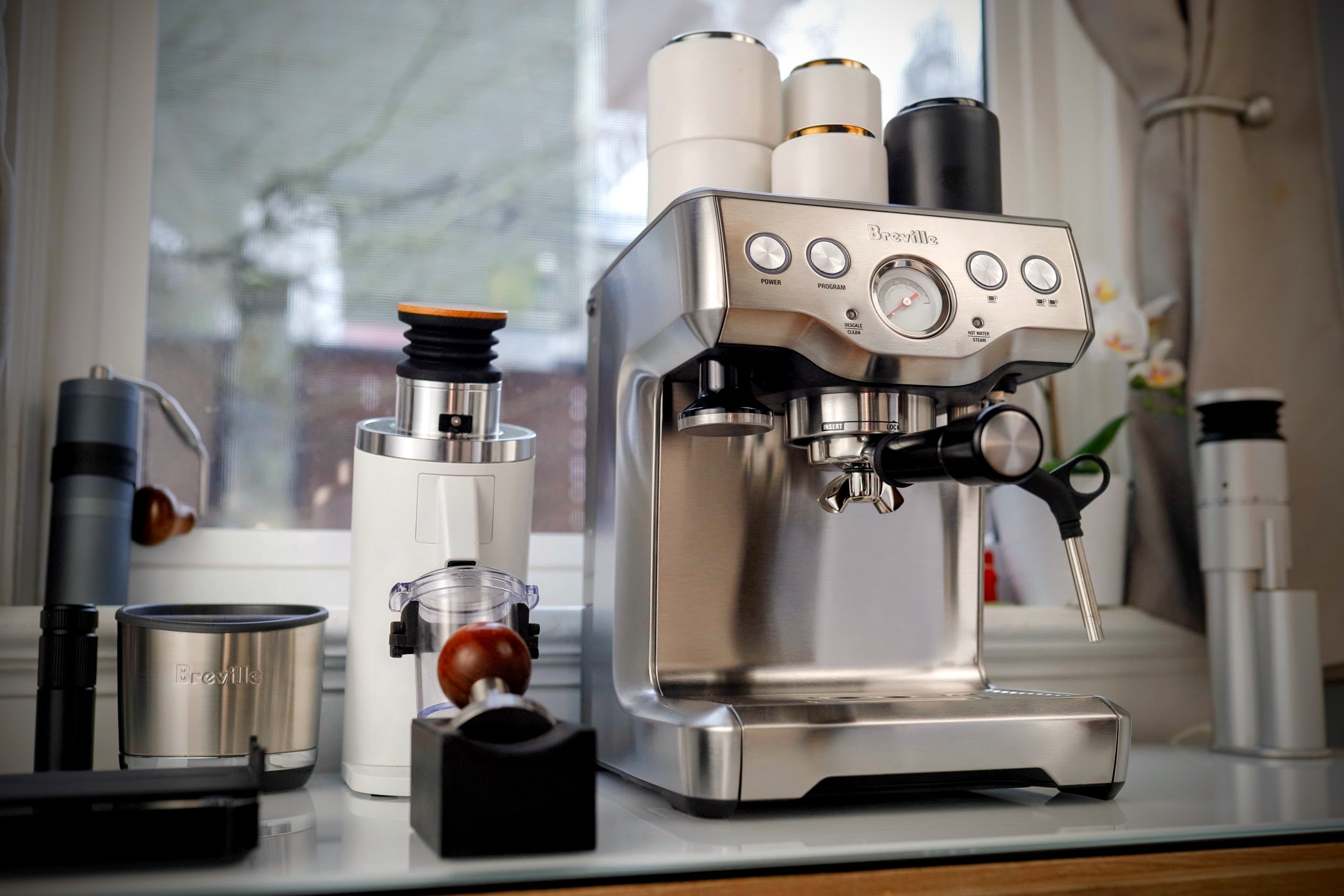
When the Infuser goes on sale again (like it has just this week), you’d be getting one of the best deals on the planet. At $399 for the machine, and $230 for the DF54, you’d be punching several classes above your weight, at under $600 all told for your espresso investment. Pair it up with a manual grinder like the X-Ultra or Blade R3, and your awesome home espresso setup as low as $500 all in.
And what about the Bambino Plus, the machine we’ve heralded as one of the best beginner machines on the market? The Bambino Plus has so much going for it, including the automated frothing system and the instant on, instant steam ability, which still makes it a class leading machine.
But unlike the Bambino Plus, you do not have to run blank shots on the Infuser prior to actually pulling an espresso shot. Just let it heat up for 10 minutes, and Bob’s your uncle. Transition time to steam is around 30 seconds, which is very acceptable. And the entire machine is bigger, and does not have a drip tray so small that you have to empty it every shot pull, like the Bambino + demands.
For 2026 and beyond, we may have to set a new choice on CoffeeGeek for the best entry level machine to consider. The Infuser is definitely a candidate.

Mark has certified as a Canadian, USA, and World Barista Championship Judge in both sensory and technical fields, as well as working as an instructor in coffee and espresso training. He started CoffeeGeek in 2001.

















28 Responses
Hi Addison – yes, the stock from the main seller on Amazon is sold out, so now the listing has reverted to third parties (Amazon does that automatically) who are selling at higher prices. I have updated the article to reflect this.
Thank you Mark, will keep looking, please let the community know if Lelit Victoria has a sale want to get back to home espresso from my original gaggia days!
Hi and thank you for your review, it’s exactly what I was looking for because I’m happy someone reviewed the machine at $350! I was one of the lucky ones that got it for that price, so it’s good to know that you think it’s one of the best options. A lot of people on the Reddit coffee channels say this machine is not worth it (but I think they were probably viewing it as a $550 machine).
I was actually debating getting the Bambino (standard version) for $50 less just because of the quick shot/espresso quality, but I gather that you don’t think that’s a good idea.
Space and budget are not a consideration for why I was thinking of the Bambino, it was just literally espresso quality– I don’t make any milk-based drinks or add water to espresso. I thought maybe the Bambino would help with the fruit fly problem that I have (fruit flies all around the espresso machine on a superautomatic)
Given that information- do you still go Infuser over standard Bamibno?
Hi Guava. First, congrats on the purchase, that price is killer.
Second, this machine is better in almost every way over the Bambino. It is also a general improvement over the Bambino Plus, but the Plus model does have the automated steaming functions, which is important to many home baristas, so there’s that to balance. But the Infuser is a bigger machine, more secure on the countertop, a proper place on top for cups (that warm up), the pressure gauge, bigger drip tray, etc etc. Personally, I would pick the Infuser over the Bambino Plus if I was in the market, but that’s because I want a more traditional machine that lets me steam the milk the way I want, manually.
Thanks for a great review. I was one of the lucky ones that got the Infuser at $350. I was debating between the Infuser and a base model Bambino for $299. I ended up with the infuser thinking it was the better deal (just $50 more). I only do espressos, no milk-based drinks, no teas/Americanos. Budget/counterspace is not an option, the pull of the Bambino for me is that I currently have a super automatic that attracts fruit flies, so I thought if I have a smaller machine, it would be better.
I am pairing it with the Eureka Notte grinder. Do you think there is a noticeable espresso difference between the Bambino/Infuser if I’m pairing with this grinder?
We’ve been using this for too long for me to recall what I paid for it (on sale at Canadian Tire). Replaced our very basic Cafe Roma that we ran till it broke down beyond my repair. Paired with a (man are they noisy) Sette 270, good combo for us.
Hi! I found a barely used 2014 Express on FB Marketplace and am wondering if you think it would be a good purchase for $150? Looking to make lattes. Thanks!
Sure, as long as it’s working.
It’s back at $350 for Black Friday!
I have standard Bambino. I usually run a blank shot to heat up the group head. You mentioned this isn’t needed worth the Infuser. How is the group head preheated?
Hi Mitch!
The Bambino Plus (along with the latest Barista machines, like the Touch, Touch Impress, Pro) use Breville’s new thermojet system. The benefit is, they are instant on, instant up to temperatures; the detriment is, they don’t put off much ambient or radient heat, so they won’t heat up the grouphead fast, or the cup warming tray. Even if the machine is on for 10, 15 minutes. The Infuser (along with the Barista Express, and Barista Express Impress) use Breville’s older thermoBLOCK heater, which is also very efficient, but not “instant on, instant steam” like the Bambino Plus etc. The downside is, you have to wait 30-45 seconds to transition from brewing to steaming. The plus side is, the cup warming tray and grouphead get nice and toasty hot within 5-7 minutes after turning the machine on.
Hope this helps!
I bought both the bambino plus and the infuser in fear that I did not which one was better. So I wanted to try both and then return the one I did not like. I think based on this I will cancel the Bambino Plus. I hope I can learn to steam the milk right to not need the automatic steaming. Thanks for your review!! 🙂
Thanks for this review, very timely! I think this is probably the machine I’ve been waiting for. Based on your comments, am I to take it the Infuser has its nose ahead of the Bambino Plus? That’s the model I’ve zeroed in on at this stage, but the Infuser seems to be just a touch better – on paper at least.
One other query I had, was our local Breville website (New Zealand) referenced Thermocoil technology, which I can’t quite figure out in relation to the Thermojet/Thermoblock technologies you mention, it would seem this is one or the other with different branding?
Hi Sam. Thermocoil is what Breville uses in the Barista Express, Duo Temp, Barista Express Impress, and the Infuser; it’s their older technology, but still an excellent thermocoil heating system design, way ahead of a lot of the systems developed in Italy.
The Thermojet is their newer system, designed for instant on, instant change from brew to steam temps. The downside is, it won’t heat up the machine itself (the thermcoils will).
I bought an Infuser about a decade ago and have been using it every day. It’s been a solidly good cup of coffee. We mostly make Americanos and Cappuccinos, but I enjoy espresso from it as well.
Then about 3 months ago, it stopped being able to time shots. One shot will be 15mL and the next will be 100mL. I’ve reset it, reprogrammed it, cleaned it, and descaled it. Nothing works.
Now that’s a puzzler; it does sound like something’s wrong with the flowmeter inside, and it could just be a matter of replacing that one part (with an OEM from a Breville support service) and the machine could be good as new.
Infuser is up to $829 (CAD) on Amazon or Breville direct. That takes it out of the “entry level” bracket, and I would think the Bambino+ at $499 (CAD) would be the entry level choice at that price point!
Yes sadly, the price jumps around a lot on Amazon Canada’s site; this article was mainly for US customers, where it did drop down to $399 for a week.
Still $399 on US Amazon, just bought one (we were debating the Infuser vs Bambino Plus as they’re both on sale at the same price and my wife preferred the piano black of the Infuser).
Thanks for the review. I LOVE mine and it’s good to know that it is still a great machine.
I bought mine about 8 yrs ago, and recently sent it back to Breville for repairs, as the gauge wasn’t working, and it didn’t seem to be building pressure. Repair shops said they could not get parts. So, I contacted Breville, and for about $200 (including the initial $50 to inspect it), it was shipped to them and repaired with the fee also covering shipping. At the time of the repair, a new machine was about $600 on Amazon. It was well worth the effort to send it back to them as they did a great job.
It’s on sale right now Amazon Canada
On Reddit, some people say that this machine has too high pressure (15 bar) and that if they adjust the grind to 9 bar, they can’t get the right shot time … they “fix” this by either replacing the OPV with an adjustable OPV, or by using an electronic fan speed controller to slow the motor (also called a “dimmer”).
Is there anything in this criticism, or are they misunderstanding the OPV’s function (i.e., it’s just a safety thing) and don’t know how to adjust the grind, amount of coffee, tamping? (Or something else?)
[My use case is single-wall portafilter; switching between light and dark roasts; and making both espresso and “classic” cappuccino or macchiato]
A ot of comment on Reddit are just people parroting what others have said, and not from actual, direct experience. something to keep in mind. That said, the original machine had a 12BAR OPV setting (as did the Barista Express), but Breville adjusted these to 9BAR around 2019 in both.
The use of a dimmer switch is something Lance Hedrick owes his claim to fame for – one of his most popular early YT videos was doing the dimmer switch mod to a Bambino Plus. It can also be done to the Barista Express and Infuser. It is meant to modulate the pump’s pressure up and down during a shot pull.
Hey Mark! Thanks for the review. I’m trying to find an actual source that the Infuser also switched to the 9 bar opv.
I had a 2015 infuser and just found a used 2022 infuser for a good deal, but I don’t know how to test whether one is calibrated to 9bar. Part of why I got the new one was so I didn’t have to do the OPV mod
Hi Tim – my source is Breville themselves on this, and changes they made to both the Express and the Infuser a few years ago. TBH, I haven’t actually “tested” it on the Infuser, but have done so with the Express, on an old 2014 era one vs a 2023 model and a hacked portafilter device i made with a pressure gauge and thermocouple. But you can test it by just putting a blind filter into the PF, and check the gauge.
I feel like I just overpaid at $544 with tax in US on Ebay. I haven’t seen it at $399 ever. My last Infuser lasted well over 10 years, which is much longer than its average lifespan. It just broke. The pressure gauge gave out a few years ago but its been working like a champ for a while. But I chose to buy it again because I could reuse some of my old parts and I knew that its unlikely any machine would be better at that price point. Which upgrades from the Barista Express would you recommend for it?
Hi James – So a couple of points.
– First, if it broke, it is possible it could be fixed, and you might be able to sell the machine to someone willing to put in the effort to get it working again; could you explain specifically what broke, besides the pressure gauge (that can be replaced pretty easily btw).
– Second, yeah, the $399 price is an outlier, but it has been there on Amazon 3 times in the last 2 years; if you use a tracking services like CamelCamel, you can see the history graph showing this.
As for upgrades… a couple I like: the aftermarket lever arms for the steam / hot water dial on the right – just jazzes the machine up a bit and gives a nicer touch point; aftermarket chopped portafilters, there’s some super nice ones out there that won’t break the bank; Breville’s filter baskets are actually really fantastic and very precisely engineered, if you want the absolutely optimal, buy a bunch and replace your basket each year. I think they’re around $10 each off Breville’s website, super cheap, so buy a half dozen; Lastly, get some nice espresso cups for it. If you want ultra premium, go for Kruve’s fantastic glass double wall espresso cups.
$399 Black friday deal