







If you are holding a mug of your favorite comfort blend right now, take a real sip. You know the one. That reliable, chocolatey, nutty roast you have bought for years. Focus on the finish. Does it vanish too quickly? Is there a weird, papery dryness on the sides of your tongue where the sweetness used to be?
You aren’t imagining things. And you definitely aren’t imagining that $28 price tag on the shelf where $19 used to be.
We are currently living through the most chaotic moment in the coffee market since the huge frost of 1994. But unlike a frost, which kills trees overnight, what we are dealing with is a slow-motion car crash of biology and politics. It is a combination of the brutal 2024 drought that broke the physiology of the coffee bean itself, and one man’s knee-jerk, punitive reactions with tariffs in 2025 that broke the supply chain.
Welcome to February 2026. The coffee is expensive, the beans are “hollow,” and we need to talk about why.
The “Raisin” Effect
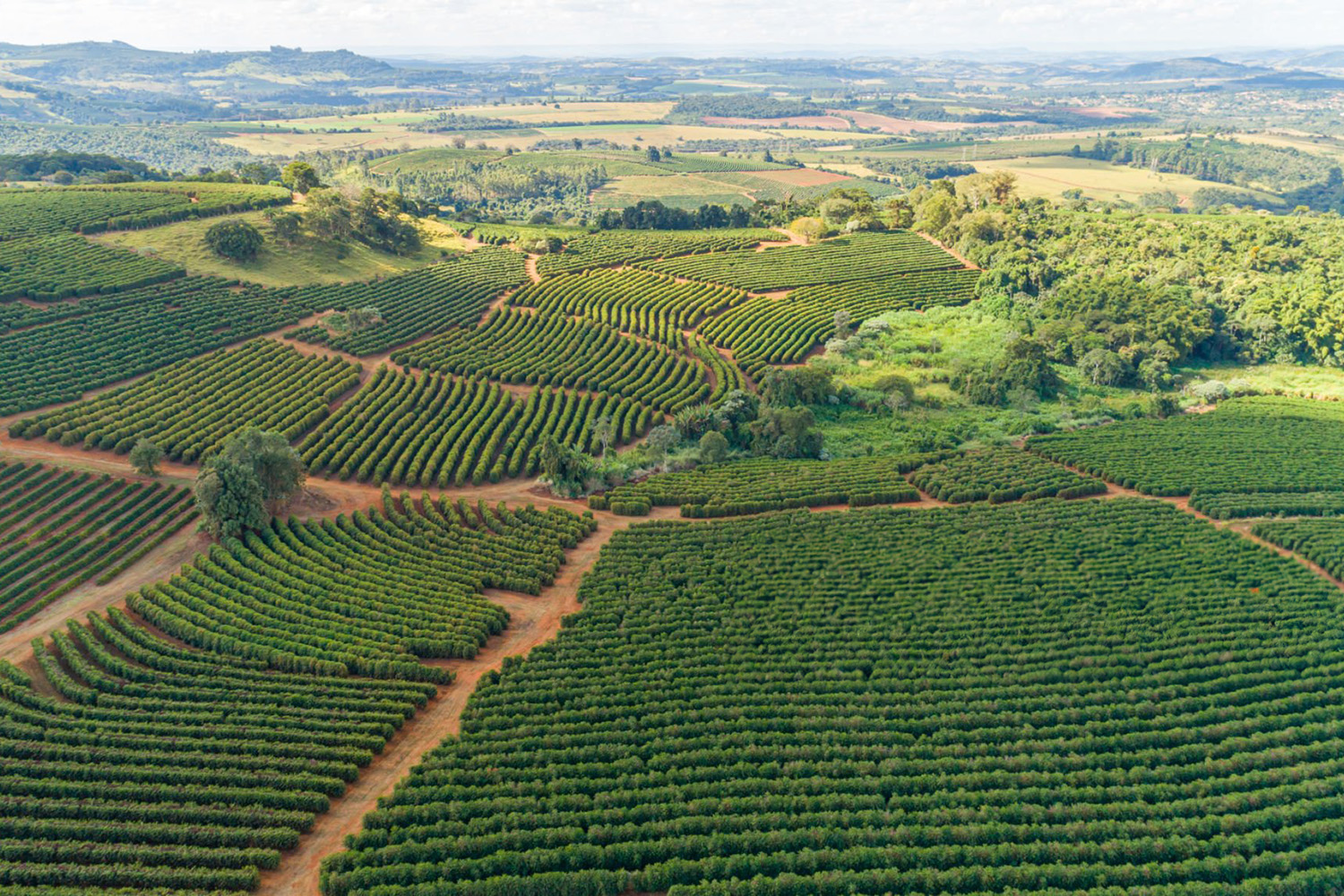
To understand why your coffee tastes woody today, we have to look back to late 2023 and early 2024. In Minas Gerais, the heart of Brazil’s specialty coffee production, the sky simply turned off. For over 130 days during the critical summer months, there was almost zero rain.
Coffee cherries are a lot like grapes. They need water to push nutrients into the seed, or bean, during the “grain filling” stage. Without water, the tree goes into survival mode. It stops feeding the fruit.
The result was what agronomists call the “raisin effect.” The cherries ripened on the outside because of the heat, but the beans inside never finished developing. They stayed small. They didn’t pack on the lipids and complex sugars that give Brazilian coffee its heavy body and sweet, chocolate notes.
When the 2024 harvest came in, it was a disaster of screen sizes. A huge chunk of the crop was Screen 13 or 14 (ie, really tiny). These are tiny beans that roasters hate because they burn easily, and clog up perforated roasting drums. But because the volume was so low, roasters had to buy them anyway. The visual impact on the farms was devastating (youtube link).
Visually, they looked okay. But chemically? They were empty. The USDA Foreign Agricultural Service reported in their 2025 semi-annual update (PDF link) that the beans were significantly “lighter in weight.” They were low-density.
Low density means air pockets. And air pockets mean that when your local roaster applies heat, the bean doesn’t caramelize. It toasts. That is where that papery, straw-like flavor is coming from.
The Tariff Hangover
If the drought ruined the flavor, politics ruined the price. And we need to be brutally honest about whose pocket that money is coming from.
When the Trump administration slapped a punitive and knee-jerk 40% tariff on Brazilian goods last July, stacking it on top of the existing 10% base tariff Trump already imposed globally, that man claimed it was a way to punish Brazil. Of course, he lied. Tariffs are not paid by the country that grows the product; they are paid by the company that imports it. This means ultimately, they are paid by you, the American coffee consumer.
For the US coffee market, this policy was economic illiteracy at its finest. The United States cannot grow the coffee in the volumes we require, and never will be able to. Outside of a tiny fraction from Hawaii and Puerto Rico, we import nearly 100% of the coffee we enjoy. Slapping a 50% tax on a product that is part of our daily lives, but cannot produce ourselves didn’t “protect American jobs.” It was just a direct invoice sent to every coffee drinker in the country.
Suddenly, every container of coffee entering a US port carried a 50% tax tag. Importers didn’t just shrug and pay it; they panicked. Contracts were cancelled. Ships were diverted to Europe or Canada to avoid US customs, clogging up ports in places like Vancouver and causing massive delays. The market reacted with near-instant price surges (Youtube link).
“But wait,” you might say. “Didn’t Trump repeal that tariff in November?”
Yes. On November 14, 2025, after massive consumer backlash, Trump walked back the coffee tariffs. But a repeal doesn’t magically erase the bills that were already paid. The global supply chain operates on a 3-to-6-month lag. The coffee sitting in roastery warehouses right now, the beans being roasted for your morning cup this week, was contracted, shipped, and paid for when that 50% tax was still the law of the land because of the whims of one man.
Roasters are currently working through the most expensive inventory in history. They absorbed the costs for as long as they could to avoid scaring you off, but the math eventually broke. That extra $7 on your bag isn’t profit. It’s the receipt for a huge tax break promised to the richest in this country. And we’re all paying it.
Here is what that “Tax Stack” looks like for a standard bag of specialty Brazil right now.
Table 1: The Price of a Cup (February 2026)
Breakdown of a typical $26.00 (12oz) bag of Single-Origin Brazil
| Stage | Cost Contribution | What You Are Paying For |
|---|---|---|
| The Farmer (Farm Gate) | $2.80 | Labor, fertilizer, and the “risk premium” for holding beans. |
| The “C-Market” Base | $3.10 | The global commodity price for Arabica (still historically high). |
| Export & Logistics | $2.50 | Shipping, insurance, and the “chaos surcharge” for port delays. |
| Tariff Impact (Lagged) | $4.10 | The lingering cost of the 50% duty averaged into current inventory. |
| Roaster’s Margin | $8.50 | Labor, gas, rent, packaging, and shrinkage (18% weight loss). |
| Retailer Markup | $5.00 | The cafe or grocery store’s cut. |
| TOTAL | $26.00 | Before sales tax. |
The Silent Filler
There is another reason your “Espresso Blend” might taste different, and it is a little dirty secret the industry is trying to keep quiet.
Robusta.
Specifically, Brazilian Conilon. While the Arabica trees were withering in the drought, Brazil’s Robusta crop had a banner year in 2025. It surged nearly 30% thanks to heavy irrigation in the Espírito Santo region.
With Arabica prices touching the stratosphere, many large commercial roasters and even some mid-sized “specialty” operations quietly changed their recipes. They swapped out expensive, low-quality Arabica for high-grade Conilon to keep their costs down and add some “crema” back into the shot.
If you are catching notes of burnt rubber, heavy earth, or a bitterness that sits at the back of your throat like a bad pill, you are likely tasting that substitution. We are seeing Conilon percentages creep up from 0% to 15% or even 20% in blends that used to be pure Arabica.
The New “Normal” Flavor
So, where does that leave us? We are paying a premium for what is effectively a defective product. The “Classic Brazil” profile we all learned to calibrate our grinders on is currently missing in action. That sweet, forgiving, chocolate-bomb profile is gone.
Actually, the spark for this entire article came from an afternoon visit two weeks ago I had with a friend who happens to be a licensed Q-Grader (and wishes to remain anonymous for the purposes of this article, as she doesn’t want her clients to know she inspired me to write this).
We were standing over a cupping table in her lab, spoons in hand, looking back through her sensory logs from late 2023 and comparing them against the fresh samples of “Prime” Brazil landing on the table. She was seeking some core components for a client’s master blend to recommend.
It wasn’t just a subtle shift in quality; as she put it, it felt like we were cupping a completely different origin. What used to be a reliable, sweet anchor for a blend had transformed into something unrecognizable. To show you exactly what we found, we sketched out this comparison:
Table 2: The Sensory Shift (2023 vs. 2026)
Comparing the “Classic” Brazil profile to the current drought-affected crop.
| Attribute | 2023 “Classic” Brazil | 2026 “Drought” Brazil |
|---|---|---|
| Primary Flavor | Milk Chocolate, Hazelnuts, Caramel. | Dry Wood, Peanut Skins, Unsweetened Cocoa. |
| Acidity | Soft, Malic (Red Apple). | Sharp, Citric, or “Flat” (Missing). |
| Body / Mouthfeel | Creamy, Syrupy, Coating. | Thin, Watery, “Tea-like.” |
| Aftertaste | Sweet, lingering finish. | Short, drying, astringent. |
| Roast Defect | None (Even color). | Quakers (Pale beans) & Tipping (Burnt edges). |
The Light at the End of the Tunnel?
Is there any good news? Actually, yes. But you are going to have to wait for it.
The 2026 harvest, which kicks off around May, is looking like a monster. The rains returned in late 2025, and the trees that survived the drought have recovered. Early forecasts from groups like StoneX and the USDA are predicting a record-breaking crop of over 66 million bags.
This should bring prices down and quality up.
But here is the catch. Coffee shipping takes time. Those beautiful, dense, rain-fed beans won’t be harvested, processed, rested, and shipped to North America until September or October 2026.
Until then, we are stuck working through the “Hollow Harvest.” We are drinking the ghost of the drought.
My advice? If you are buying Brazil right now, look for “Pulped Natural” or “Honey” processed lots from high-altitude farms in the Cerrado Mineiro. These producers often have irrigation systems that saved their trees from the worst of the heat. Or, take this opportunity to explore. Peru and Mexico had fantastic harvests this year and didn’t get hit with the same Trump tariff chaos.
It is going to be a rough few months for our grinders. But the rain has returned to Minas. Eventually, the flavor will return to our cups.

Allison's day job is highly sought after dog groomer, which encapsulates one of her three loves: dogs. Her other two loves: writing and coffee, are what brought her to the CoffeeGeek writing team. An unabashed V60 fan, Allison also explores Portland's cafe scene with gusto, often taking Max, her border collie with her.



















4 Responses
This is a very insightful article into the reasons why coffee has gotten so expensive in the past year. I too noticed a drop in the quality in the cup, and wasn’t sure if it was just me. Glad (I suppose) to know my taste buds are still on point.
I hope this trend reverse in 2026! Thank you for writing this Allison!
This article makes me angry. Not at you Allison and coffeegeek, but at where we are at as a country and what we’re doing to the global coffee supply. First there’s this massive drought — my local roaster told me about that last year — and now we have this clown who drove the prices up even artificially higher. I also agree with Allison that all the Brazil coffees I had last year tasted really off. I love the profiles it always delivered but last year it felt like I was drinking some mass grocery store bland blend.
This is a fantastic piece—it’s rare to see someone connect the dots between “bean biology” and “geopolitical lag” so clearly. It explains exactly why my morning cup has felt so thin and overpriced lately despite the “official” news telling us things are stabilizing.
I really appreciated the breakdown of the “Raisin Effect.” It makes total sense that if the sugars never develop during grain filling, no amount of roasting skill can fix that hollow, papery finish. It’s also a sobering reminder of how long a “knee-jerk” tariff can haunt the supply chain, even after it’s been walked back.
Definitely going to keep an eye out for those high-altitude Cerrado Mineiro lots or pivot to Peru for a bit until that 2026 harvest finally hits the shelves this fall. Thanks for the deep dive!
Solid piece, Allison. You connect the dots between “bean biology” and the geopolitical mess that’s currently wrecking my coffee… and country. I’ve definitely noticed coffees feeling thin and overpriced lately, and finally understanding the drought in Brazil and that “Raisin Effect” was a huge eye-opener. It makes total sense now—if those sugars never develop during the grain filling, there’s no way a roaster can fix that “hollow, papery finish” you mention, no matter how good they are.
Honestly though, I’m just beyond frustrated with what’s coming out of the White House right now. It makes me so angry to see the current occupant of that office playing these games with trade when we’re already dealing with a legit supply crisis. It feels like we’re getting hit twice—once by the weather and then again by a total lack of common sense from our own leadership. Those “clown” moves are just driving prices up artificially for the rest of us.
I’m really worried this new 15% tariff he just announced is gonna further screw things up. Like you mentioned, these “knee-jerk” policies haunt the supply chain way after they get walked back. I love the profiles Brazil usually brings to the table, but I’m legit worried my local roaster won’t even be able to stock those high-altitude coffees I’m used to, if this keeps up. Thanks for the sobering breakdown, even if it was a tough read.