


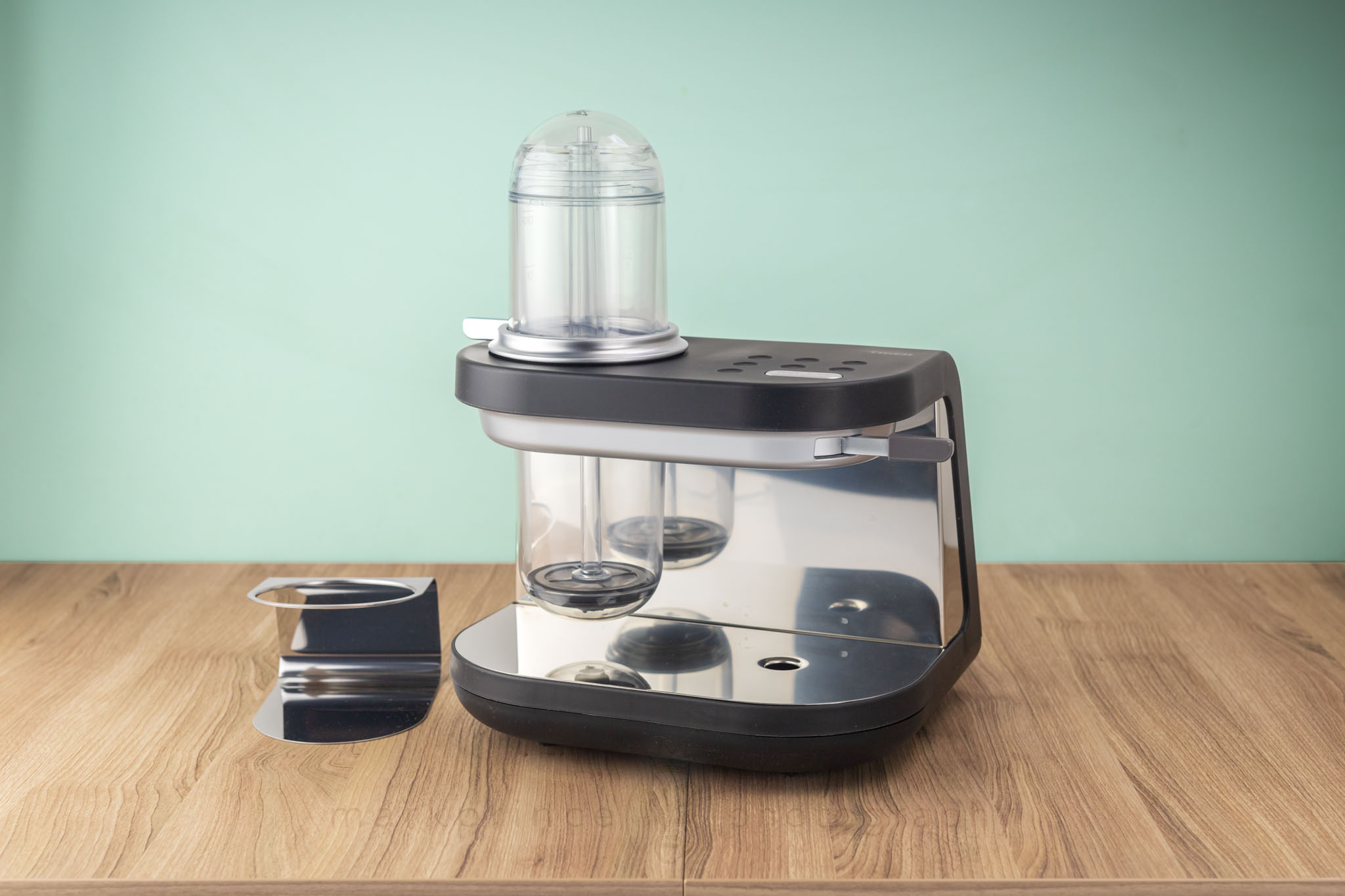
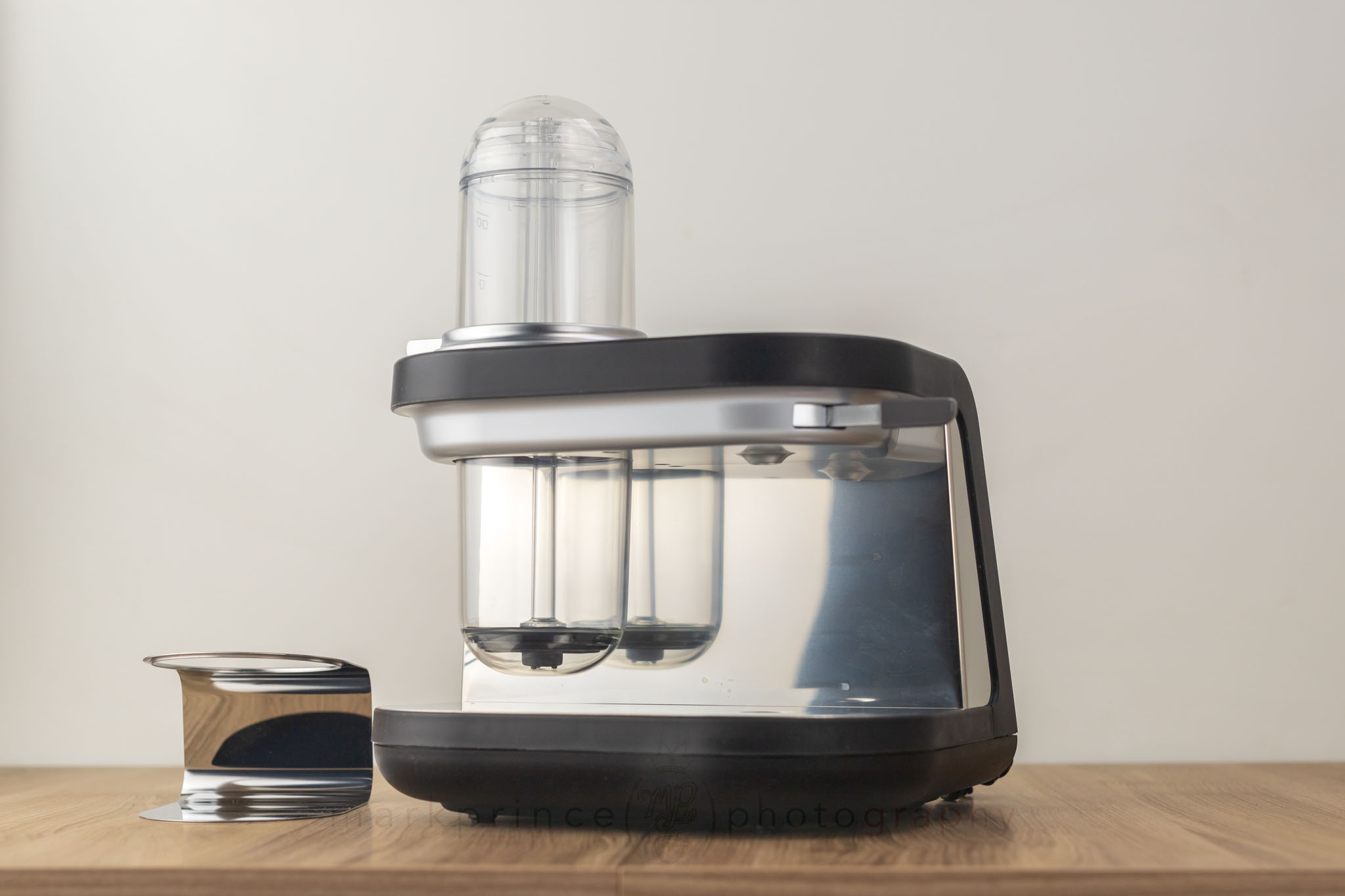
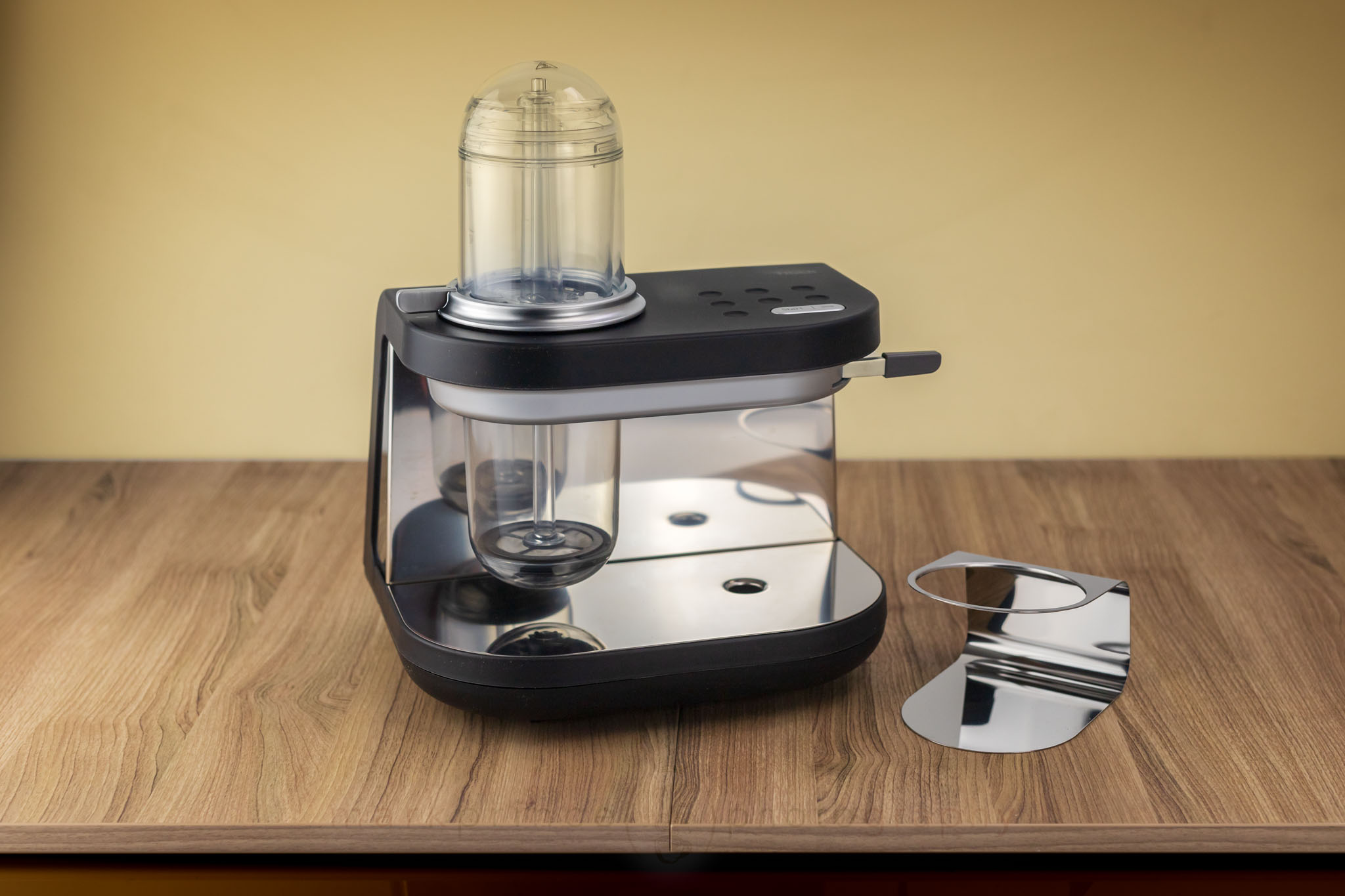


Roughly 18 months ago, a friend in Japan sent me a video of this device that sort of worked like an upside down siphon. It was all automated, and very fast. It was also by a company that I was familiar with, but not in the coffee space: Tiger. I was intrigued, but being that the machine was Japanese market only (100V, 50h), and quite expensive, I opted not to obtain one, even though I’m entirely intrigued by all things siphon coffee making.
Fast forward to the 2024 Specialty Coffee Association Expo this past spring, and Tiger not only announced that they were bringing this automated siphon machine to the USA, but they even had a booth at the Expo.
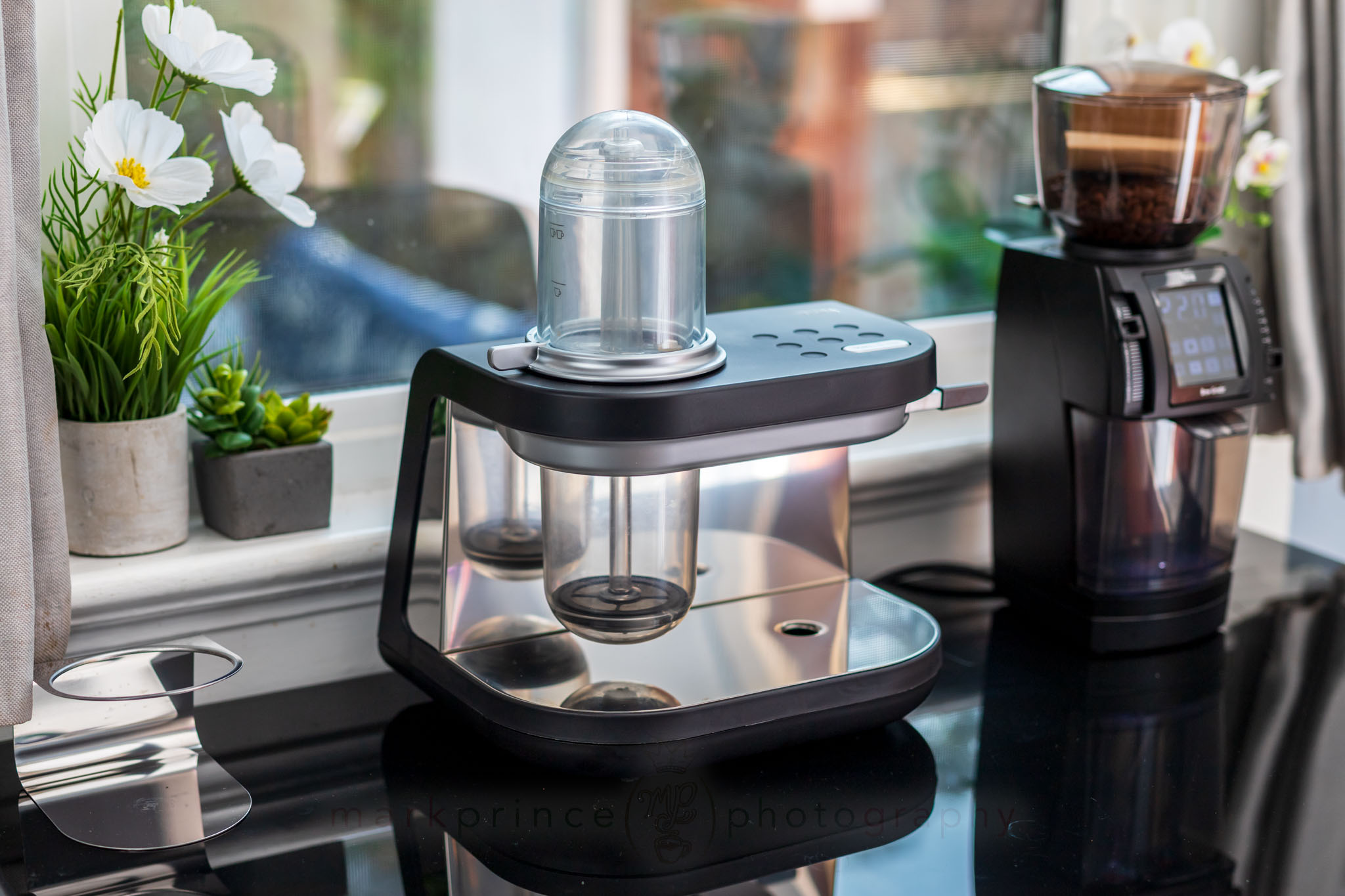
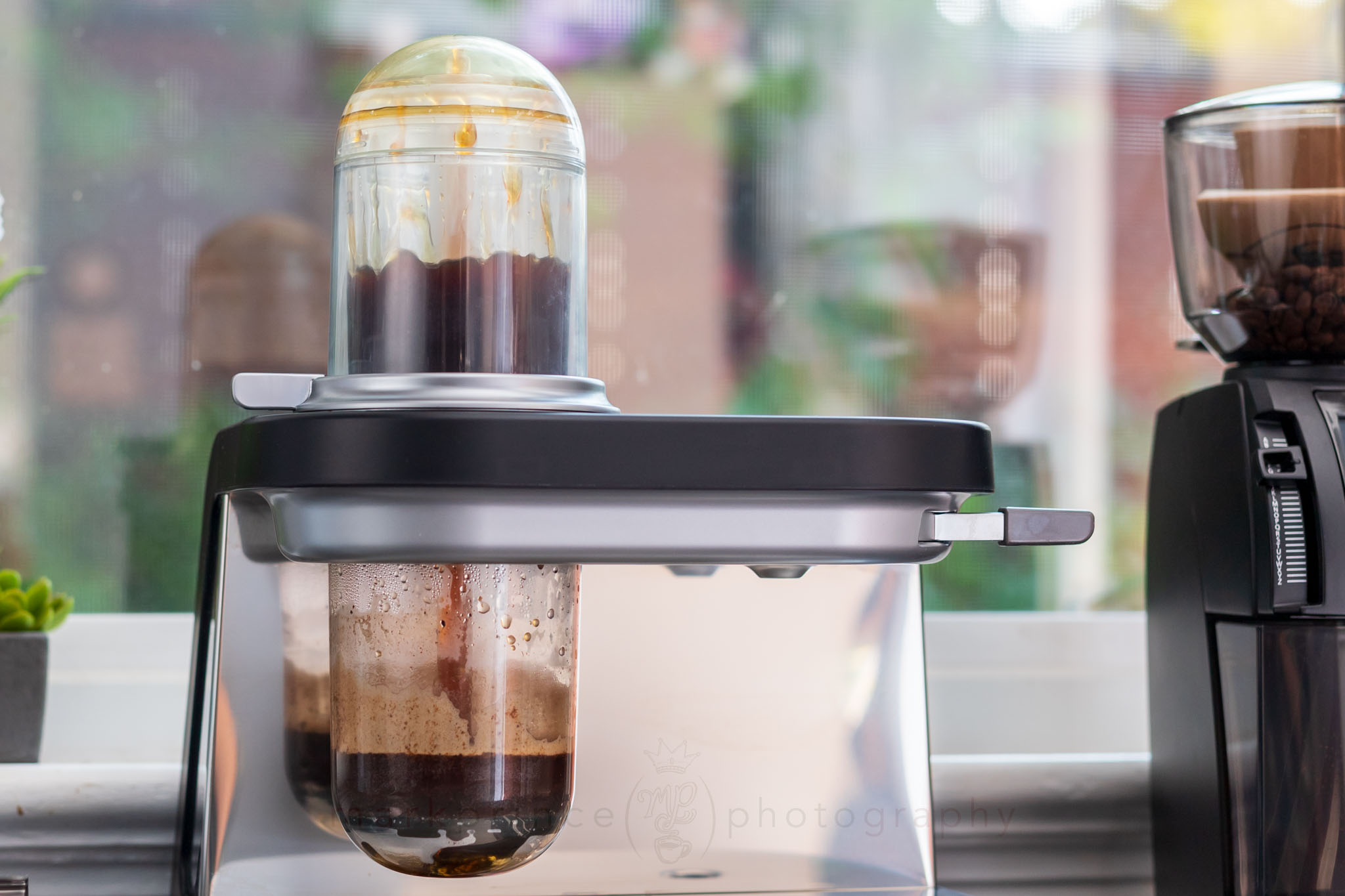
That machine is the Tiger Siphonysta, a highly automated and quick coffee brewer based on the siphon coffee method. It can brew about 125ml of coffee in 2.5 minutes, and 250ml (8oz) in 3.5 minutes, start to finish. The machine’s technology relies heavily on the siphon coffee brewing principle, but also relies on an internal pump to regulate things more and provide a varying degree of adjustable temperature controls while doing so, something a traditional siphon cannot do.
It is also a very unique, and striking piece of technology and “functional art” for your countertop.
I reached out to the company, and they agreed to send us a sample unit to fully review and test. I am based in Canada, and they were very clear that this machine is not certified for the Canadian market, as it has no CSA certification or approval, but does have full UL certifications for the US market. For that reason, my fellow Canadians may have to wait to get this brewer, but it is available for sale now in the US market, exclusively through Amazon.
Out of the BoxTiger Tiger Siphonysta
I am very happy to see that Tiger uses mostly sustainable and recyclable materials as well as enviro friendly inks in their main packaging for the Siphonysta. More companies in the coffee sphere need to do this.
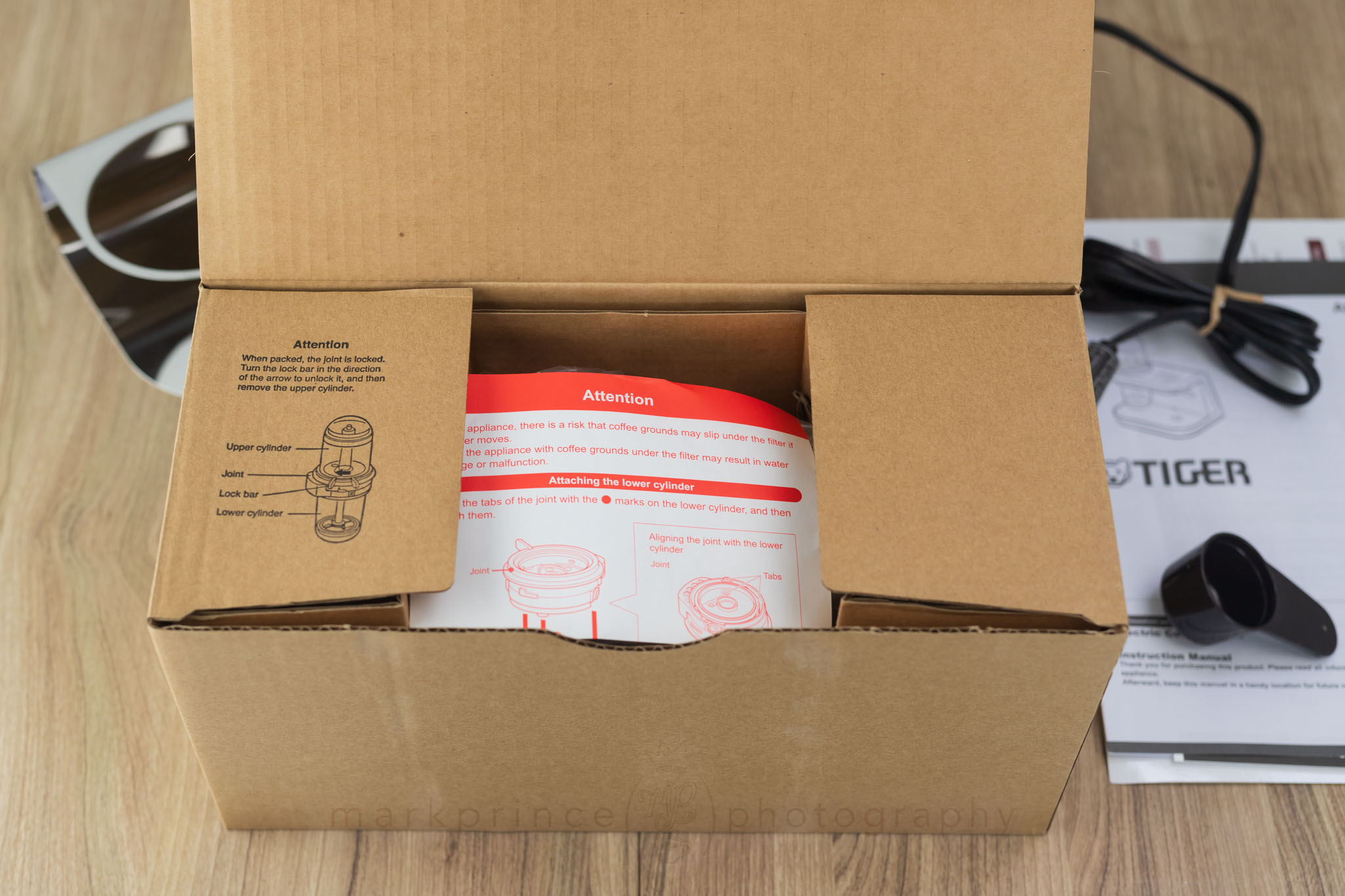
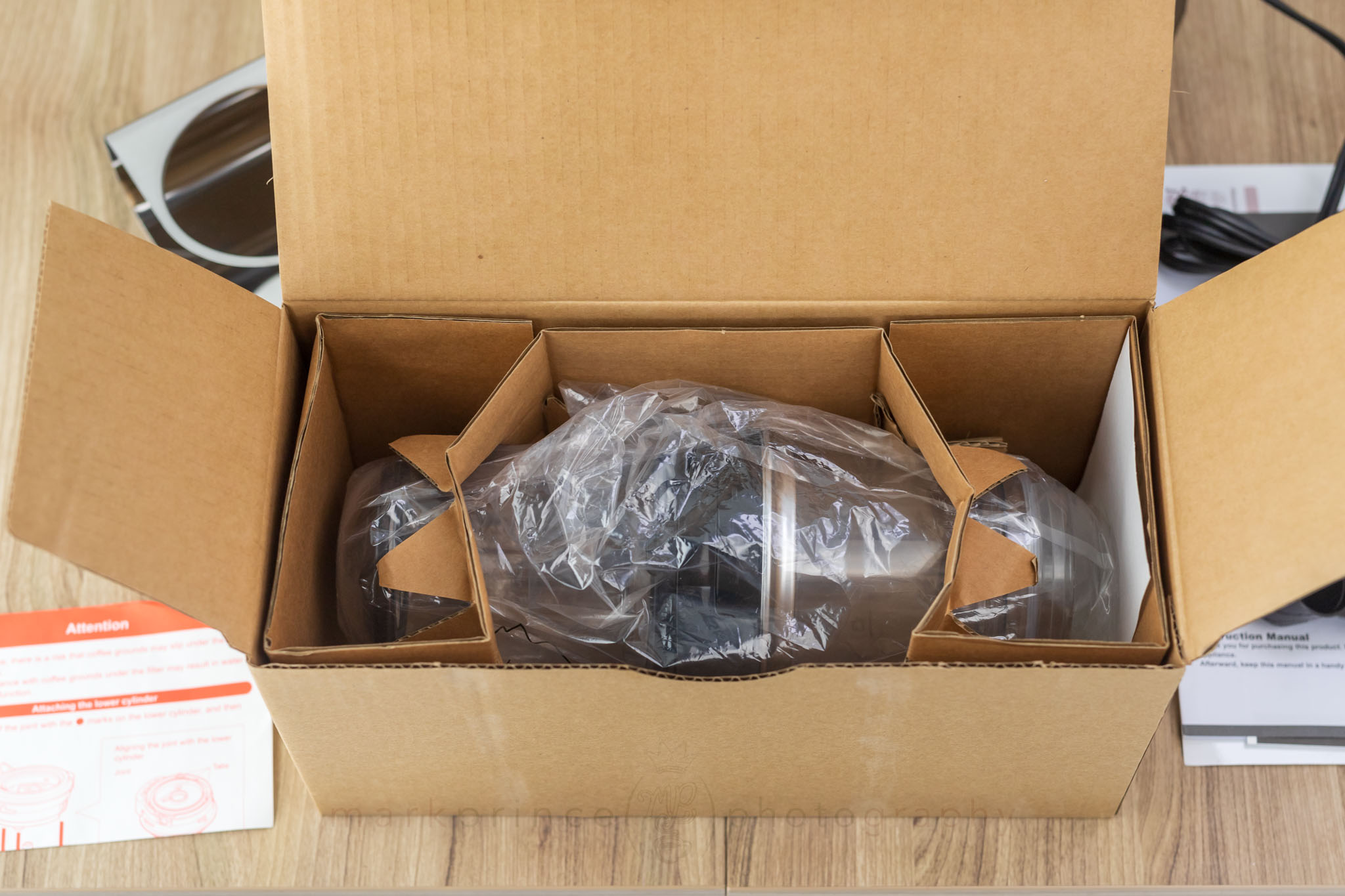
The Siphonysta ships in a brown cardboard box, and inside all the main protective parts are cardboard based materials. Only the main machine and the brewing assembly are wrapped in protective plastic bags.
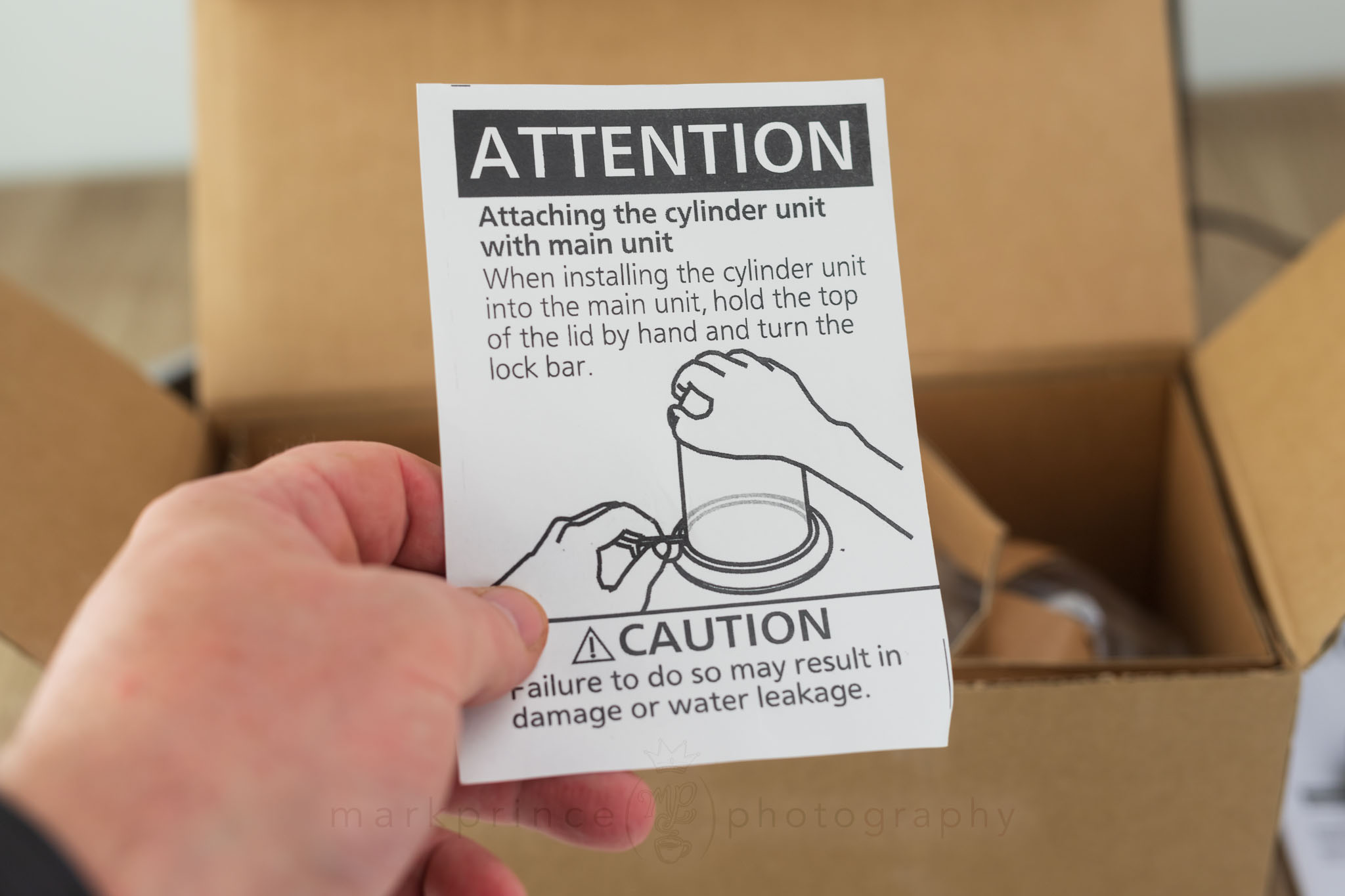
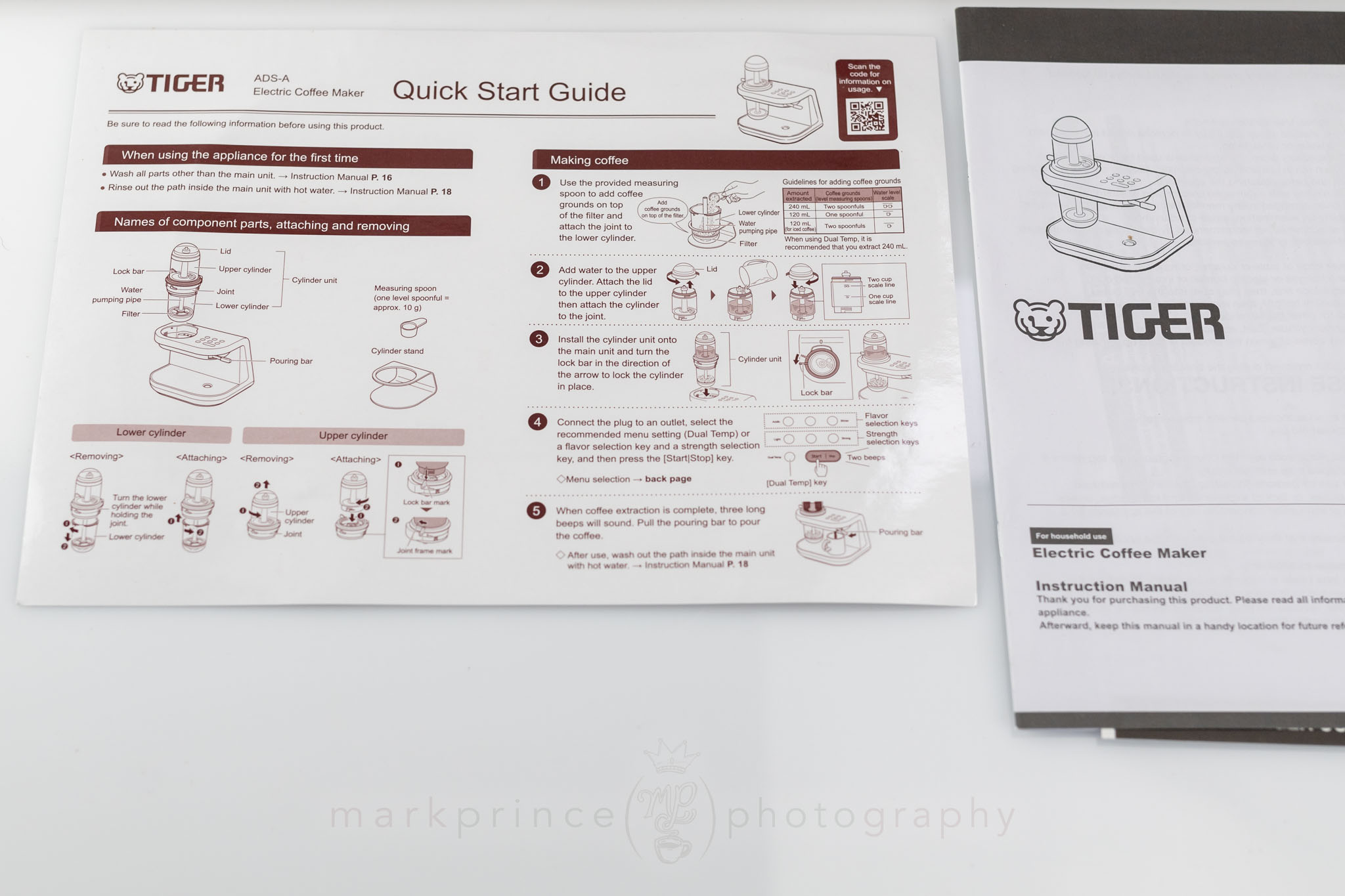
Once out of the box, there are a lot of notification and addendum materials included with the Siphonysta on top of the standard product manual. The company is very insistent on exactly how to assemble and disassemble the brewing chamber, how things line up, and wants the user to be extra careful about where coffee grounds go. I feel all this information could just be updated into a revised product manual; it can be overwhelming, especially for folks who never read manuals to begin with (and you always should!).
Included with the Siphonysta are the a) main brew chamber, b) a stand to hold the brew chamber when adding coffee, assembling and adding water, c) a dose scoop (holds roughly 10g per scoop), and d) a cleaning brush.
There is also a plastic wrap and peel coating on top of the Siphonysta’s main drip tray plate. Once you have this removed, the machine can be easily assembled in seconds.
Let’s go through the main components of the Siphonysta next.
Brewing Chambers
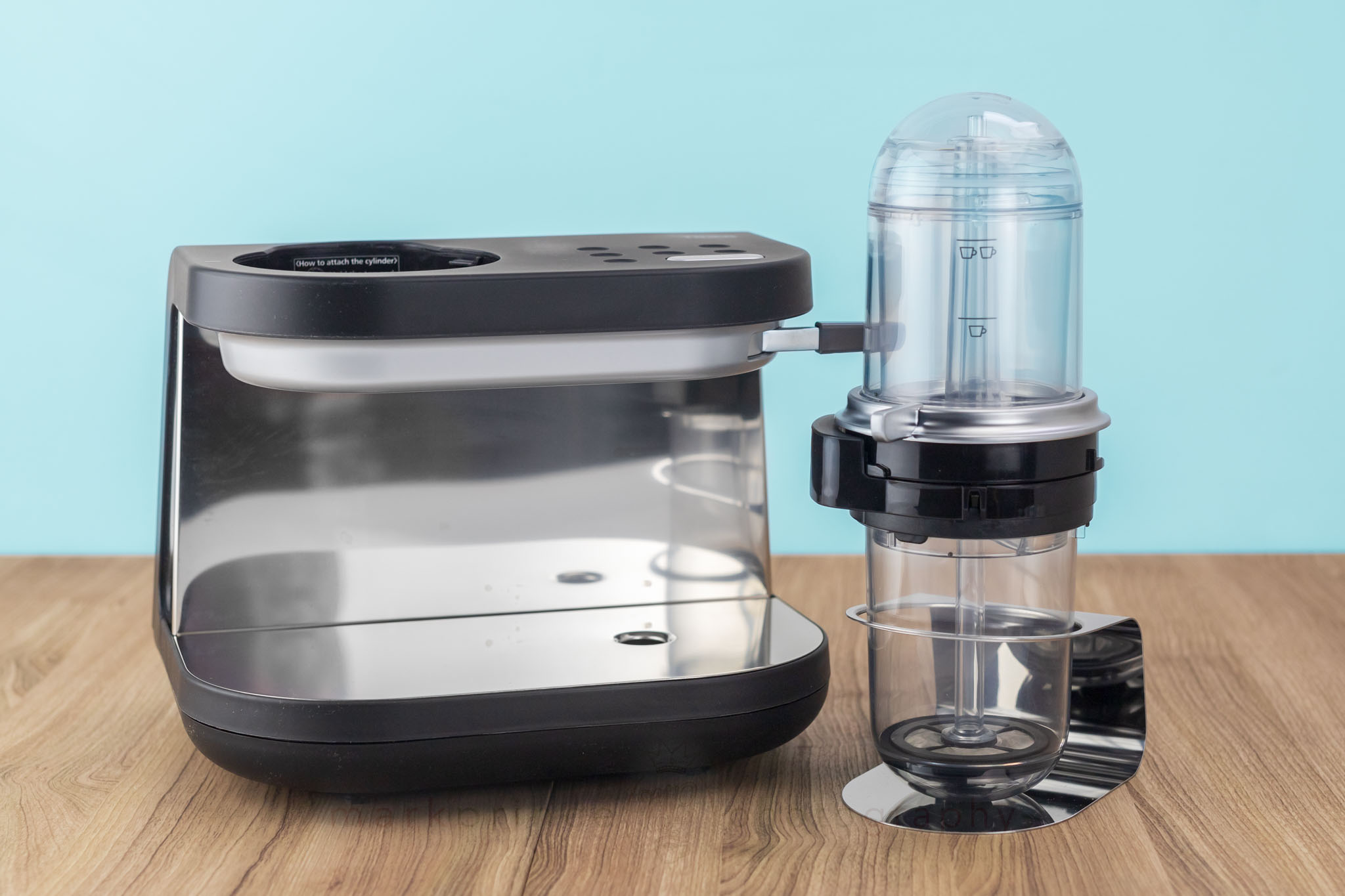
The Siphonysta is a complex machine designed to be used simply. A lot of the complexity is built into the four part brewing apparatus, which is made up of a) a top water / finished coffee chamber, b) a middle collar mount with lots of gears, valves, o-rings, water and coffee pathways and pump connections (most of which you don’t need to be concerned about day to day), c) the lower brewing chamber, and d) the permanent filter assembly with a tube assembly.
The entire assembly weighs 597g (1.3lb).
Let’s start with the materials used: Tiger says all the plastic is BPA free, but the plastics are less than impressive: they seem a bit cloudy and dulled, even when the brewer was brand new. As the machine was used, I noted that the clear plastic for the upper and lower assembly got even more dulled and slightly cloudy. It doesn’t inspire confidence.
There’s a wunderkind of a plastic out there called Tritan which is crystal clear, BPA free, and in use in a wide range of food items from Rubbermaid’s high end kitchen storage containers, to the AeroPress; I’m a bit surprised that a $500 coffee brewing device doesn’t use the best possible plastics for the Siphonysta. And you’d want that crystal clear type of plastic too, since the Siphonysta definitely puts on a show during its brewing cycle.
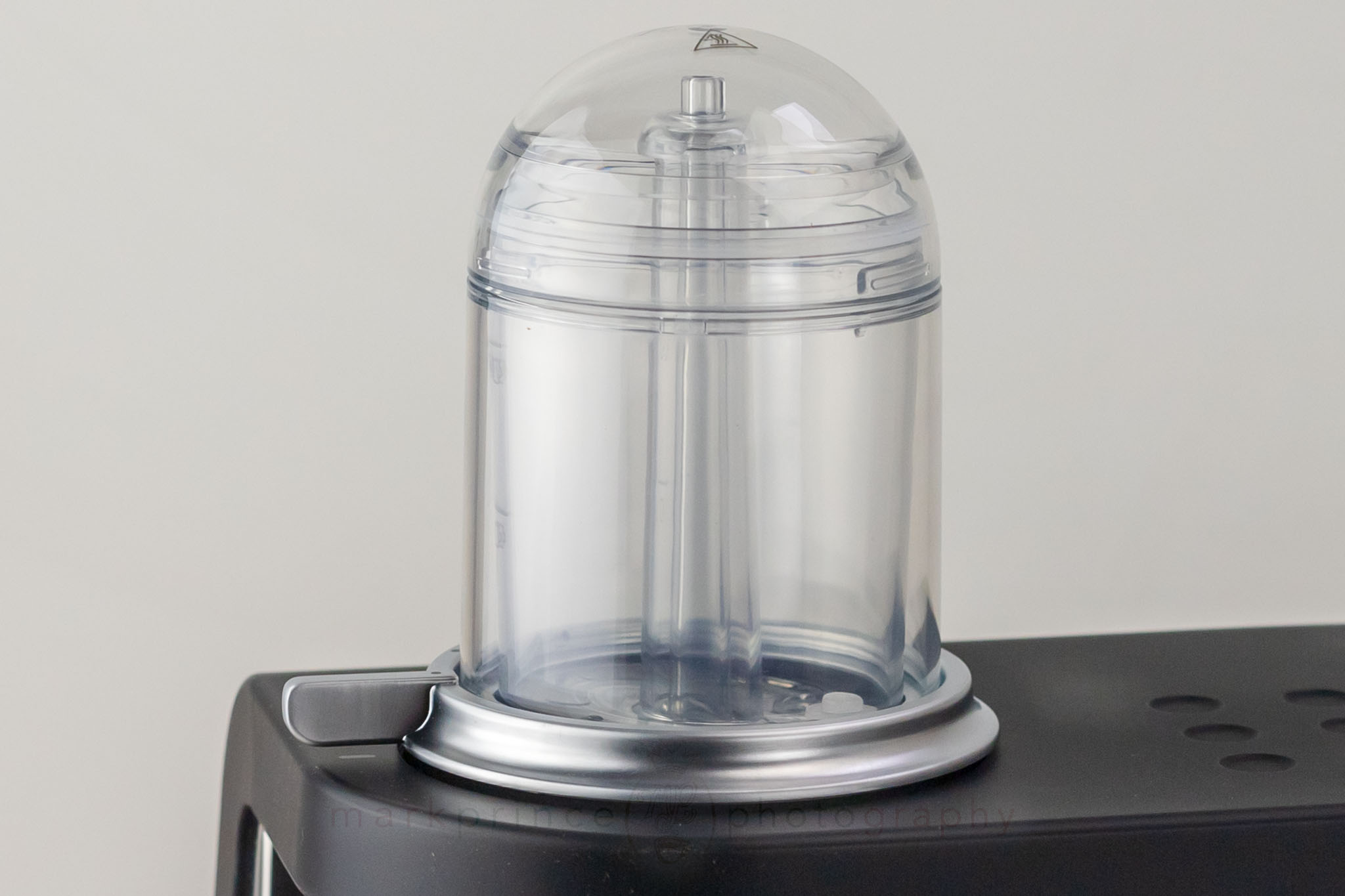
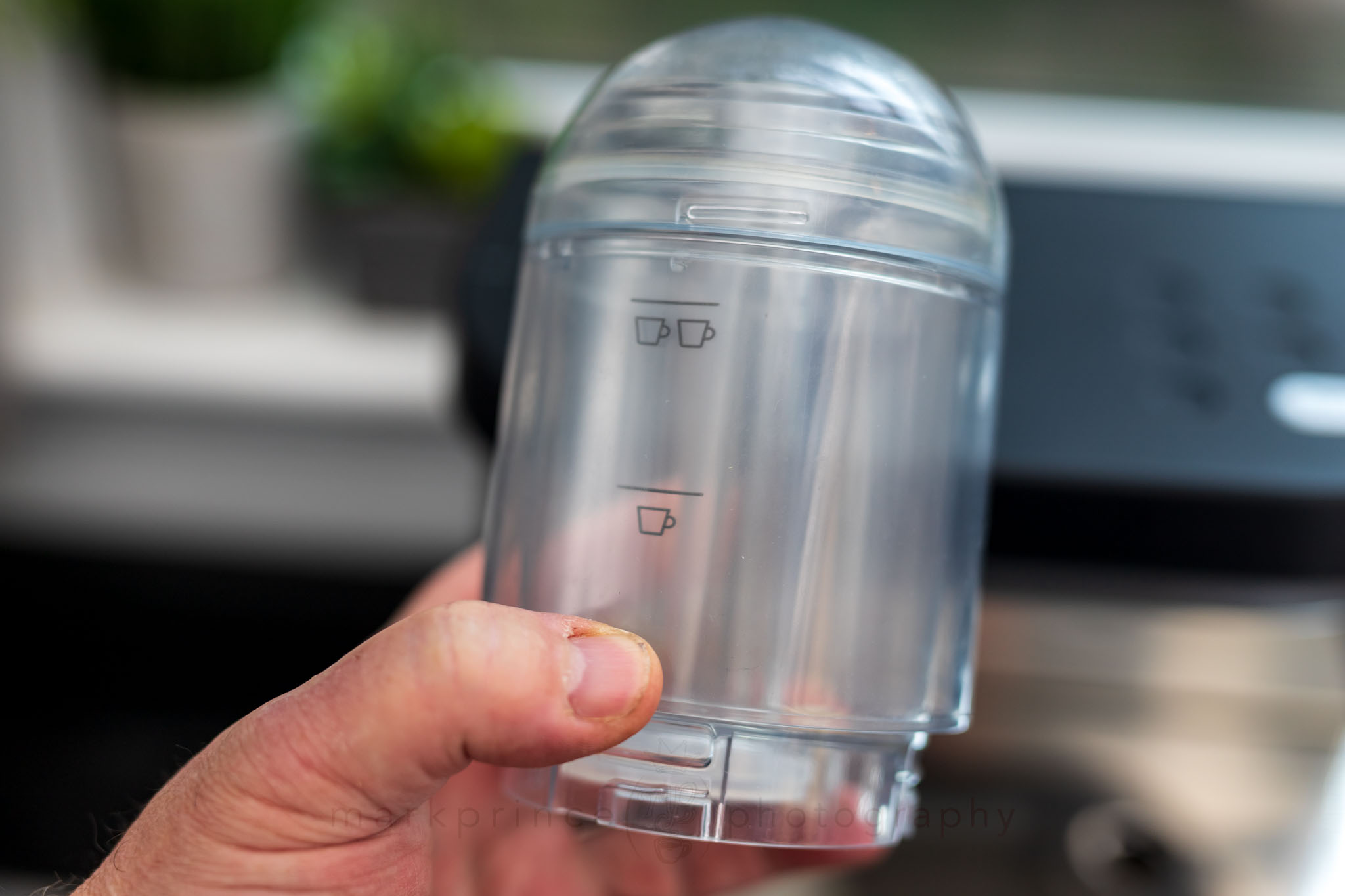
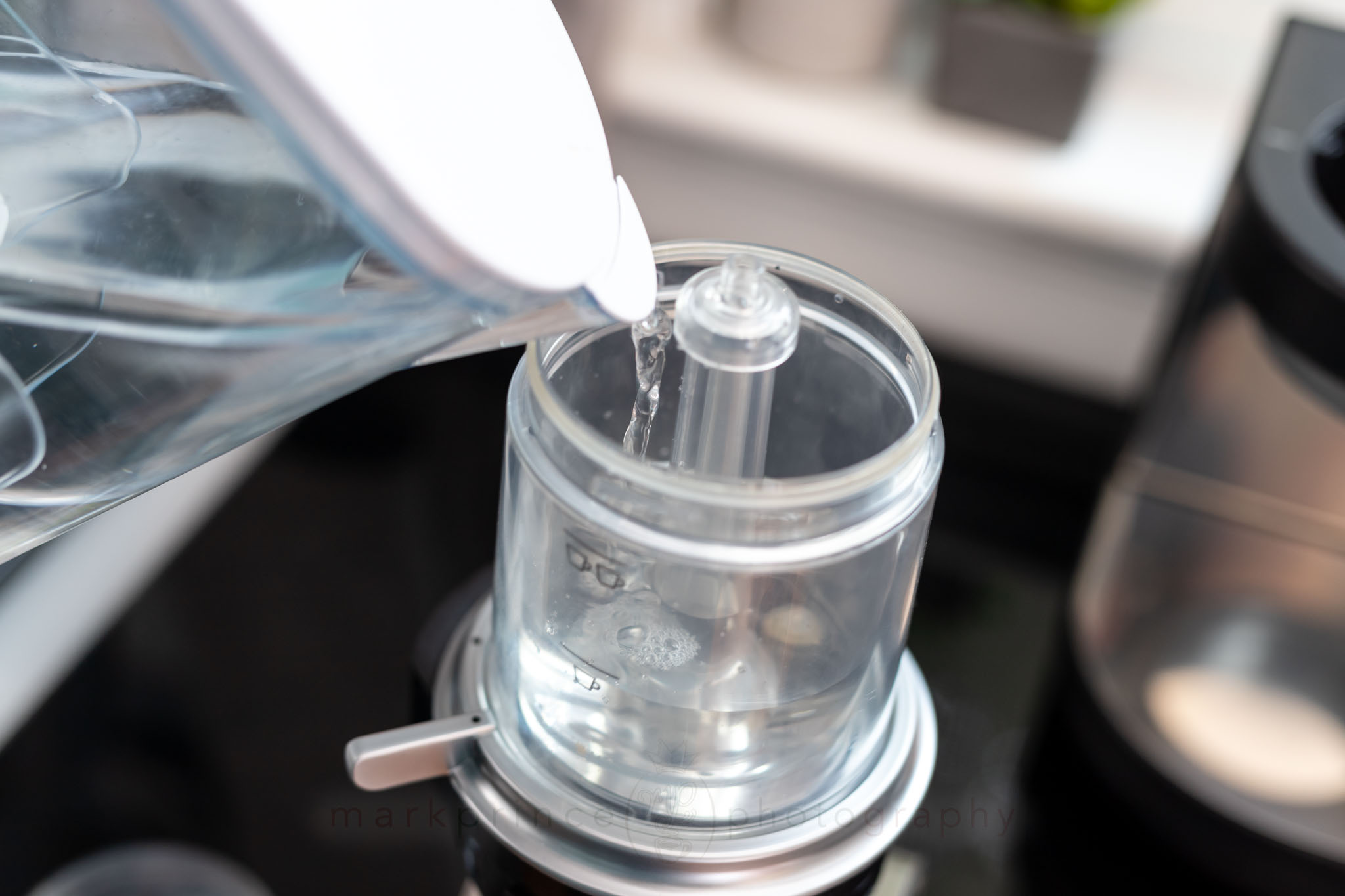
The top plastic chamber has a removable dome lid, and this is where you add your water during the initial brew, and where the brewed coffee ends up before you dispense it out of the machine. The domed lid has a small silicone o-ring as part of the assembly, because this chamber, once closed, is part of the “vacuum process” for the brewing method.
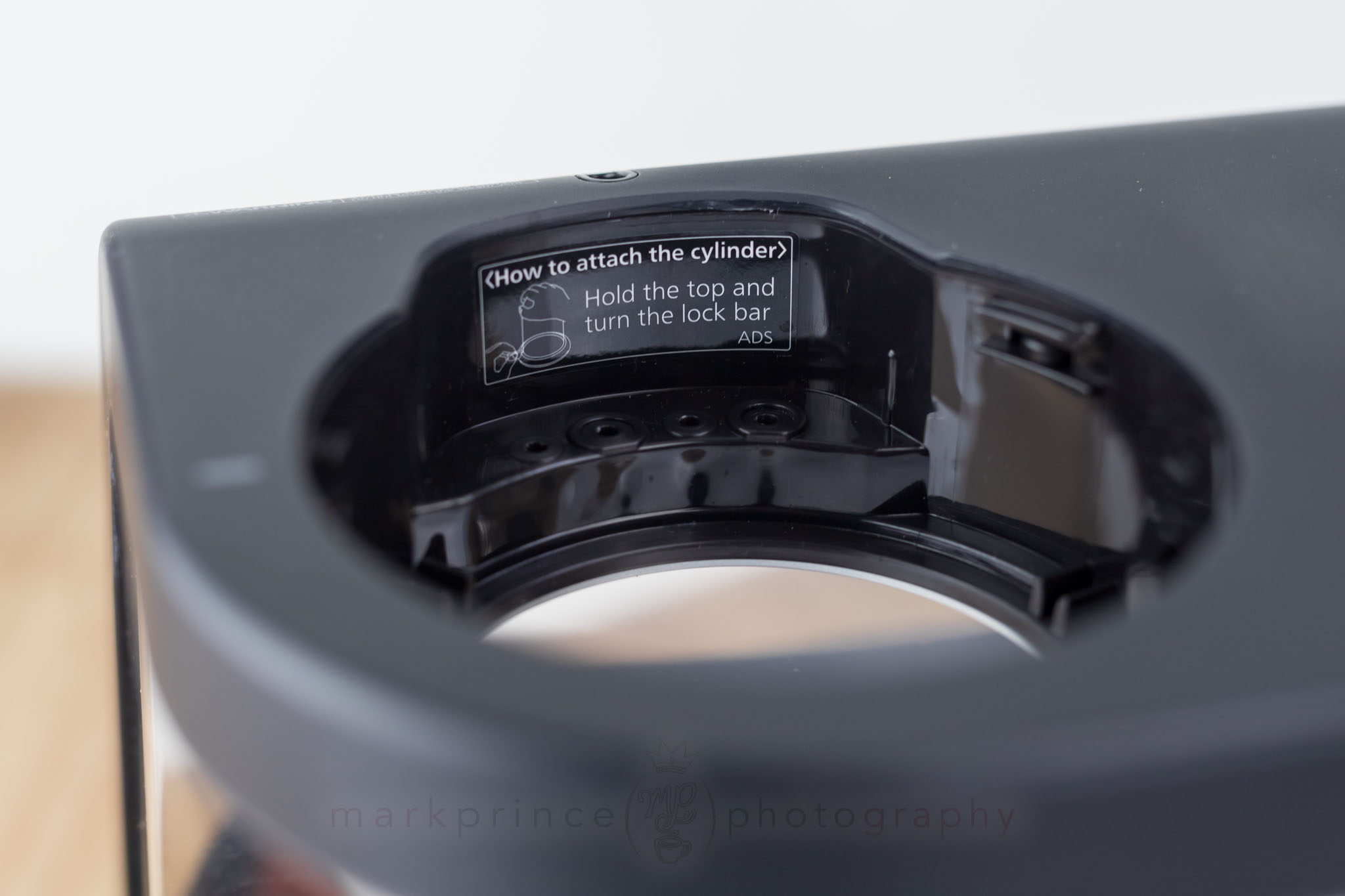
The top assembly with lid, weighs 154g (5.5oz). This assembly screws into the middle collar mount, which is black. It can only screw on one way: the top assembly has one small dot on the bottom side, and it needs to be lined up with the middle collar’s extended handle; once inserted, rotate the top assembly clockwise to seal it to the middle collar assembly.
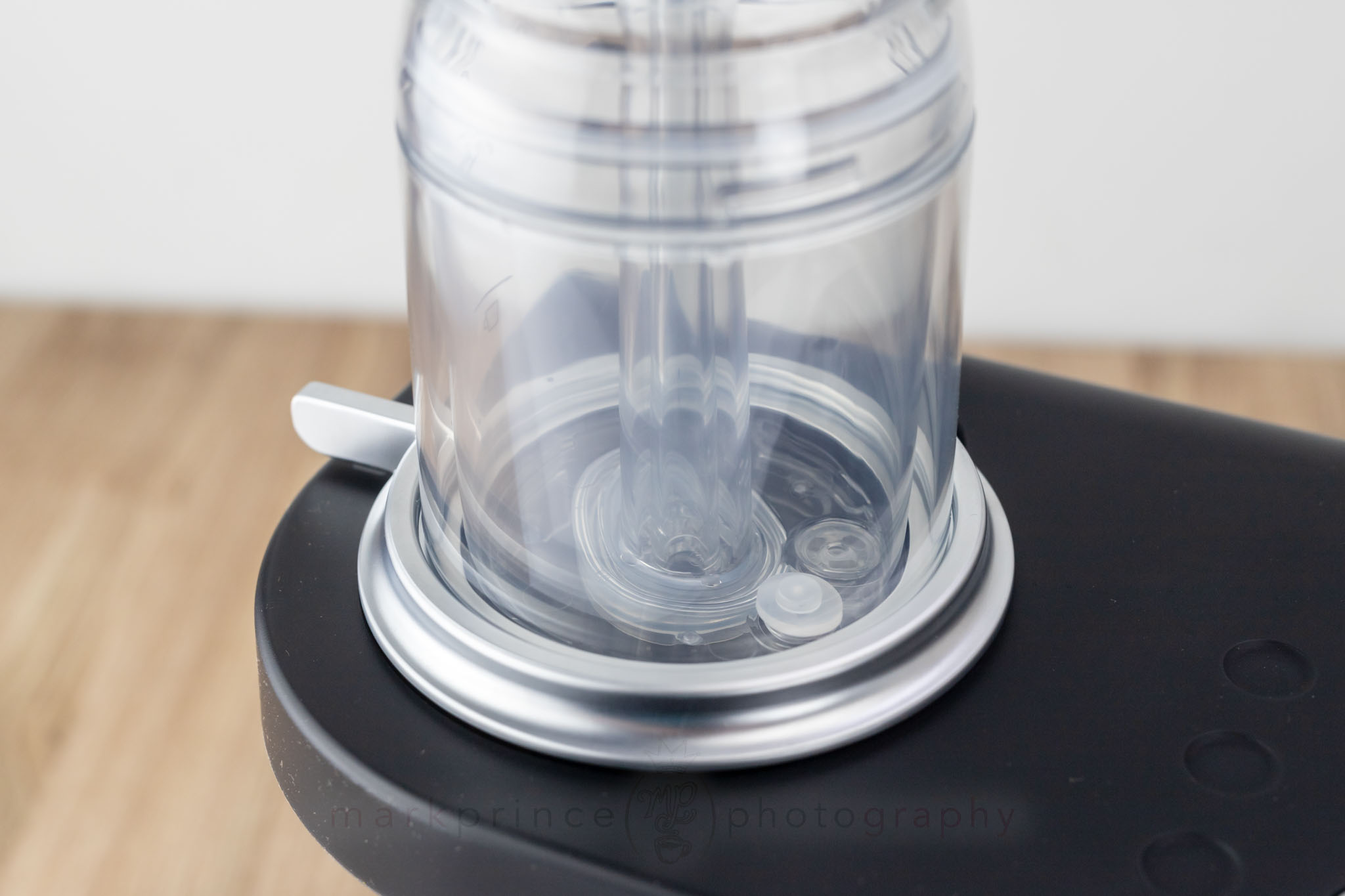
The middle “collar” is where a lot of action takes place, automatically. It is heavy and beefy, and it contains gears, doors, pathways for liquid, and even pump connections. It is mostly black, with some silver accents and a silver lever arm.
This part, along with the machinery and connections inside the body of the brewer, is where all the “magic” happens to automate the brew process. I won’t get into too many details about its construction, other than to say it feels robust, and seems designed to handle thousands of brew cycles. It definitely is not dishwasher safe.
The middle collar assembly does have several silicone o-rings here and there. In my entire testing, they always stayed put, but Tiger themselves say you should periodically check to see that they are in place: if any goes missing, the machine will not function correctly.
The middle collar assembly weighs 330g (11.6oz).
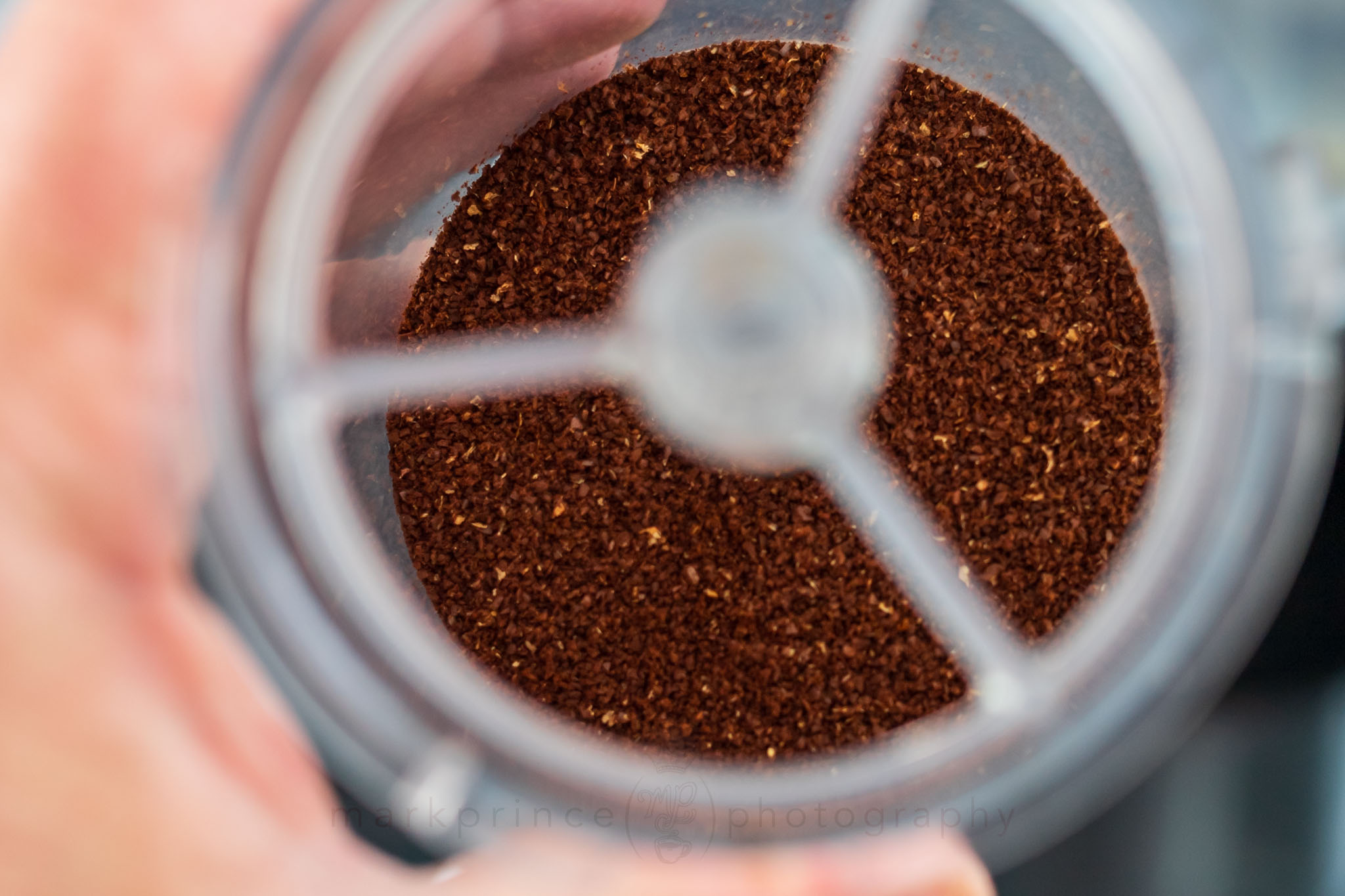
The bottom plastic vessel, which mates to the middle collar, is where the coffee brewing takes place. After inserting the filter assembly (making sure it is sitting correctly), ground coffee is added, so it sits on top of the permanent filter. Tiger recommends you put your finger over the filter assembly’s top flow tube when adding coffee, so you don’t get any stray grounds in the tube.
To attach it to the middle collar assembly, line up one of the three dots with some extended black plastic flaps on the middle collar, then twist to tighten and create a seal. These dots are hard to see, and could be better marked on the plastic, or a different colour to make them stand out more. With filter installed, it weighs 110g (4oz).
The filter assembly got a redesign this past spring. Previously, it was just a circular permanent mesh filter attached to a tube. Early users of the Siphonysta had difficulty lining this tube up with it’s connector in the middle collar when assembling the brewer, so Tiger added a circular secondary ring near the top of the tube, so it would sit perfectly centre in the brewing chamber.
If there’s any part of the Siphonysta I’d buy spares for, it would be a spare filter assembly and a spare set of the machine’s silicone o-rings. If you somehow break or tear the filter on this device, there’s no easy third party hack or device you could use to replace it: the filter is pretty unique.
The Siphonysta Machine Body
The Siphonysta’s main body is heavy. Even without the brewing assembly installed into the machine, it weighs 4.5kg (10lb). This body houses a lot: the pump system, the rapid water heating system, the machine’s circuitry and control boards, and the power supply converter. It also has built in liquid pathways to move brewed coffee from the brewing chamber to the dispensing area on the right.
Yet it is a very sleek and elegant looking package with simple soft-touch press controls on top, one actual electro-mechanical button, and a mechanical flow lever on the right side.
Most of the body is made from a hard, almost brown-black coloured plastic with some texture to it. A secondary accent area is gray plastic, and the backsplash plate and drip tray cover are polished stainless steel. The plastic used in the body of the Siphonysta seems very high quality and durable (a marked difference from the plastic used in the brew and water chambers). Absolutely no complaints here.
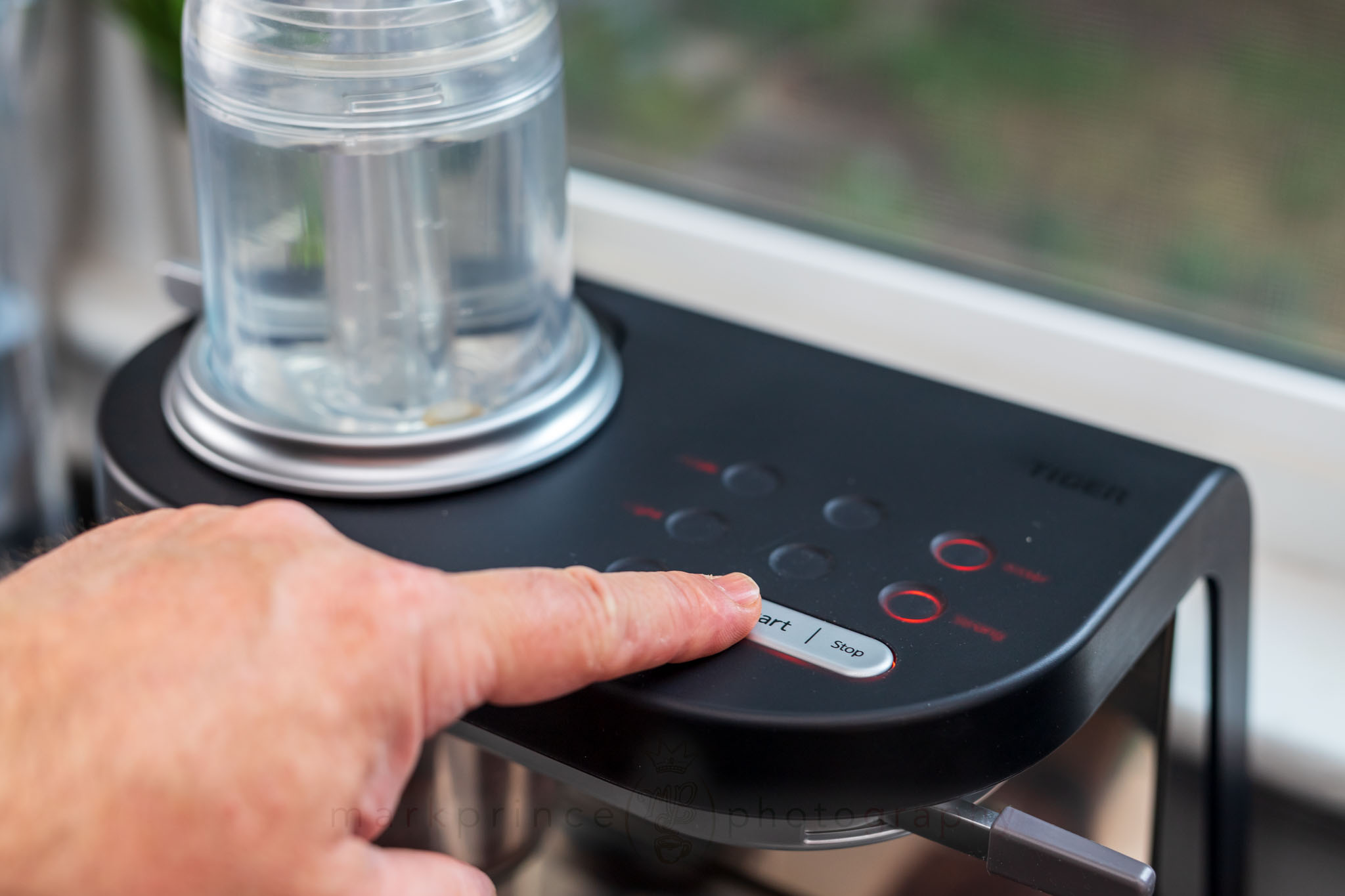
There is no on/off button: the machine automatically goes into standby mode once plugged in. The machine will turn on and be ready to brew whenever you mount and attach the brewing cylinders (inserting, then twisting the cylinder to its locked position will light up the soft-touch brew selection buttons). At this point, fine tune the brewing parameters via the buttons ,and press the start button to commence the brew.
We will cover the brewing selection choices on the control panel in much more detail later, including some of our lab tests on water temperatures and dwell times, but for now, here’s the choices you get:
Three flavour selection buttons, listed as “Acidic”, “Middle” and “Bitter”. Three coffee strength buttons, listed as “Light”, “Middle” and “Strong”. There is a seventh button listed as “Dual Temp”, which is intended for doing a higher concentrate brew for iced coffee. The flavour buttons control the water temperatures of the Siphonysta; the strength buttons control the dwell time, or the time the full brew is taking place (this timing doesn’t include the time it takes for your brew water to move from the top vessel to the bottom one).
The start / stop button does what it says, and is an electro-mechanical style button.
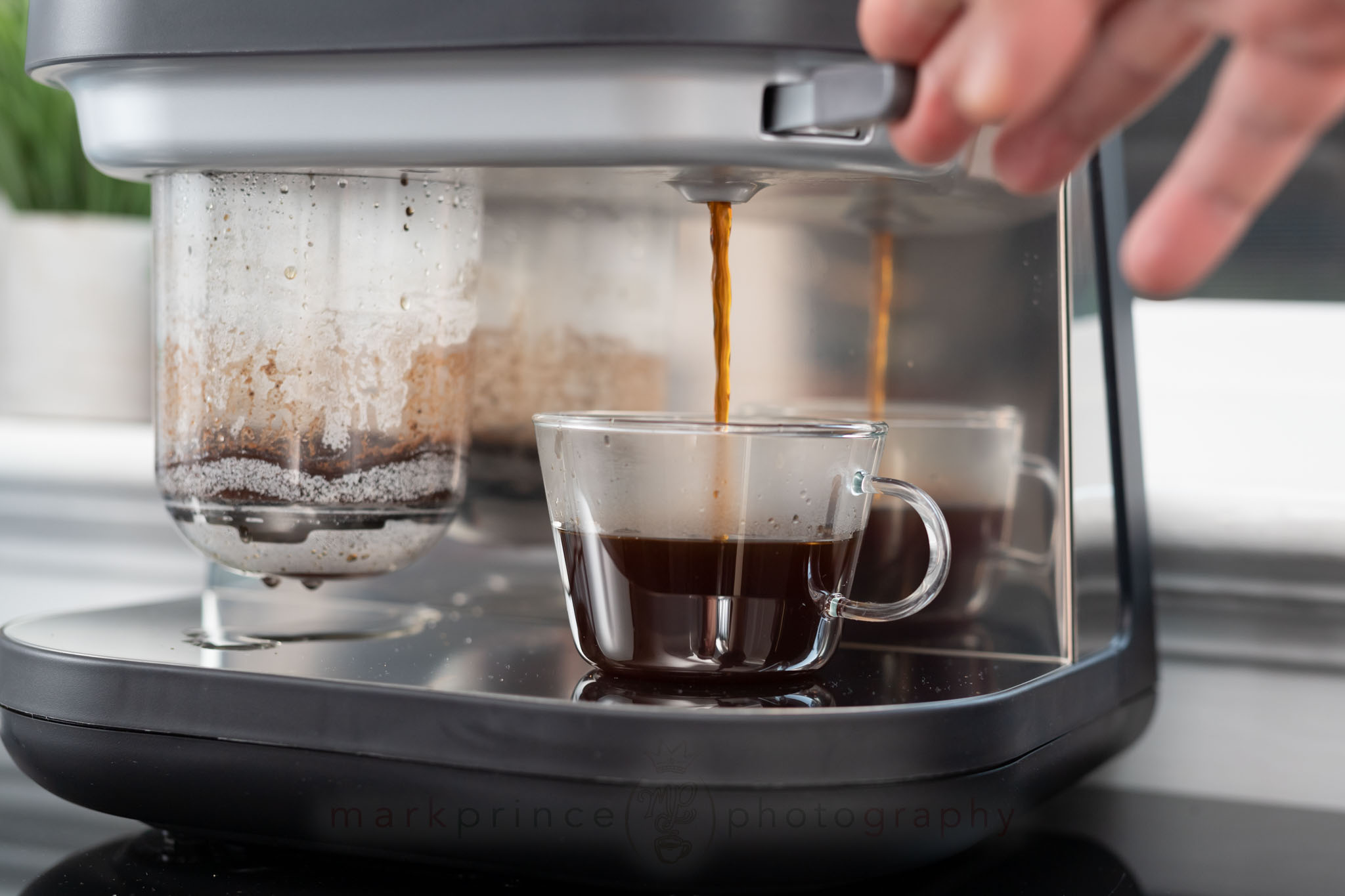
To the right of the start /stop button, on the side of the Siphonysta, is a mechanical lever arm with a rubberized grey grip. This arm simply opens up the flow tube access from the upper chamber of the brew assembly, directing the brewed coffee through a pipe, to dispense into a cup placed on the drip tray cover on the right side of the machine.
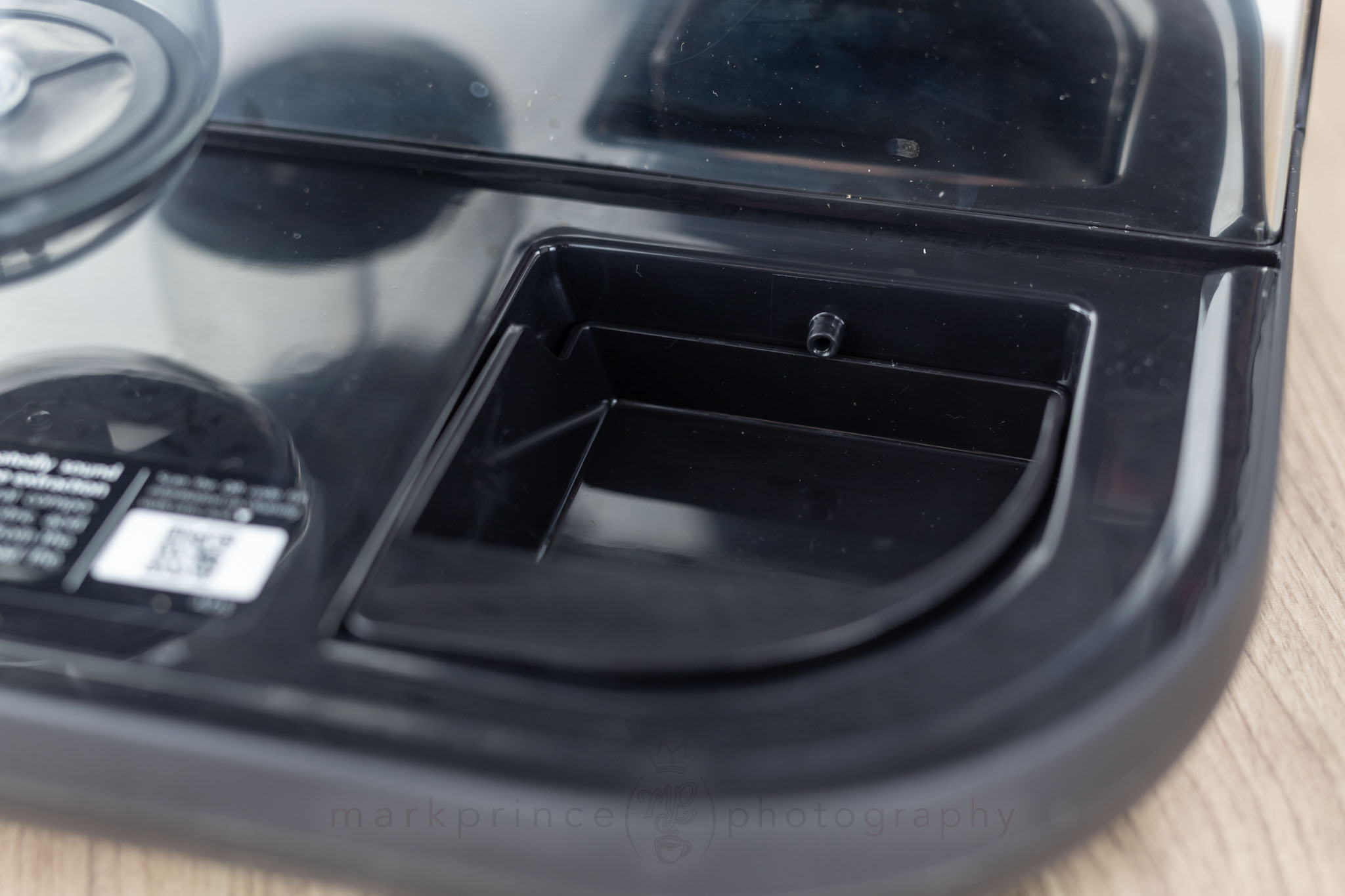
There is a solid, polished steel plate that serves as the “drip tray cover” (for lack of a better description that is removable. It has a single hole on the right side. Removing the drip tray reveals a removable drip tray for catching any spare drips from the coffee dispensing area. There’s also a over-pressure pipe that will feed into the drip tray if the machine has an issue with pressure build up.
When the drip tray cover is removed, you’ll see an instruction for how the Siphonysta senses a calcium or scale buildup, and the warning it will give: two short beeps, repeating every three seconds, after a brew is completed. If you hear this, you will need to run a descaling brew with the machine, using citric acid. It’s pretty straightforward.
The machine’s backsplash plate and drip tray cover are polished stainless steel. I’ve tried my darndest during the full test of this machine to be careful placing cups under the pour spout, to avoid scratching the plate; for the most part I’ve done well, but keep in mind, it will scratch over time.
The Siphonysta sits on four very sturdy and no-slip rubber feet; it stays still on the countertop under most operations. There is no cord storage built into the machine, so if you want to hide some of the 1.45m (4.75ft) of cord, you’ll have to get creative.
As mentioned, some parts of the Siphonysta are dishwasher safe: namely the upper and lower brewing assemblies, and the filter assembly. I’ve been hesitant to run them through the dishwasher, because the plastic seems very likely to get more cloudy and scratched up from running through a dishwasher.
Fully assembled, the Tiger Siphonysta weighs just over 5 kilos (11.1lb). It measures 31cm wide, 24cm deep and 36cm tall with the brewer installed (12×9.5×14.5”). It has a very powerful heating system inside, with the total power draw of the machine measured at 1250W (with a Kill-a-Watt reader). For those that care about this kind of thing, it is entirely manufactured in Japan.

Support CoffeeGeek
If you enjoy and learn from this resource, please consider making a one time or recurring donation to help support our work and fund purchases for future reviews.

First UseTiger Tiger Siphonysta
I watched every possible video I could on the Siphonysta before firing it up for the first time, including every Japanese one out there (thank you Youtube’s auto translate feature!) so I knew going in two things: a) Tiger recommends using 10g of coffee per “cup” (which is 125ml) and b) they recommend using a relatively coarse grind (hence the bigger dose, which is 1:12.5 ratio (wowzers)).
But I didn’t follow their recommendations initially. I did a standard metal filter grind (just slightly coarser than a pour over grind) and went with our tried and true 1:14 ratio for coffee, That’s 18g for the 250ml brew. I also set the machine to the middle settings: Normal for flavour, and normal for brew strength.
My first surprise came from the pump noises. They certainly aren’t loud, but you just don’t expect a pump when brewing siphon coffee. I shouldn’t have been surprised though: this machine has some temperature control built in, and the use of a pump (vs. just relying on steam pressure) means they can control brewing temperatures more accurately. The pump activates, cycles the top chamber brew water through a flash heating system, and delivers it to the bottom vessel holding the ground coffee.
The chamber slowly fills up via a pulsing action of the pump drawing water through the flash heater, and once it reaches its maximum volume, the dwell time starts. Soon, the machine introduces steam through the water tube to create turbulence in the brew chamber, further aiding extraction. Then all too soon, the turbulence ends, a series of gears whirring and clicking takes place, and the brewed coffee is extracted through the filter’s main tube, up through the middle collar, and up to the top vessel, where it cascades down from the top of the chamber.
It’s all quite a show!
The resulting coffee however was weak and thin. TDS’ing that sucker revealed very low numbers, around the 1.05 range. And I knew why: the dwell time was really short: around 10 seconds. That’s not enough time to extract from 18g of coffee using 250ml water. I could see why Tiger recommends a ratio of 1:12.5 instead of our own 1:14, or the SCA’s standard of 1:15-1:17. I can only imagine how weak this brewer would be if you put in only 14g of coffee for a 250ml brew (1:17 ratio).
So my second round with the machine, I used Tiger’s ratio of 1:12.5 (20g for 250ml), and I set the machine to “bitter” for the strength mode (that ups the brewing temperature a bit), and “strong” for the strength button selection (that would increase the brewing dwell time).
3.5 minutes later, I had coffee to dispense. I noted that the dwell time and steam introduction were indeed just a tad longer – maybe 2 or 3 seconds, thanks to selecting the “strong” option.
Wowzers. Okay, this is a really nice and balanced cup of coffee. Ran the DiFluid TDS and hit the magic 1.35 range. That’s not too bad for a 3.5 minute brew, start to finish!
As an aside, this 3.5 minute thing is key here and perhaps one of the biggest selling points of the Siphonysta.
Some may argue that a pour over takes that long too. Well sure, but only if one doesn’t include the kettle heat up times prior. Even the fastest kettles we have here for 110V (the excellent OXO Digital Pour Over Kettle) takes 4 minutes to get 750ml water up to 205F; so using that, and pour over means you get your brewed cup of coffee about 8 minutes after you first want one. With the Tiger Siphonysta, you have a brewed cup 4 minutes after you first initiate the process. That’s not something to sneeze at.
Of course, this thing will only brew 250ml max. Actually, you can brew a bit more – I’ve done 280ml in the top vessel, and it works just fine, but that really is maxed out. The finished cup is around 255ml using that much starting water. For American tastes, that might not be enough. So how about if you want to do back to back brews?
Cleaning the Brewing Chambers
I saw this video review of the Siphonysta and the guy was really upset about how difficult the device is to clean. Well guess what: It is not difficult at all. It’s pretty easy and very fast. I’m really not sure what he was going on about. I can fully rinse and clean the top and lower chambers in about 75 seconds (we timed it). The process is this:
Remove the brew assembly from the machine. Unscrew the bottom portion. Slide the filter out with spent coffee, and gently knock it into your compost container. Run the filter under hot tap water to finish cleaning it out. Rinse the lower chamber. Unscrew the top chamber from the middle collar, remove the dome lid. Rinse the chamber, tubes and lid under hot water – get all areas of it, including the base. Reassemble everything. Done.
You do not have to rinse the middle collar chamber, but if you want, run some water briefly on the top and bottom. Sometimes I do, sometimes I don’t. Once reassembled, the brewing apparatus is ready to use again.
Bottom line: you can do two complete brews on the Siphonysta, start to finish, including cleaning in between, in under 10 minutes. For more deeper cleaning, you can put the top and lower assemblies, dome lid and filter assembly in your dishwasher. Only hand wash the middle collar assembly.
Subscribe to
Coffee Pulse
Join the 12,850 other coffee lovers who receive CoffeeGeek's premier newsletter. Each issue dives deep into one coffee or espresso based subject. Subscribing is free, and your personal information is never shared.
By submitting this form, you are consenting to receive marketing emails from: CoffeeGeek. You can revoke your consent to receive emails at any time by using the SafeUnsubscribe® link, found at the bottom of every email. Emails are serviced by Constant Contact

Support CoffeeGeek
If you enjoy and learn from this resource, please consider making a one time or recurring donation to help support our work and fund purchases for future reviews.
Extended UseTiger Tiger Siphonysta
I soon discovered the best brew available on this machine was by using the strongest settings: Bitter, and Strong. The lighter settings only worked with the darkest roasts I threw at the machine.
Grind settings have to be on the slightly coarser side. Not Chemex coarse, but definitely coarser than what I’d use in a paper-driven V60. And if anything, going higher on Tiger’s recommended 1:12.5 ratio (like a 1:11 ratio of coffee to water) ended up in even better, more fuller brews from the device. I settled in on 11g per 125ml (so 22g for a full brew). The reason is the short dwell times tied in with the coarser grind. Yes, this brewer is using about 5g more coffee per brewing session than a pour over, but the speed, convenience, and cup quality are more than worth the bump in coffee use.
On the Strength and Flavour Buttons
Throughout this review I’ve talked a lot about the strength and flavour buttons, but here is the real meat on this area of the machine. Let’s cover this aspect of the Siphonysta, in depth.
Up top on the machine are three selections for coffee flavour, and three for coffee strength, There’s a seventh button, the machine’s “dual temp” mode, which we will cover later.
The flavour selections are “Acidic”, “Middle” and “Bitter”. All three are perhaps named poorly, because what they actually affect are the brewing temperatures. If I were naming these, based on what they do, I’d call them “Mild”, “Normal” and “Bold” (or “Full”).
Tiger provided me with their lab test numbers, but I ran several temperature tests myself with our lab Fluke thermometer and probes, and got slightly higher numbers than those provided to me by the manufacturer. These tests were conducted with a cold-start machine, and repeated 3 times for each setting. The temperature of the brewing water increases roughly 1C to 1.5C between each selection, starting at 88C, and ending at 91.5C. (192F to 196F).
These temperature ranges are “okay”, but may lead to excessively sour coffee brews if you use very light roasts, which work best in 94-95C brewing environments. I feel in some way this machine was designed for light-medium roasts, medium and especially darker roasts. I would have liked to see a better high end for the “”Bitter” setting, perhaps 95C.
The Strength buttons, “Light”, “Middle” and “Strong” are the second area you can adjust the machine’s brewing parameters with. They control the dwell time for the brew in the bottom chamber, but this timing is also affected by the Flavour setting you choose. What’s the dwell time? After all the water from the top is moved to the bottom vessel, this is the time the full saturation takes place before the machine’s steam pressure and pump system kicks in to filter the brew and move the brewed coffee back up top.
If you set the machine to “Acidic” for flavour, the Light setting gives a dwell time of 8 seconds. Middle is 12.5 seconds, and Strong is 13.5 seconds.
For “Middle” flavour, the dwell times are 10.5 seconds for Light, 11.5 seconds for Middle, and 13 seconds for “Strong”
For the “Bitter” flavour, we measured the dwell times at 10.5 seconds for Light, 12 seconds for Middle, and 13.5 seconds for Strong.
Throughout all testing and tasting, I found myself wishing the dwell times had a wider range depending on which flavour setting you made. I think the Siphonysta would work better as a more rounded brewer, even for the lightest roasts, if the dwell time range was 8 seconds to perhaps 25 or 30 seconds, depending on if you picked Light, Middle or Strong.
The Dual Temp button is interesting. It manipulates water at two different ranges, first introducing it around 90C for the initial extraction, and then basically turning off the heater for the last portion of the brew water introduction. The resulting brewed cup temperature is around 69C, or 155F. The dwell time is still very short, measured at 12 seconds.
We covered this before, but to reiterate: the Dual Temp mode is there for doing a more concentrated coffee extraction for iced brew coffee, and is not meant for hot coffee drinking. Tiger recommends using up to 40g of coffee for this brew (20g if you’re doing the half brew), and dispensing the brew into a cup with ice to dilute it.
Tiger SiphonystaCompared To
It’s difficult to find anything to directly compare this automatic siphon coffee maker to. I suppose I could compare it to a 1940s Sunbeam Coffeemaster C40 model which was fairly automated, but how many people will be buying one of those today? The fact is, there’s no real 100% automated siphon coffee makers on the market in the USA at the moment: there are models that semi-automate the heating and brewing process, there’s the recently discontinued KitchenAid Siphon Coffee Maker, and I suppose that would be a good candidate. (We have one of these units, but by the time we were ready to review it, KitchenAid informed us it was being discontinued).
The most natural comparison is a traditional 3 cup siphon coffee brewer. Fortunately, we have plenty of those. We put the Tiger Siphonysta up against the 3 cup Hario Electric Siphon.
First and foremost, the Siphonysta destroys traditional and electric siphon brewers when it comes to operation time. If you use a siphon’s traditional cloth wick, denatured alcohol burner, get ready for a 25-30 minute brewing session. Even the Hario Electric Siphon’s heating stand takes 25 minutes to heat water up to boiling (they really dropped the ball there btw). If you take 4 minutes to boil water in a kettle, then add it to a cloth wick heated (or electrically heated) traditional siphon, you still need another 2-3 minutes for it to get up to brewing temperatures. So you’ll be 7 or 8 minutes in, and finally ready to do your brew, which takes another 3 or 4 minutes.
That means the fastest traditional siphon brew you could do, brewing out about 300-350ml of coffee, will take about 10-12 minutes, with a kettle assisting. The Tiger Siphonysta does it in 3.5min for a 250ml brew, or 2.5min for a 125ml brew.
Then there’s taste. In this regard, the Siphonysta does okay, but you can definitely get a better brew from a hand crafted, manually controlled traditional siphon. This is because you can control the dwell time for a much better extraction range. We use the 1:14 ratio in our siphon brews, using 25g coffee for a 350ml brew; Dwell time is around 50-60 seconds with two agitation stirs. The resulting cup is darned near perfect, especially when using a pristine cloth filter.
The limitations of the Siphonysta’s dwell time, tied in with the very minimal brewing temperature ranges mean you have to use more coffee and the highest settings to get an acceptable cup. In one focus group, we did three side by side brews with the Siphonysta and the 3 cup Hario Electric Siphon (with a kettle assist); in all three blind sample tastings, the Hario ECS won.
That said, everyone enjoyed the Siphonysta samples; they just felt the Hario ECS, with the hand crafted brewed coffee, tasted better.
The focus group did see the brewing techniques involved in both: the longer operating time, the hands on approach to the Hario ECS, the extra cleaning the filter required, etc,. All three members felt the quality bump in the cup wasn’t worth the convenience and speed the Siphonysta offered, based on the Siphonysta’s good cup quality on its own.
Other factors came into play too: while our focus group loved the convenience, speed, look, and operation of the Siphonysta, once I told them the price, they were a bit shocked. Especially considering they could buy a traditional 3 cup “Ali Express” siphon for under $50.
Indeed, only the price, and the cloudy plastics used in the brew chambers were the main turnoffs for our focus group. Out of the three participants, one said they would consider buying the machine because they loved the concept and overall execution, and felt technologically it was sound enough that it should be similar to the price of a new starter espresso machine. Two others felt it was too expensive for a 250ml coffee brewer; one said if it did double the volume, she would consider buying one.
All three loved the look, how it operated, and one feature was loved more than anything else: everyone loved the way it dispensed the brewed coffee. Even when I downplayed the feature a bit, mentioning it was the most basic mechanical bit on the machine, they didn’t care: the physical act of the lever, the coffee moving from the upper brew chamber to the dispensing area and cup was “magical!” one participant wrote on their form.
How the SiphonystaCan Improve
After using this brewer for over 200 brewed cups, I feel there’s several areas Tiger could tackle to “next level” the Siphonysta.
First and most important: the dwell times and brewing temperatures need a revisit. I’m fine with a 10 second dwell time for the lightest setting, but they need to bump it up to 25 seconds or more for the strongest. I would go with 10, 20 and 30 seconds for the three selections. On brewing temperatures, I’d like to see the range expand to 88C / 91C / 94C for the three selections. On the current machine, the only satisfactory brew setting for the coffees I use is the “Bitter / Strong” selections.
For the dual temp mode, I would go even more extreme on the dwell time: 60 seconds. If its purpose is a concentrated lower temperature brew, the dwell time needs to be extended quite a bit for it to be usable.
Second, they have to use better plastics in the brew and water chambers. Go with Tritan, a tried and true, crystal clear plastic. It stands up to dishwasher use, and doesn’t get cloudy. I have Tritan plastic Rubbermaid kitchen storage containers that are 5 years old, have been through our dishwasher hundreds of times, and still are crystal clear.
Third, and I know this is a challenge, but the brewing volume needs to increase, at least for the North American market. 350ml should be the minimum, and 500ml could be the ultimate target. But this would require a massive redesign, so I don’t think it’s feasible.
Lastly, the price.
I know a good starter espresso machine is in the $500 range. Lots of stuff going on inside. And I also know the Tiger Siphonysta has a lot of things going on inside, that definitely justify the high price. The amount of engineering in this machine is almost staggering and is on par with some modern automatic espresso machines. For me personally, this machine is “worth” the $500 retail price, based on all it does and all the engineering and parts involved.
But for some consumers, $500 for a device that brews 250ml of coffee is not a consideration. (Try telling them there’s lots of $500-$1,500 coffee devices that only brew 45ml of coffee, aka espresso machines!).
I don’t know how Tiger can get this price lower. I suppose if they dumbed the machine down, made it simpler and more basic with way cheaper parts, they could. But they shouldn’t. It’s pretty amazing for what it is, and I’m personally fine with the 250ml brews, especially considering it does it in 3.5 minutes, start to finish.
I’d also love to see options for different types of filters: both cloth and paper filter. This may be something Tiger can easily tackle later on.
Subscribe to
Coffee Pulse
Join the 12,850 other coffee lovers who receive CoffeeGeek's premier newsletter. Each issue dives deep into one coffee or espresso based subject. Subscribing is free, and your personal information is never shared.
By submitting this form, you are consenting to receive marketing emails from: CoffeeGeek. You can revoke your consent to receive emails at any time by using the SafeUnsubscribe® link, found at the bottom of every email. Emails are serviced by Constant Contact

Support CoffeeGeek
If you enjoy and learn from this resource, please consider making a one time or recurring donation to help support our work and fund purchases for future reviews.

ConclusionTiger Tiger Siphonysta
I remember testing an “automatic turkish coffee maker” over a decade ago, and while being impressed the machine could mimic some of the hand-directed elements of doing a double or triple boil for that brew method, the resulting cups from it were no where near the quality from 100% hand crafted Turkish coffee was with an ibrik and practiced hand.
That’s not the case with the Tiger Siphonysta. It really does come close to doing a close facsimile of a hand crafted siphon coffee brew, though you have to up the coffee dose and set it to the highest settings to get there, especially with lighter European and North American roasts. You get really tight temperature controls. You get really good (albeit short) agitation during the dwell time. And like a traditional siphon coffee maker, you get a show as well.
All in 3.5 minutes, cold start to brewed cup. That is easily the most impressive thing about the Siphonysta: it delivers a very good brewed cup of coffee only minutes after you think about wanting one. The finished cup gives a fairly clean, taste rich representation of every single origin coffee I threw at the device too, rivaling the cups I got from traditional pourover and all metal pour over brewers.
The machine is very handsome, with clean lines and a unique look. It’s easy to clean (and even has a built in longer cleaning cycle), and you can do back to back brews on it with about 90 seconds clean up time in between (faster if you rush it).
It certainly can be improved, and our final score reflects the machine’s shortcomings. If it had longer dwell times, a slightly higher capacity and a wider temperature range, but remained $500, I would be scoring the Tiger Siphonysta at possibly 4 out of 5, or higher and grant it a “best of class” badge.
As it stands now, I do recommend this brewer, if you want a close proximity to authentic siphon coffee taste, want your coffee fast, and don’t mind the 250ml max brew size. The $500 price point is high, but the technology inside and uniqueness of function somewhat justify the cost.
The Tiger Siphonysta is available exclusively through Amazon in the USA for $499. Tiger will eventually sell replacement parts through their parts website.
If you would like to see the Siphonysta in action, and happen to be attending a coffee related trade show in the near future, Tiger will be displaying the machine and answering questions at these events:
- Coffee Fest – Los Angeles, Aug 25-27, 2024
- Coffee Fest – Minneapolis, Oct 11-12, 2024
- Coffee Fest – New York, Mar 23-25, 2025
- Specialty Coffee Expo – Houston, Apr 25-27, 2025.
The link above is our Amazon Affiliate link. By using it, you help fund the CoffeeGeek website, which allows us to continue bringing you new content, guides, how tos, and reviews.


One Response
Great review of a very interesting machine. Thank you!