

For years, I’ve put off creating a “best of the year” guide on CoffeeGeek, even though the idea lingered in my mind. The honest reason lies in my own shortcomings: I procrastinated. I believed that to curate a meaningful list of top products that provide beneficial information to you, our readership, I needed firsthand experience with the recommendations — something I often had — and well-developed written content to support those choices for readers seeking more details.
This latter detail is where I fell short. I didn’t consistently produce the content needed to back up the recommendations, and that hesitation held me back from following through.
This year marks a turning point. In 2024, CoffeeGeek experienced its most productive year yet, publishing nearly 90 new articles, reviews, guides, how-to’s, and opinion pieces. Our writing team, the strongest it has been over a decade, dedicated itself to delivering quality content, laying a solid foundation for this list.
Every product featured here has been rigorously evaluated through hands-on testing, extensive use, and, in many cases, long-term ownership by our team. We carefully considered a wide range of categories, selecting standout items that genuinely impressed us. In instances where competition was especially close, we also recognized a runner-up. We also didn’t limit our choices to products introduced in 2024 (with the exception of the first category); we want to present the best products available right now, no matter how long ago they were introduced.
This guide reflects our direct experience with the products we’ve reviewed, used, or owned. While it may not cover every exceptional coffee gadget or match up with everyone’s preferences, that diversity of opinion is what makes discussions about coffee gear so enriching. If your favourites differ from our list, we encourage you to share them in the comments below; fresh perspectives are always welcome.
With all this background in place, I’m excited to present CoffeeGeek’s “Best of 2024” list, selected by the writers of CoffeeGeek. Let’s dive into the gear that made this past year remarkable.
– Mark Prince, Senior Editor
Feature Guide Information
This is the first edition of this guide, and there are no plans to update it; it is our definitive list of the best coffee and espresso gear available on the market in 2024. Any updates will purely be for corrections and availability of our choices.
Subscribe to
Coffee Pulse
Join the 12,850 other coffee lovers who receive CoffeeGeek's premier newsletter. Each issue dives deep into one coffee or espresso based subject. Subscribing is free, and your personal information is never shared.
By submitting this form, you are consenting to receive marketing emails from: CoffeeGeek. You can revoke your consent to receive emails at any time by using the SafeUnsubscribe® link, found at the bottom of every email. Emails are serviced by Constant Contact
Best New Productin 2024
In some ways, our pick for the best new product in 2024 was pretty easy – only a couple of products really stood head and shoulders above the rest – but once we narrowed it down to our two top choices, it became a lot more difficult to choose between them.
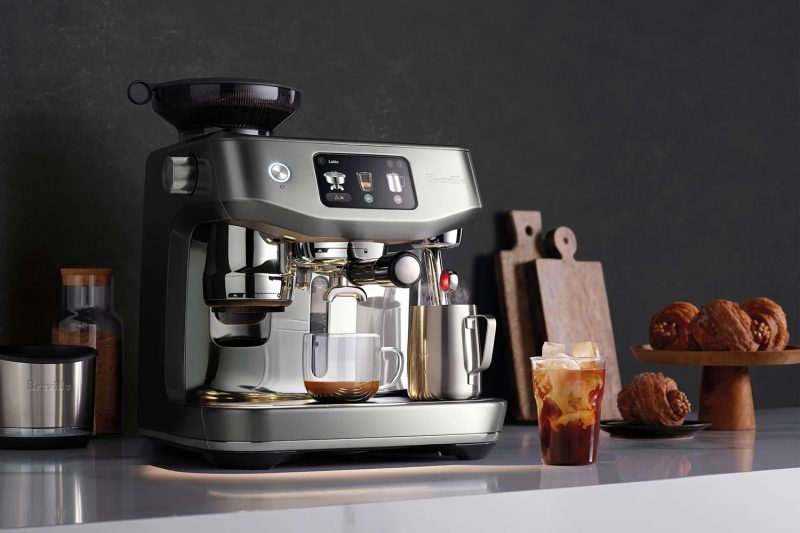
Breville Oracle Jet
This new release from Breville is the pinnacle of all their espresso machine technology development since 2010. It includes all the best from the Barista Line and the Oracle line of machines.
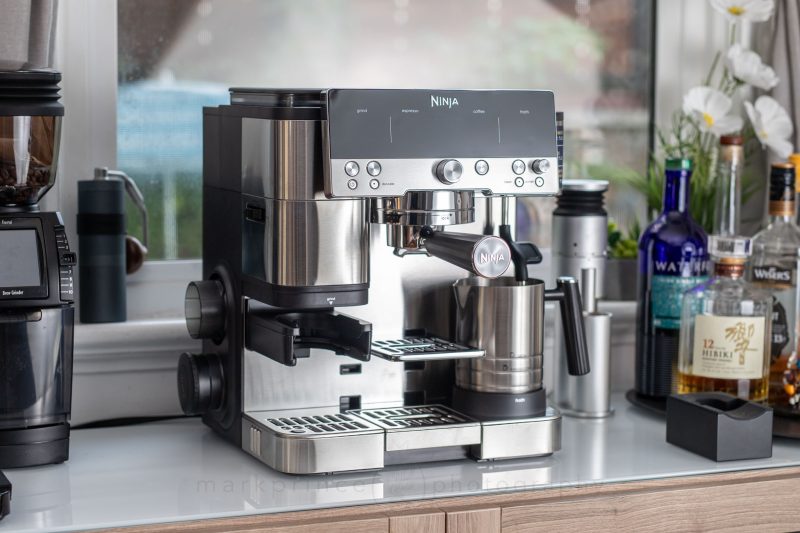
Ninja Luxe Cafe Premiere
A surprise machine out of nowhere, Ninja clearly did their homework on what would make a capable, 2020s style espresso machine with the Luxe Cafe.
Top Espresso Gearof 2024
Certainly, this is a contentious topic, and our picks may not align with your own choices. We based our choices on access and availability to 47 different current day espresso machines, which are either in our testing space, or owned by one or more of our writers. They are categorized into distinct groups to suit different needs and budgets.

Lelit Bianca V3
Our pick for the most well-rounded espresso machine at any price, considering factors like cost, features, durability, and after-sales support.
Breville Bambino+
Read More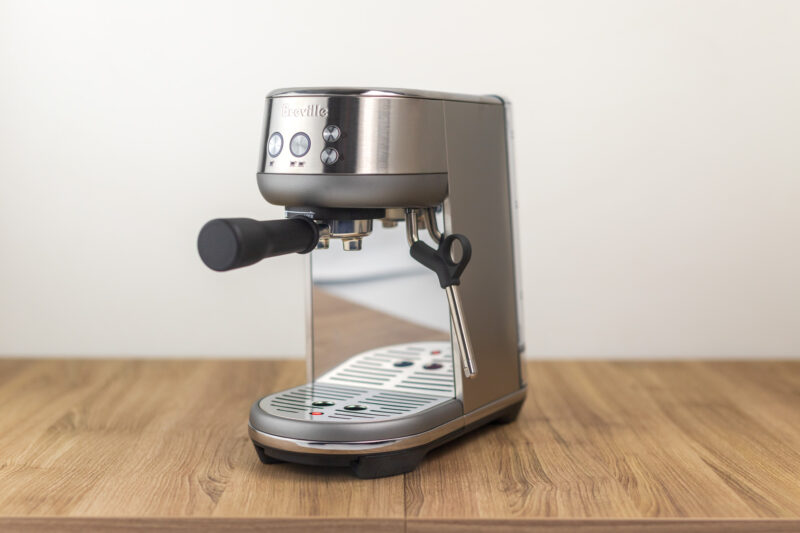
Breville Bambino
Under $400, this machine is ideal for those new to crafting espresso at home, offering a great balance of simplicity and performance.
There is no runner up in this category.

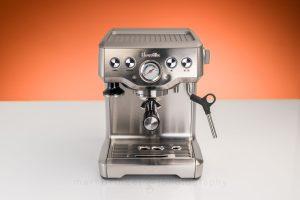


The Best Grindersof 2024
Just like espresso machines, we’ve categorized grinders into a few distinct groups to suit different needs and budgets. Our picks are based on the stable of 51 currently-available grinders we have in our test lab.

Mazzer Philos
Our pick for the best grinder, dollar for dollar, on the market in 2024, one that can handle any brewing method you throw at it.
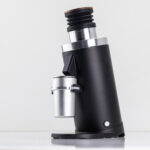
Turin DF64 Gen 2
Read More
Rancilio Stile
Read More
MiiCoffee DF54
With a price cap of $300, this our best choice for an espresso-primary grinder that delivers exceptional control and particle size output.
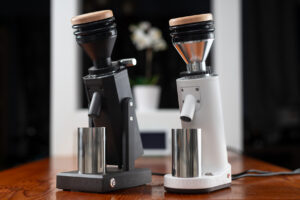
Turin SD40s
Read More
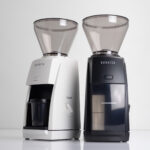

Best Brewers + Accessoriesof 2024
We also want to highlight what we consider the best accessories, kettles, and manual brewers of 2024, though we are keeping this section brief. Each of these represent the best in their class.
OXO Brew Kettle
By far and away the best pour over kettle on the market, all things considered, including price, features, build quality and longevity.

Kruve Propel Glassware
Believe the hype and appeal of these cups: they are engineered, top to bottom, to enhance the espresso drinking experience.

Bookoo Themis
This scale has become the darling of the influencer crowd in coffee, and for good reason: it's better than the previous mini scale, Acaia Lunar.
MHW-3Bomber Mini Scale
Fantastic, fast reading scale with one killer feature - it auto turns on and zeroes out when 100g or more is placed on the scale.

NextLevel Pulsar
Excellent no-bypass brewer that sets the standard for how this particular brewing method can be carried out.

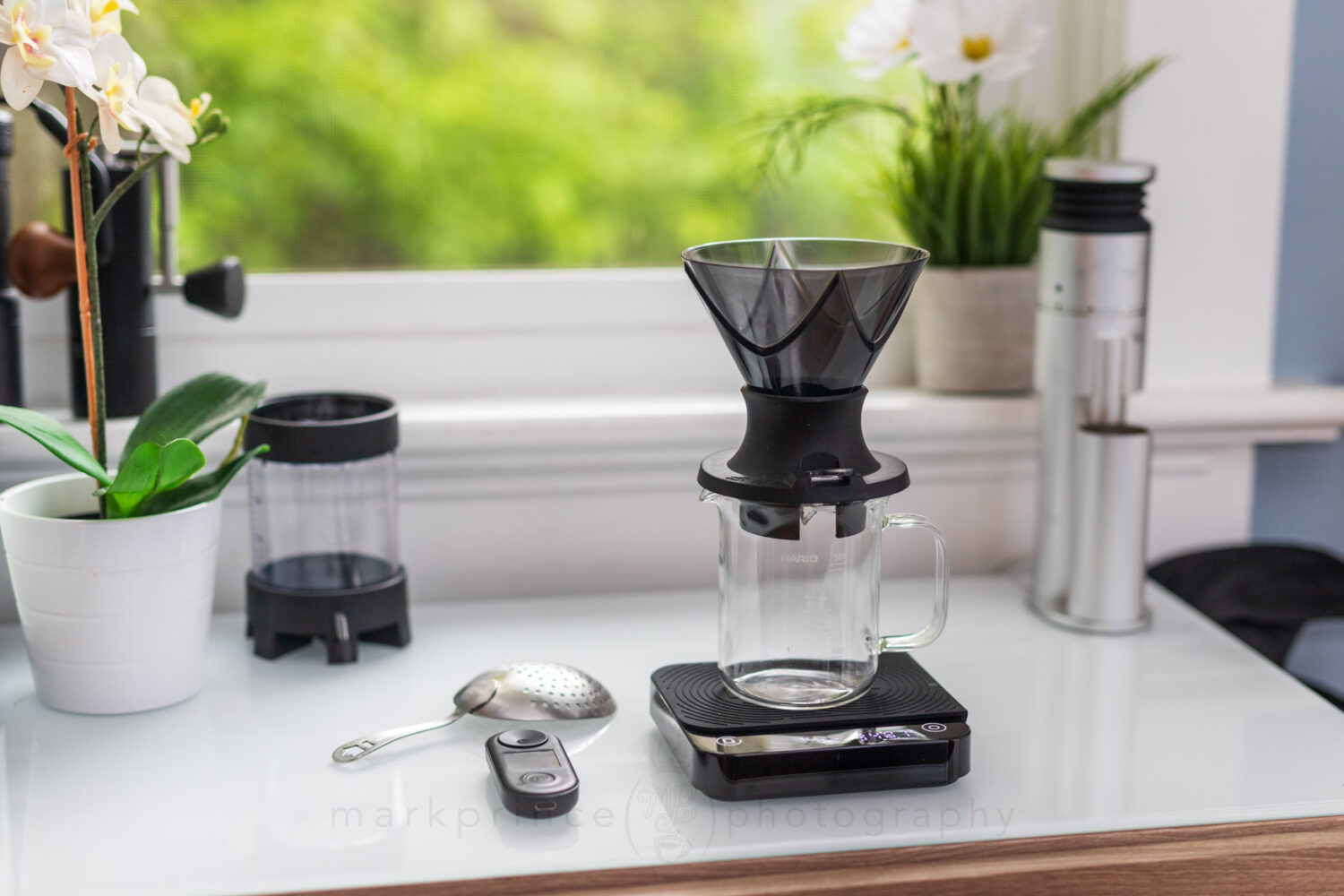
Hario Suiren
A new take on the V60 system from Hario that is is beautiful, functional, and very inexpensive.
Navigation
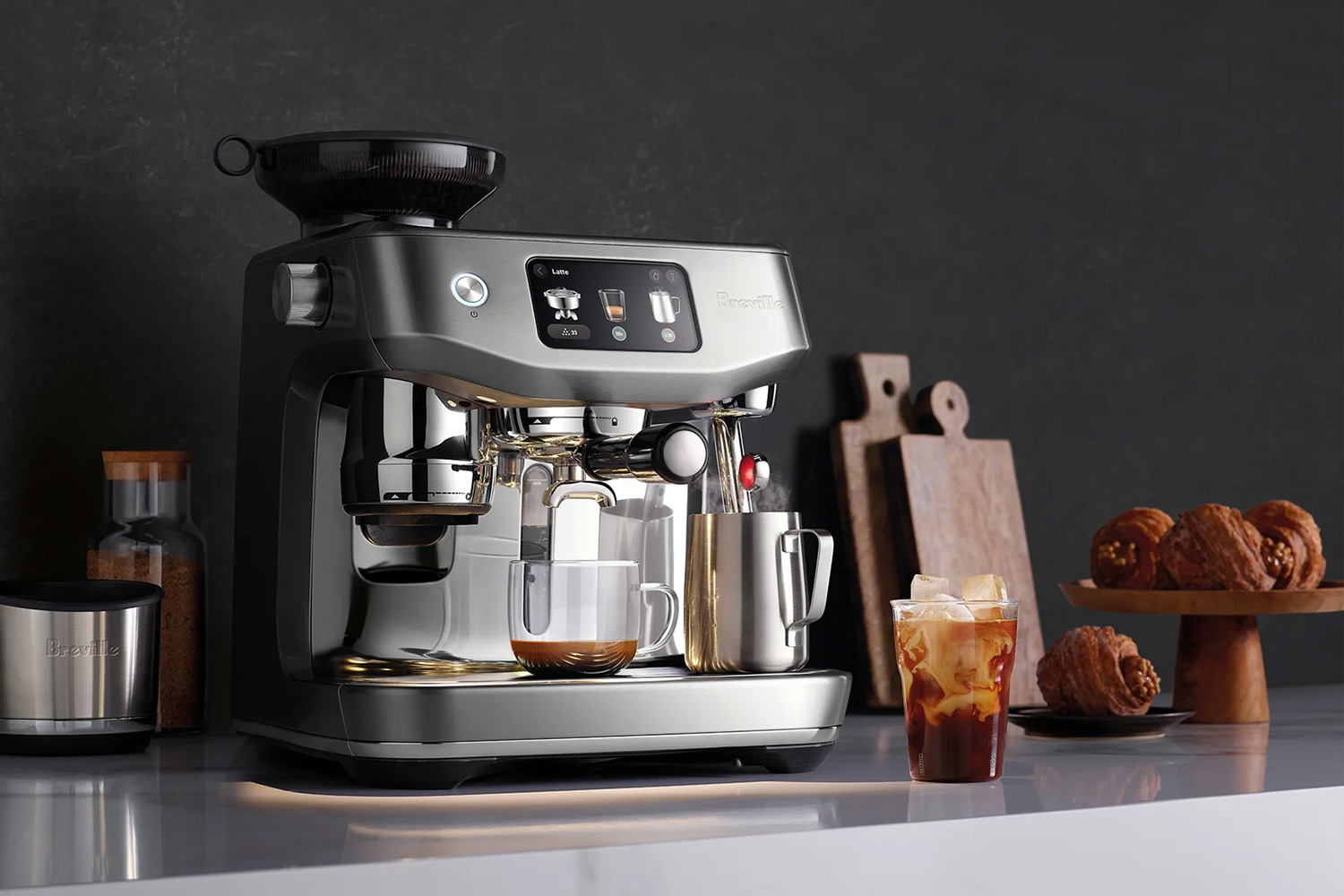
Name: The Oracle Jet
Maker: Breville
MSRP: $1,999 USD / $2,999 CAD
Typical Sale Price: $N/A / $N/A
Features: HD touch screen; dozens of recipes built in; OTA updates; advanced PID control; automated steaming and frothing; dual thermojet with active heated grouphead; programmable volumetric controls; water filter; 3 way solenoid valve; 58mm portafilter; 4 filter baskets; included pitcher, knockbox, accessories.
After much deliberation amongst our team (it was a 3-2 vote!), the Breville Oracle Jet was chosen as the most significant product introduced in 2024, narrowly surpassing the Ninja Luxe Café Premiere. This machine reflects Breville’s ongoing, class leading innovation in the bean-to-cup market and builds upon the foundation laid by its predecessors, the Oracle, and Oracle Touch machines.
Rather than fully embracing the path of super-automatic machines to compete with brands like Jura, Saeco and De’Longhi, Breville has carved out a unique niche. The original Oracle, introduced over a decade ago, combined extensive automation with the perks of a 58mm portafilter and dual boilers. It redefined expectations for what an advanced, fully automatic espresso machine could achieve. Breville later expanded on this concept with the Oracle Touch, integrating customizable drink recipes via a touchscreen interface, setting a new standard for user-friendly traditional espresso machines.
The company extended these features to its Barista lineup, introducing models like the Barista Touch and Barista Touch Impress. These machines offered a wide variety of espresso drink builds – mostly automated – but also had some compromises. For instance, they were built around Breville’s 54mm portafilter and while they have the instant heat and steam capabilities that the Breville Thermojet system offers, they need a lot of manual preheating before being able to brew those 5 star shots.
The Oracle Jet, released in fall 2024, takes the best from the Oracle and Barista lines and adds its own improvements. It features the 58mm group system, Breville’s most advanced grinder to date, and loads of drink customizations and recipes. It also has dual Thermojets, with one dedicated to rapidly heating the brew group. Perhaps most significant, it is Breville’s first machine that can have its software and firmware updated OTA. This is crucial, because other Breville touchscreen machines could benefit from having their software updated, but it’s not possible for the consumer to do so.
The Oracle Jet is the pinnacle of Breville’s excellent developments in consumer espresso machines since the Dual Boiler debuted in 2010. It has a class leading grinder system improved over previous models. The auto-dosing and auto-tamping systems work flawlessly. While its standard 22g doses may feel excessive, switching to smaller baskets—third-party or otherwise—easily achieves the classic 18-19g shots.
Priced at $2,000, the Oracle Jet positions itself as a premium product. However, compared to Jura’s flagship $4,000 Z10 Super Automatic, it offers remarkable value. With superior espresso quality and Breville’s commitment to extended support, the Oracle Jet solidifies its status as a top-tier machine.

Name: Luxe Cafe Premiere
Maker: Ninja
MSRP: $499 USD / $699 CAD
Typical Sale Price: $429 USD / $549 CAD
Features: All in one systems with barista guidance; PID control; automated steaming/frothing system; weight-based grinding and dosing; programmable volumetric controls; water filter; low water warning; 3 way solenoid valve; 54mm portafilter; 2 filter baskets; included pitcher, tamper, and dosing tools.
The Ninja Luxe Café Premiere arrived unexpectedly last summer, marking Ninja’s entry into the upscale espresso machine market. Few anticipated its debut, and even fewer expected it to perform as well as it does. At a retail price of $500 or less, the machine delivers impressive quality and features that punch way above its weight class.
Ninja appears to have done extensive research to understand the espresso market and create a machine that excels in both hot and cold beverages. The Luxe Café Premiere incorporates weight-based dosing with an integrated scale (dosing out around 17.8g for every double espresso grind), volumetric controls, and an innovative thermoblock system that switches off during cold brew preparation. Its “barista assist” mode offers an intelligent and user-friendly experience, while PID temperature controls ensure consistency. The milk steaming system stands out by producing actual cold-frothed milk, an industry first. Ninja even got the espresso ratios right, offering 1:2, 1:2.5 and 1:3 settings.
The machine comes with everything necessary for creating a variety of beverages. Its spring-loaded tamper provides precise and even pressure, while the included dosing collar simplifies grinding and dosing. The milk pitcher features a high-speed whisk powered by a magnetic spinner within the machine. The unusual portafilter supports a range of drinks, with a traditional double basket for smaller volumes and a deep 40g basket for larger drinks like quad espressos and brewed coffee.
Compact and roughly the size of a mid-range super-automatic, the Luxe Café Premiere delivers exceptional drink quality across the board. Whether crafting small or large drinks, hot or cold, the results are consistent and satisfying. The built-in grinder performs well for its class, although the machine notably lacks hot water delivery—a surprising omission given Ninja’s history of feature-packed designs.
Overall, Ninja’s first attempt at an upscale espresso platform is in the “knock it out of the park” category. The Luxe Café Premiere is a capable, versatile system that offers remarkable value and functionality for home use.

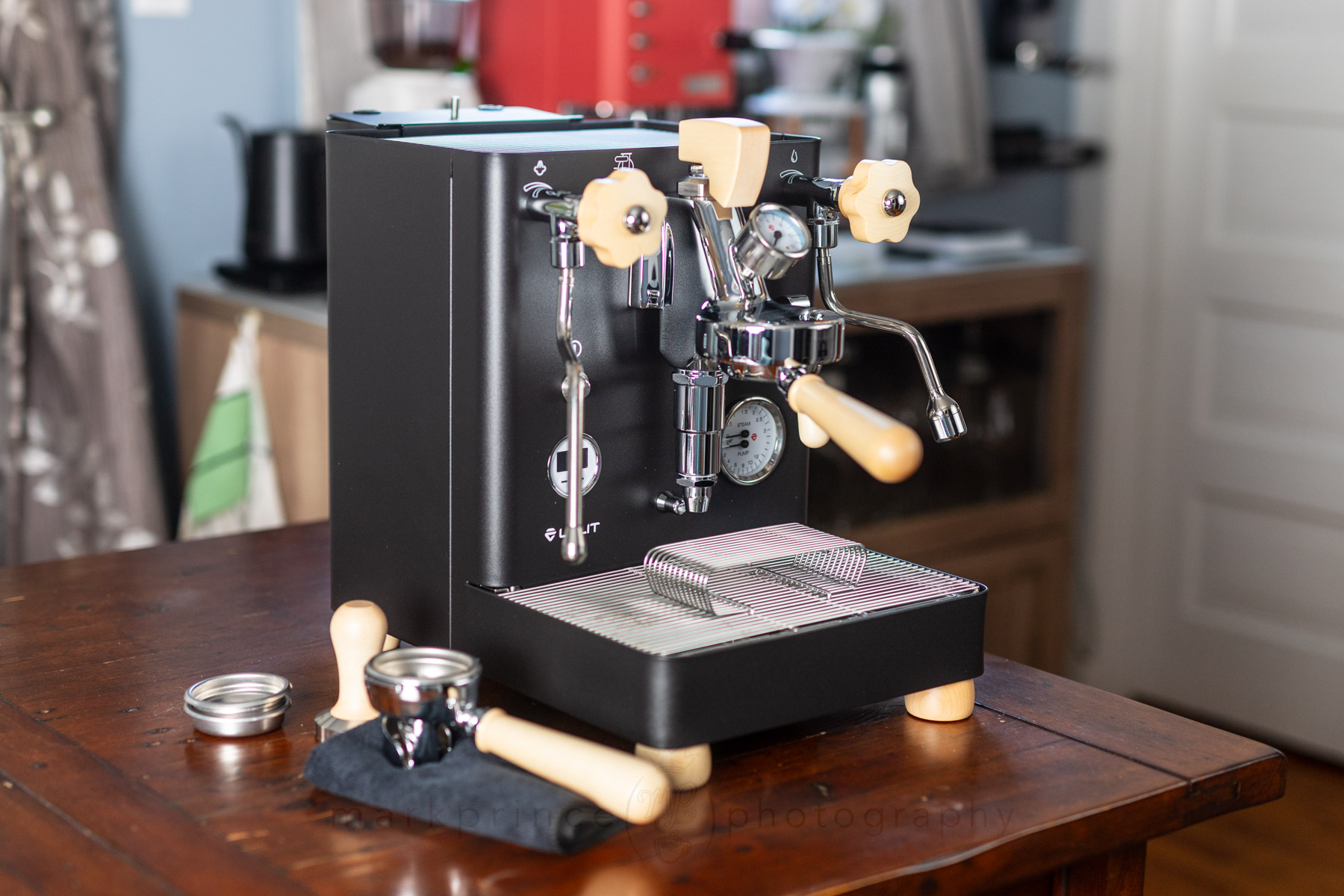
Name: Bianca, V3
Maker: Lelit
MSRP: $2,999 USD / $3,799 CAD
Rare Sale Price: $2,799 USD / $3,399 CAD
Features: Rotary pump; plumb in option; E61 grouphead; paddle system for pressure control; LCC system with advanced programming; low flow shot start / end; programmable pre-infusion; large, positionable reservoir; upgraded accessories; wood accents; chopped PF included; IMS baskets; dual boiler; deep drip tray.
The Lelit Bianca V3 earns its spot as our top espresso machine for 2024. With its E61 grouphead, dual boilers, Lelit Control Center (LCC) controls, and rotary pump, it gives you impressive control over your espresso. Features like programmable preinfusion, low-flow adjustments at the start and end of shots, and real-time pressure tweaks using the grouphead’s wood paddle make it a control-freak’s dream for anyone who loves dialing in the perfect shot.
But what about the Decent espresso machine, you may ask? Sure, the Decent espresso machine might win in programming customizations, but it falls short without a rotary pump. This takes consumer espresso machines to the next level. Rotary pumps deliver stable, consistent pressure and offer a more durable, commercial-grade build that also offers decades of service.
Another Bianca’s standout feature is its ability to be plumbed in. Hook it up to a water line, and you can use line pressure for gentle preinfusion without the pump, giving you even more varied control over flow rates and extraction.
The Bianca isn’t perfect. Its steaming power could use a boost, especially if you’re making large milk drinks. Machines like the La Marzocco GS3 froth milk faster, which might matter if you’re crafting multiple lattes back-to-back.
Still, the Bianca delivers exceptional value. At $3,000, not only do you get all the features already listed, but a premium accessory package few other machines offer. It’s also a fraction of the $9,500 price tag of the La Marzocco GS3 MP, a machine it directly competes with. With recent price cuts for the new color options, it’s even harder to beat.
For its blend of performance, durability, and affordability, the Lelit Bianca V3 stands as the best overall espresso machine this past year, and a worthy choice if you’re looking for that “end game” espresso machine.
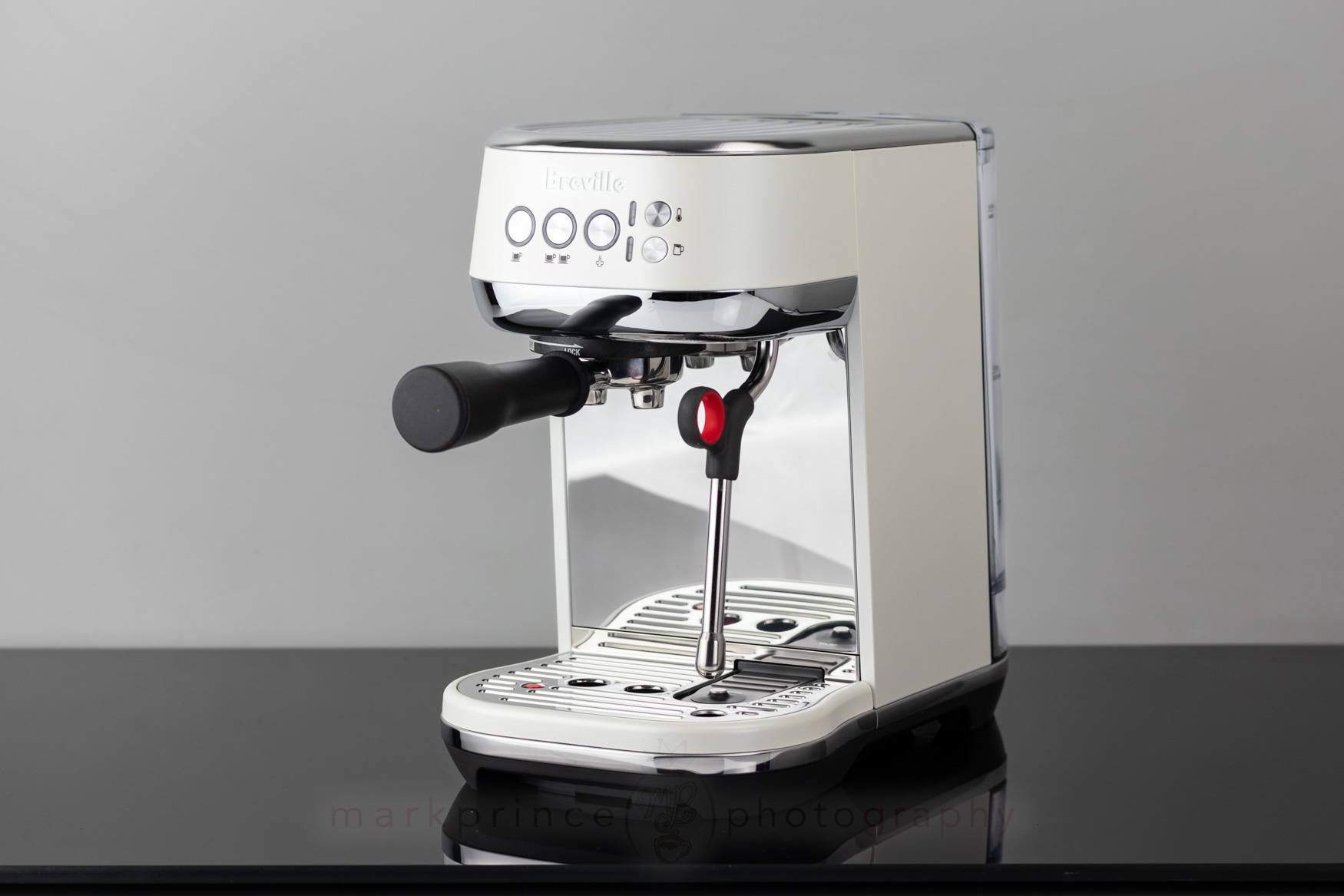
Name: Bambino Plus
Maker: Breville
MSRP: $499 USD / $649 CAD
Typical Sale Price: $399 USD / $499 CAD
Features: PID control; automated steaming / frothing system; thermojet instant on / steam; programmable volumetric controls; low water warning; 3 way solenoid valve; 54mm portafilter; 4 filter baskets; included pitcher, tamper, and dosing tool.
The Bambino Plus machine might seem like a controversial choice (it’s not a $2,500 powerhouse), but it plays in the big leagues. Like the Lelit Bianca, we detailed why this is one of the best machines on the market today in a feature article.
Compact and efficient, the Bambino Plus loaded with advanced features, including a multi-setting auto frother that produces real microfoam. The star is Breville’s ThermoJet system, delivering near-instant brew and steam prep time. Add precise PID temperature control, volumetric shot programming, and a three-way solenoid valve for dry pucks, and you’ve got a serious espresso setup.
The automatic milk frother, with adjustable temperature and texture, makes barista-level drinks easy. Whether you’re into latte art or just need smooth microfoam, it’s reliable and consistent. For more control, the steam wand handles manual frothing with ease. Breville also upgraded the Bambino Plus in 2020 to include hot water functionality through the steam wand.
It features an automated preinfusion mode that you can tweak manually for excellent ground saturation. The 54mm portafilter is mid- to good quality and matches up with Breville’s Barista line accessories including 3rd party options, giving you hundreds of options to customize your setup. Maintenance is simple, with automated cleaning and descaling cycles keeping it hassle-free.
Of course, it’s not perfect. The ThermoJet system doesn’t fully heat the portafilter or internals, so running a couple of blank shots is necessary. The shallow drip tray fills up fast and needs regular emptying. Even so, the Bambino Plus strikes a great balance between performance and convenience, making it a strong pick for anyone ready to jump into the espresso world.
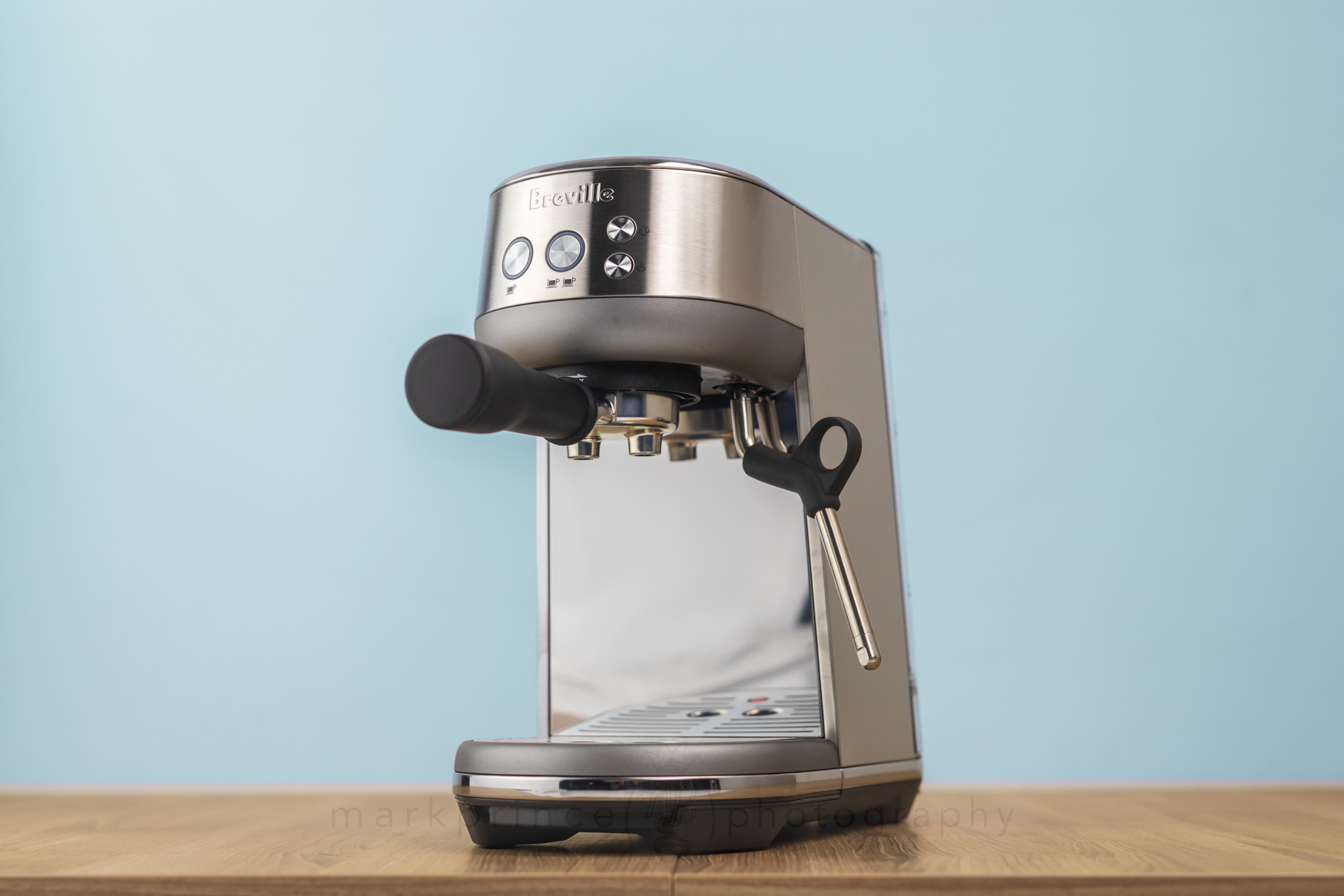
Name: The Bambino
Maker: Breville
MSRP: $299 USD / $399 CAD
Typical Sale Price: $279 USD / $349 CAD
Features: PID temperatures; thermojet instant on / steam; programmable volumetric controls; 54mm portafilter; on demand hot water; auto flush after steaming; auto pre-infusion; 4 filter baskets; included pitcher, tamper, and dosing tool.
Yes, this list is turning into a Breville love fest, but facts are facts: no other major brand in the consumer espresso market is producing better machines across their lineup right now. In fact, brands like De’Longhi, Casabrews and others are chasing Breville constantly.
The Bambino, which – weirdly – was introduced after the Bambino Plus, has about 75% of the features of the Plus model, for around $150-$200 less up front cost. For $300, you’re getting a lot of machine at a budget price.
The Bambino uses Breville’s ThermoJet heating system, so it heats up instantly and switches to steam mode just as fast. In its price range, it’s the best manual steaming option available, delivering steady, dry steam that lasts as long as you need.
This machine is built around Breville’s 54mm portafilter system, which opens the door to a huge range of aftermarket accessories. From tampers to chopped portafilters, it’s easy to customize and upgrade. One smart upgrade is replacing the not-so-great aluminum portafilter with a $25-$30 aftermarket steel chopped version for better durability and performance.
While the Bambino doesn’t include a 3-way solenoid valve the Plus model has, it still has precise volumetric controls that you can reprogram, automatic pre-infusion, PID temperature stability, and manual brewing options. It also has a dedicated hot water button, a feature missing from the Bambino Plus, making it handy for americanos or tea.
At this price, the Bambino offers features you’d expect to find on machines twice as expensive. Pair it with a quality grinder, and you’ll have a setup capable of producing five star espresso shots all day long.

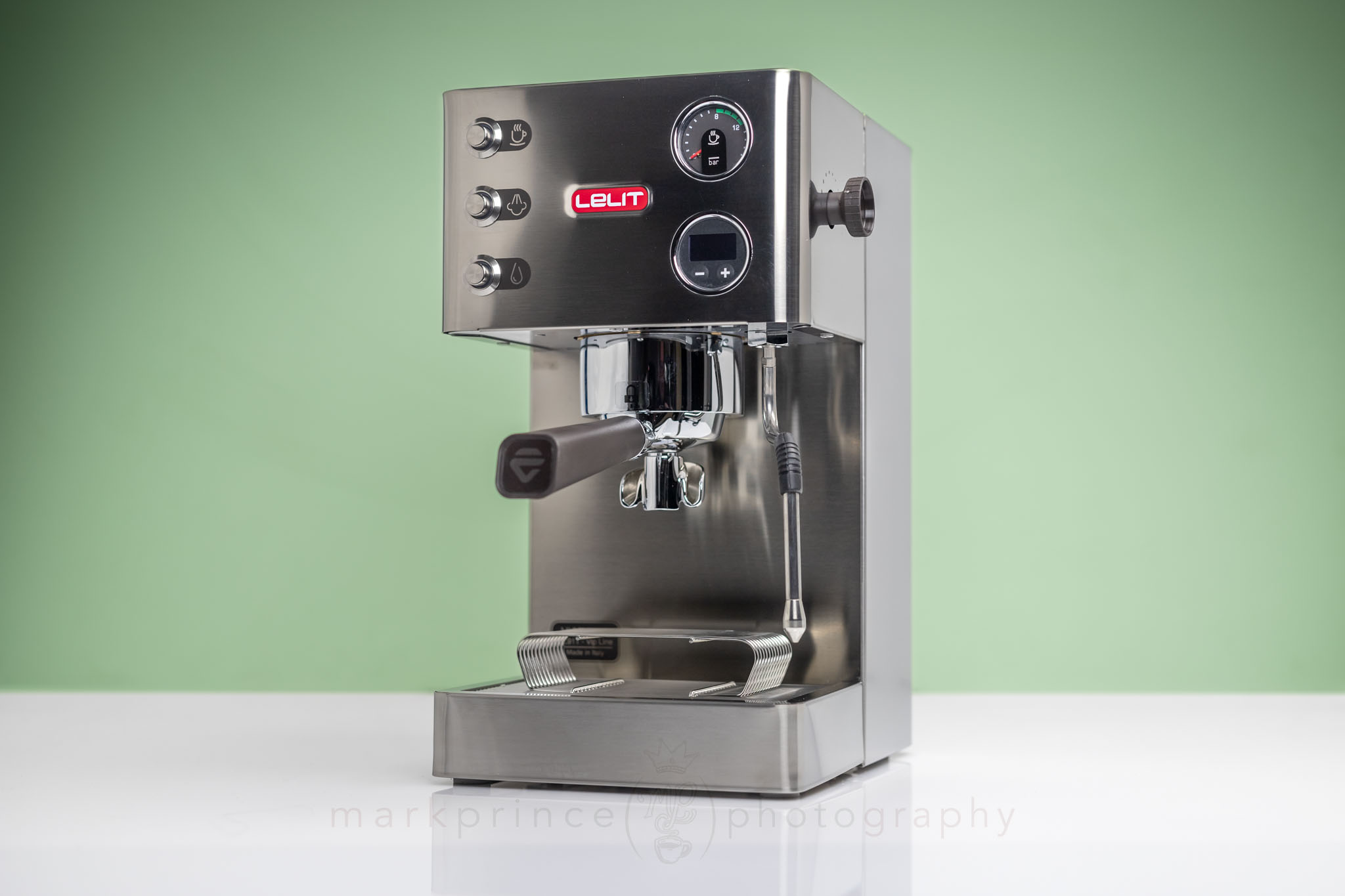
Name: Victoria
Maker: Lelit
MSRP: $999 USD / $1,399 CAD
Typical Sale Price: $N/A US / $N/A CA
Features: Precise PID controls; 1F adjustments; programmable pre-infusion; pressure gauge; hot water on demand; low water warnings; 58mm grouphead; high cup clearance; adjustable OPV; shot timers; upgraded portafilter; auto flush after steaming; 3 way solenoid valve; deep drip tray.
The Lelit Victoria remains a hidden gem. For around $1,000, this single boiler machine delivers performance that outperforms its class. It’s a shame it doesn’t get more love in reviews or on social media.
It’s comparable to the Profitec Go in some ways, but it takes things further with features like on-demand hot water, more advanced pre-infusion and programming options, and smoother, more efficient steaming. Plus, you won’t struggle to fit different cup sizes under its spouts, even with an espresso scale, a real issue with the Go.
Built around a solid 58mm grouphead and upgraded portafilter, the Victoria has a compact footprint but delivers big-machine capabilities. Its shot stability is rock-solid after about 10 minutes of warm-up, and switching between steam and brew modes is impressively quick for a single boiler. An auto-flush feature speeds things up even more. The 300ml boiler may be small, but its powerful heating coils keeps up effortlessly during shots and steaming. Milk texturing is smooth and consistent, with steam performance that is near best in class.
The Victoria’s user experience also shines. The pressure gauge is easy to read, unlike the awkward placement on the Profitec Go, and the Lelit Control Center (LCC) panel is intuitive, providing helpful feedback during shots.
Of course, it’s not perfect. The sound insulation could use some work, and the pump vibrations make cups rattle on the tray—though a few silicone bumpers solve that easily. The water reservoir design is one of the machine’s worst design choices, borrowed from Lelit’s smaller machines like the Anna II, and it feels out of place here. It is also difficult to manage and fill.
Even with all of that, the Lelit Victoria is a performer. It is basically what the Rancilio Silvia should have evolved into. It is very easy to service and repair down the road, a big plus. Lelit is committed to offering a wide range of parts for this machine for the foreseeable future, at fair pricing. This is also a big reason why we picked it as the best midrange machine of 2024.
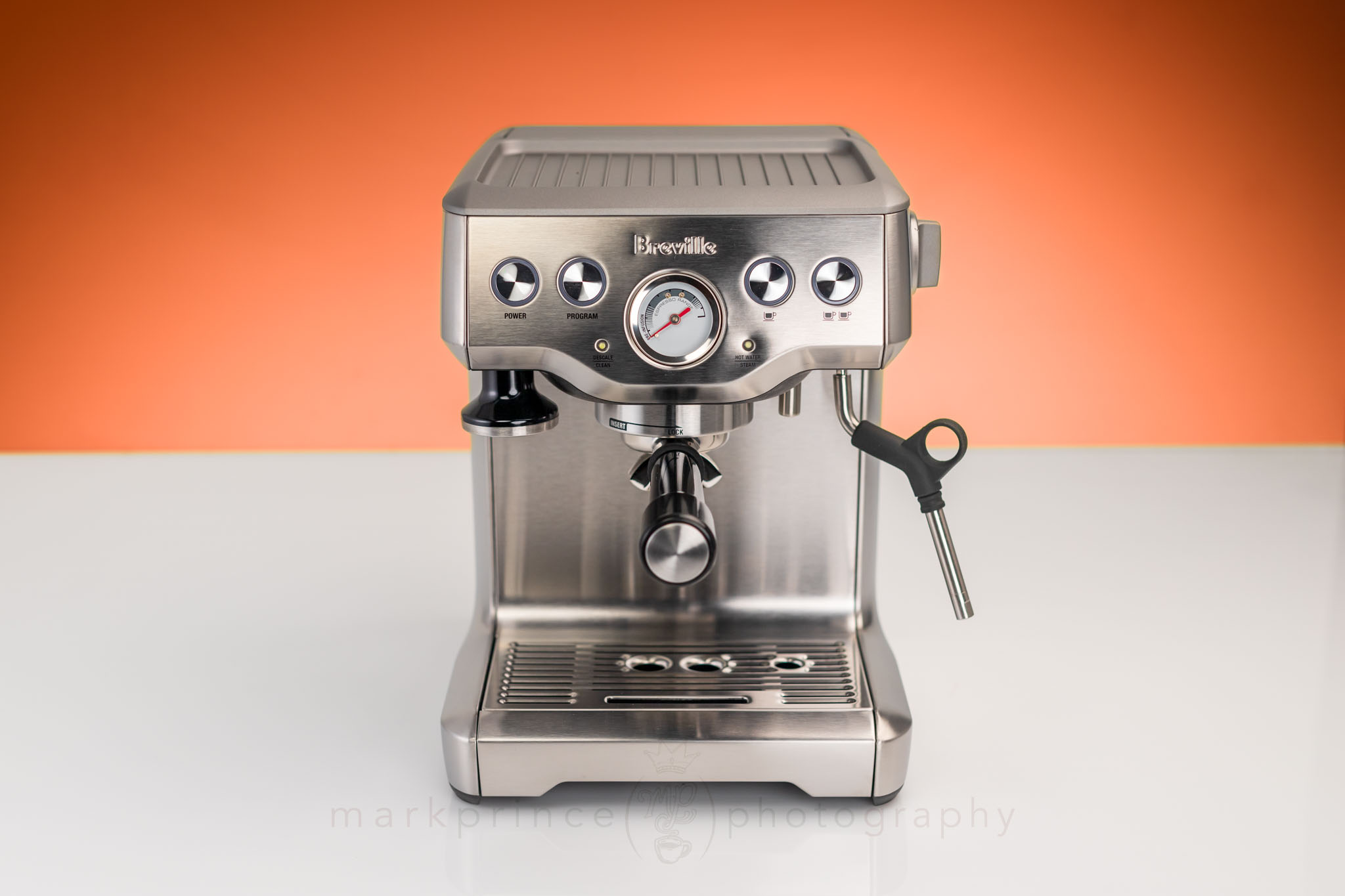
Name: Infuser
Maker: Breville
MSRP: $569 USD / $799 CAD
Typical Sale Price: $450 USD / $549 CAD
Features: Programmable, volumetric controls; auto pre-infusion with manual control; 3 way solenoid valve; on demand hot water; pressure gauge; included magnetic tamper; quick heat up times; auto purge after steaming; PID temperature control with 6 settings; deep drip tray.
This machine choice may stir up some debate, but I stand by it as one of the best options under $600 today. There’s a compelling reason it made the cut: twice last year, sharp-eyed buyers snagged this $540 espresso maker for just $350 during Black Friday and Prime Day deals. At that price, it’s nearly impossible to find a better deal for what you’re getting.
We’re big fans of this machine and cover it often on CoffeeGeek. The Infuser is essentially a Breville Barista Express without the built-in grinder. Considering the Barista Express is the top-selling espresso machine worldwide, that’s no small comparison. But these days, the grinder in the Express feels a bit outdated. Stripping it away leaves you with a machine that does everything else exceptionally well.
The Infuser comes equipped with a PID-controlled thermoblock system, delivering quick, consistent heat and excellent temperature stability with six temperature settings. Unlike Breville’s newer ThermoJet systems, the Infuser’s thermoblock warms the entire machine, including the group head. Once it’s on, ten minutes is all it takes for everything to reach ideal brewing conditions.
It’s packed with sought-after features: precise volumetric controls, a three-way solenoid for backflushing, a dedicated hot water spout, automatic purging after steaming, and automated preinfusion that you can tweak manually. Its compact design looks great on the counter, and it even includes a water filtration system. Maintenance is a breeze, too. We’ve been running three Infusers here, one from the original North American release over a decade ago. After six years, a minor leak was easily fixed with $5 worth of silicone o-rings and ten minutes of tinkering.
At its full price of $540, the Infuser is a standout. Find it on sale for $450 or less, and it’s a steal. Here’s hoping Breville keeps this gem in their lineup for years to come.
Flair 58+ Lever Best Manual Espresso Machine in 2024
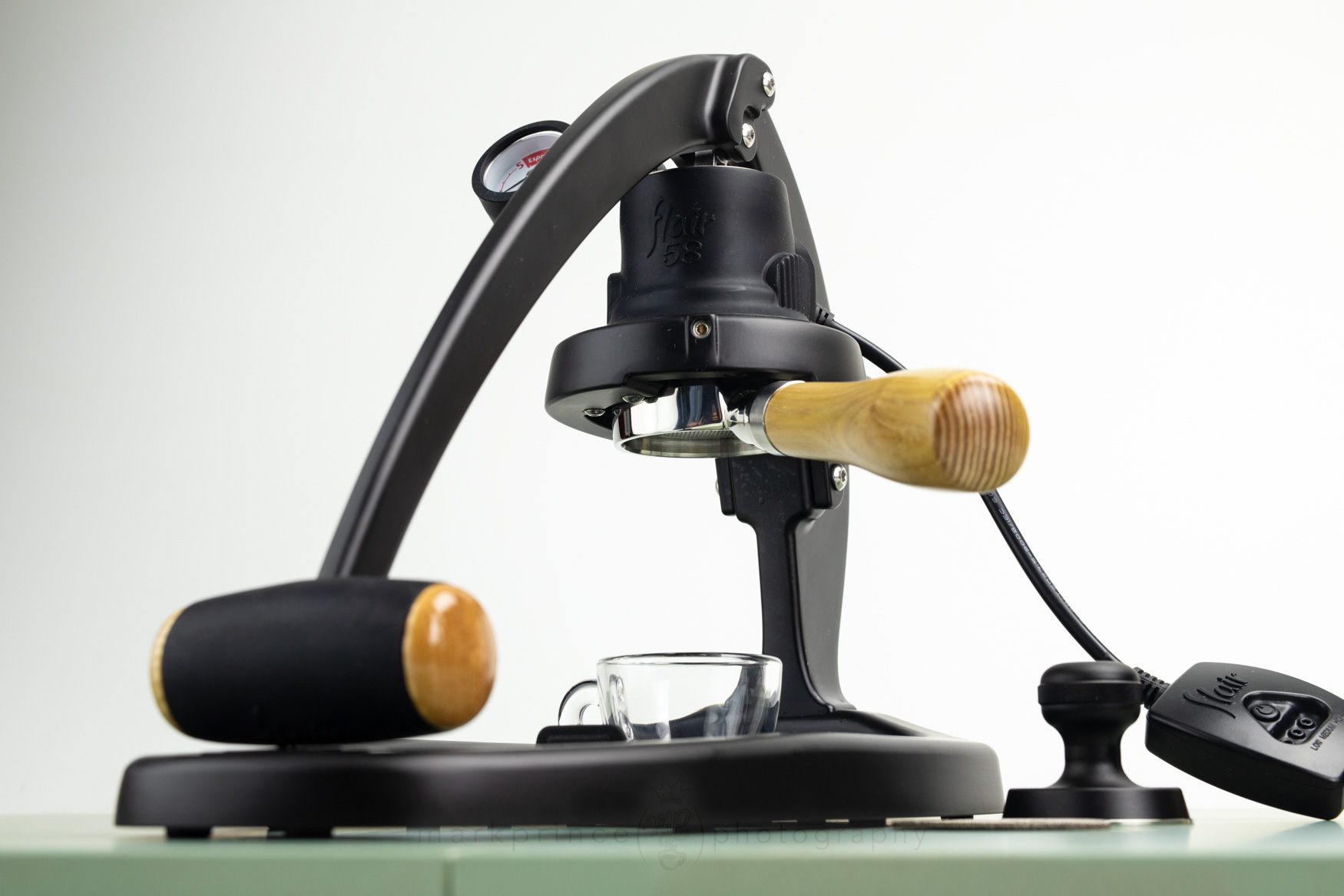
Name: Flair 58+
Maker: Flair Espresso
MSRP: $580 USD / $795 CAD
Typical Sale Price: $480 USD / $650 CAD
Features: Integrated heat adjustment system; 58mm portafilter; integral pressure gauge; passively heated reservoir; optional travel case; long-throw lever; included tamper and puck screen.
NB: none of these links are affiliate links.
The Flair 58+ is our pick as the top manual lever espresso machine of 2024. While earlier Flair designs and models produced great shots, their workflow and design, especially the brew groups and micro portafilters, often held them back. Before the Flair 58 arrived, the Cafelat Robot was our go-to choice for ease of use and shot quality.
The Flair 58 changed everything. Its 58mm portafilter and passive heated water reservoir (which you don’t need to use if using the machine off the grid) bring it closer to the experience of a traditional espresso machine. As someone who owns multiple electric lever machines and nearly every manual lever system out there, I can confidently say the Flair 58 consistently produces the best shots out of all of them.
The visible pressure gauge along with the long reach lever arm are both excellent, allowing precise control over extraction. The ability to use an 18-21g dose in a standard 58mm portafilter is a significant advantage. Temperature stability is excellent. Though it doesn’t heat water from cold, the system keeps brewing water stable once you’ve added it from a kettle, ensuring consistent results.
What makes the Flair 58 so impressive is how smooth the workflow feels. It’s easy to brew multiple shots back-to-back, much like using a traditional electric espresso machine. For around $600, this machine has the capability of delivering some of the best espresso you will ever taste.
We’re excited to revisit the latest version, the Flair 58+2, later this spring. The new model adds features like integrated power and temperature settings, a vastly improved power brick, better parts, and a shot mirror. We’ll review it to see how it builds on an already outstanding design by Flair Espresso.
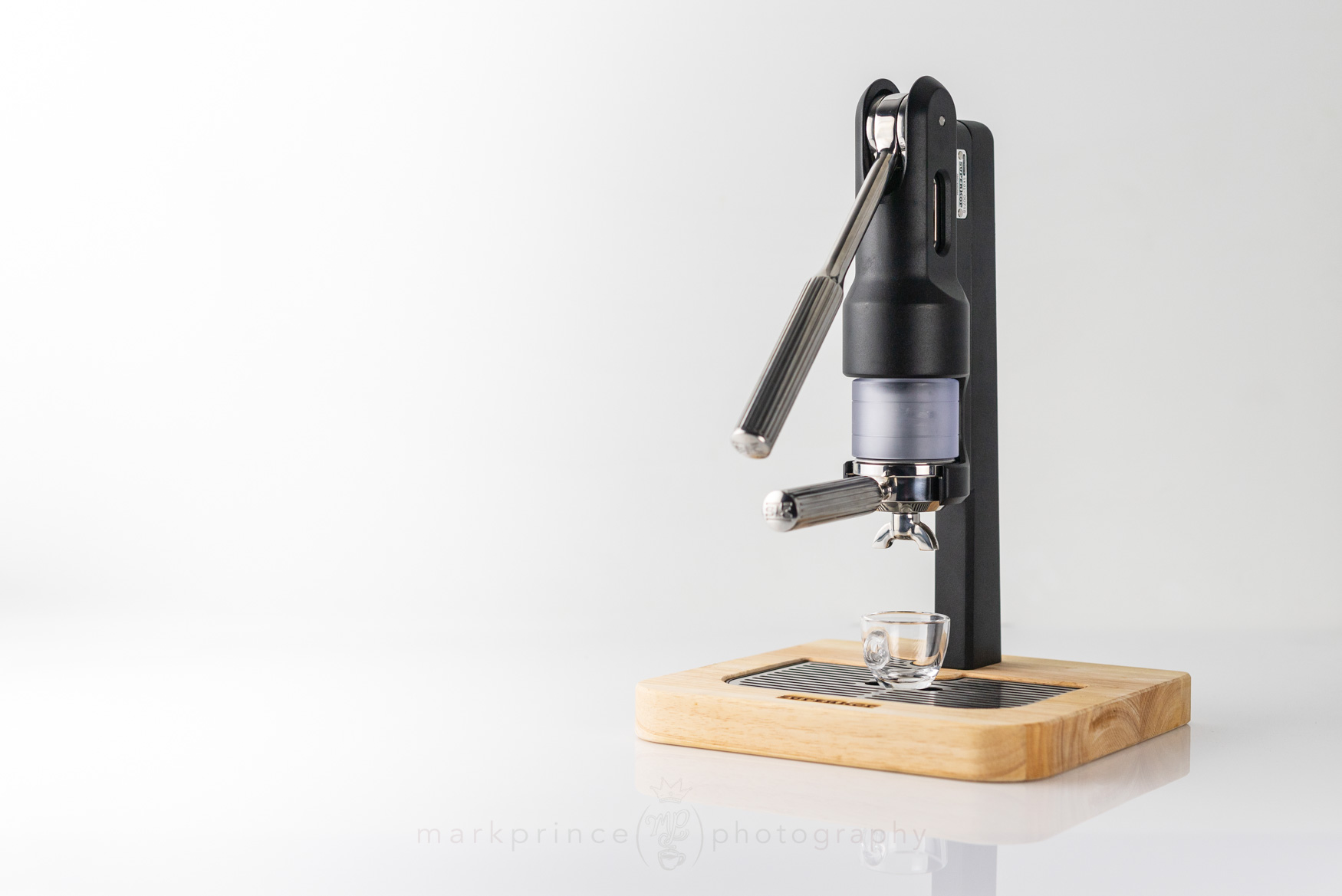
Name: Superkop Lever
Maker: Superkop
MSRP: $799 USD / $999 CAD
Typical Sale Price: $699 USD / $849 CAD
Features: ratchet lever system; 58mm portafilter (no bayonets); thick water reservoir; wall mountable; can control pressure application; included heavyweight wood base; very low maintenance; easy back to back shots.
I’ll let you in on a secret: if I had to choose between the Flair 58 and the Superkop, I’d pick the latter, for one reason: wall mounting. The Superkop can be wall mounted and it’s the only espresso machine available today that you can do that with. That said, while it is a fantastic espresso producer, the Flair 58 still beats it on overall taste and shot consistency. I think if the Superkop had a pressure gauge, that might actually take it to the next level, and next year, our choice in this category might be reversed.
Priced between $700 and $800 now (down from $1,000), the Superkop uses a clever lever and ratchet system, much like a car jack, but flipped in function. You pull the lever down to create pressure, repeating this six times for a full shot. The speed of each pull gives some control over pressure flow, though a pressure gauge would make dialing in shots more precise. It is also very easy to operate, and can produce back to back shots with ease.
The machine features a 58mm bayonet-less portafilter, paired with a sturdy, insulated water reservoir that sits atop the portafilter. This setup allows for impressive espresso extraction, and it’s fully capable of producing those five star shots we’ve referenced a few times. The reservoir, though quite durable, is perhaps the machine’s shortest lifespan component. It’s smart to pick up a spare or two when you purchase the Superkop, if you plan on using this machine for decades to come.
It is a very functional work of art, whether you use it with the included (and huge) wood base, or decide to wall mount it (yes, you want to wall mount this, trust me). One that starts up conversations from visitors to your house, and one that delivers superlative espresso.


Name: Philos
Maker: Mazzer
MSRP: $995 USD / $1,395 CAD
Typical Sale Price: $N/A / $N/A
Features: Single dose, hopper door; magnetic catch cup; 400w motor; auger feed system; custom 64mm burrs with optional set; knocker; stepless grind convertible; 6 micron adjustments; all metal construction; high-commercial grade quality.
NB: none of these links are affiliate links.
Mazzer, after several years of development finally released their first true consumer-market grinder, the Philos, and they ticked almost every box in the positive column with this $1,000 powerhouse. One month of testing was enough to choose it as the best grinder in 2024. In fact, this is becoming our lab-standard espresso grinder, it is that good.
Based on 64mm burrs, rotating on the vertical plane, and fed with a bean crunching auger system, the Philos feeds broken up beans at a very even rate ensuring uniform grind distribution and even grind rates. The newly developed burrset – the i200D – boosts the quality of the grind particle size output even further, and is well suited for just about every brew method, from turkish to press pot. Cup clarity and enhanced sweetness perception is par for the course with these burrs.
If you want a more traditional style burr set for medium or dark roast coffees, Mazzer also offers the i189D burrs, and they are easily swappable.
The grinder is stepped with 145 settings jumping a scant 6 microns in particle size per click. But you can easily convert it to a fully stepless grind if you like. Retention is very minimal in this design, but Mazzer also includes a “dose finisher” tool housed right in the front of the machine, to get the last stray grinds out. The 400-watt asynchronous motor, operating at 1,600 RPM (60 Hz) is robust and built to last decades.
Like all products, it is not perfect. It’s pretty big, occupying a large footprint on your counter. Some have complained about plastic parts in a few areas (we don’t share that complaint). The stepped dial is in the back of the machine and depending on your counter design, might be hard to access. On the brushed metal model, the dial is sometimes hard to read in certain light.
But this is one of those “end game” products; buy this, and you’ll probably never have to buy another coffee grinder, no matter the brew method you do most. Our First Look and Full Review are on tap for this year.
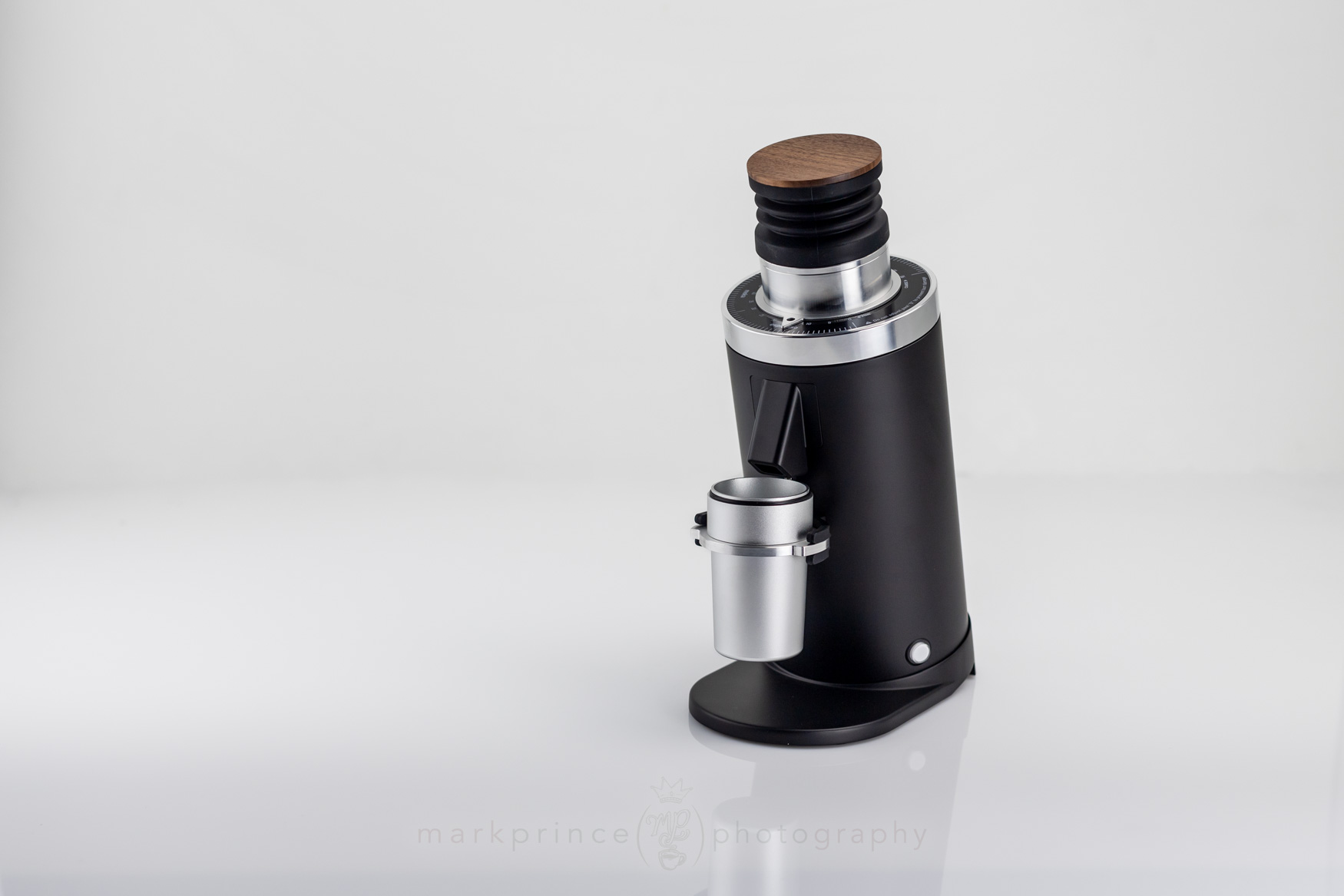
Name: DF64 Gen 2 Grinder
Maker: Turin
MSRP: $399 USD / $549 CAD
Typical Sale Price: $379 USD / $500 CAD
Features: Single Dose; bellows system; anti-pocorn device; ionizer / plasma coil; included dosing cup; stepless grind adjustment; butterfly spring tension collar; wood lid; all metal construction, 64mm flat burrs, DLC upgrade available; SSP burr compatible.
It took a while and many iterations of the original DF64 grinder, but the Turin DF64 Gen 2 is a polished and evolved version of that ground breaking (at least on price) grinder, making it a very worthy multipurpose, single dose grinder to consider for your home coffee setup. At $400, this grinder comes close to matching the output quality of our top pick in this category, at $600 less in cost.
The DF64 Gen 2 has some features the Philos does not, including a built in plasma coil for reducing static. Another feature is a fork system that can be used to grind directly into most 58mm portafilters, though many opt to grind into the included dosing cup.
Build quality is stellar: everything is metal, with excellent fit and finish. The grinder is steplessly adjusted, with clear indications on the grind selection dial. Burr alignment, an issue with previous DF64 models, is a non issue on this model with its butterfly spring system holding the burrs in place.
The standard burrset included with the DF64 Gen 2 is excellent quality but Turin offers an upgrade to DLC coated burrs. Out of the box, the grinder does an excellent job for all standard brewing methods. For those hyperfocused on specific brewing methods, aftermarket $250+ SSP burrs are available for this grinder.
The main negative for this grinder is it gets pretty loud under grind load. Since it is a very fast output grinder, the noise doesn’t last very long. Recently, the dosing cup has changed to a black plastic model, but the grinder now comes with an angled silicone seat to bring it closer to the grinds chute.
Pair this grinder up with any espresso machine from $250 to $9,500, and you’ll be producing world class espresso shots.
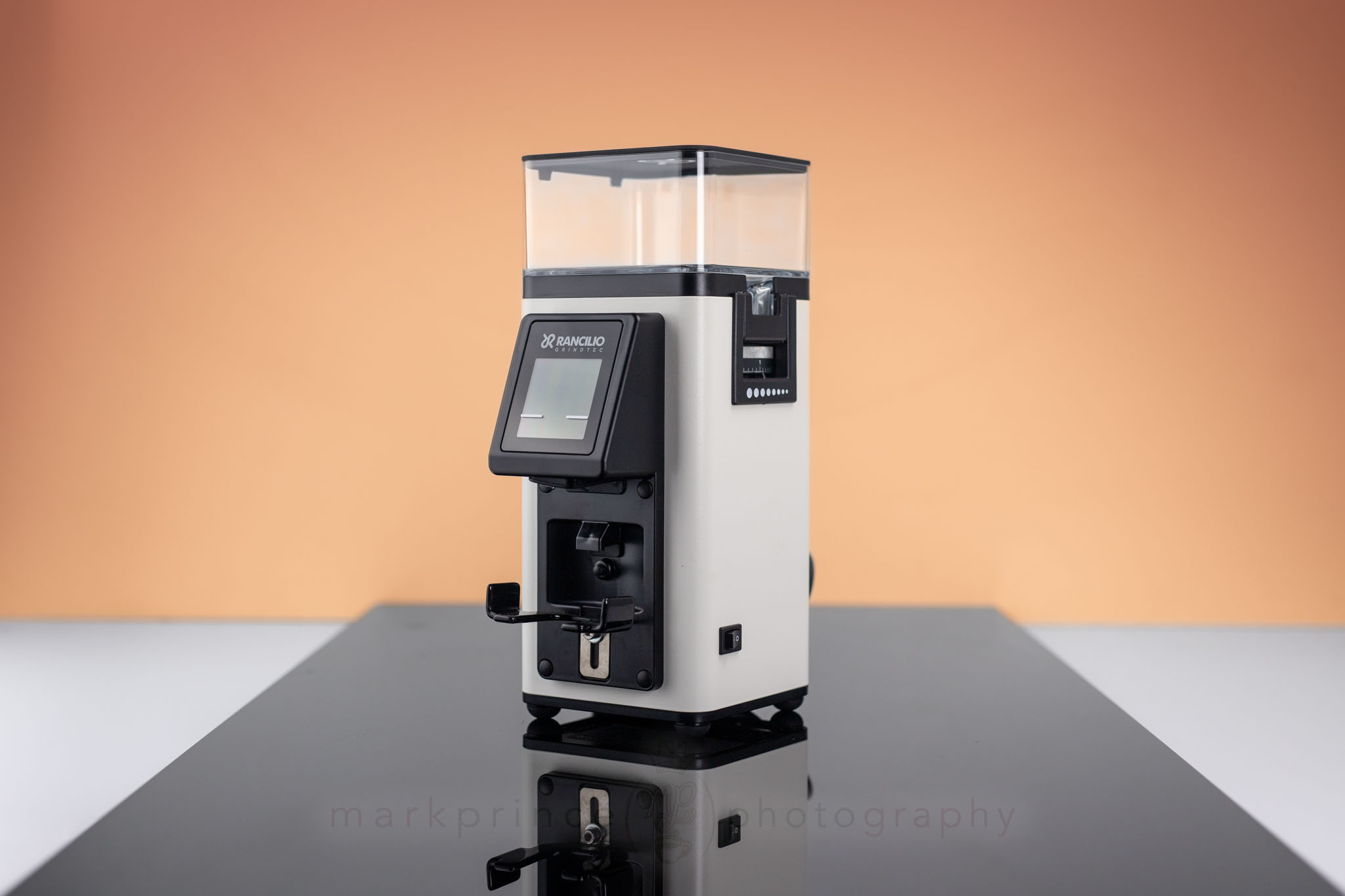
Name: Stile
Maker: Rancilio
MSRP: $650 USD / $915 CAD
Typical Sale Price: $600 USD / $849 CAD
Features: On demand grinder; digital timer based (0.1sec); 58mm flat burrs; very fast (+2g/sec); powerful motor; removable hopper with bean door; auto start ability; portafilter activated grind; quiet; small footprint; heavy torque.
Mark writing this: In 2024, the Rancilio Stile became my new favourite grinder, despite initial doubts. Before getting one, I bought into a few negative Amazon reviews, but once I started using it, it was clear to me those reviews missed the mark. I liked the Stile so much that I paired it with the Lelit Bianca for nearly six months, and it was more than capable for that task. Now, it serves as our secondary espresso grinder in the lab.
The Stile benefits from a proper break-in period—more so than most flat burr grinders. After running about 7kg through it, the timer-based dosing output became incredibly consistent, varying by just 0.2g per dose. The fluffy, even grind it produces is a highlight, making it ideal for dosing directly into a portafilter. It’s also fast, grinding 18.5g in about 8.2 seconds, and quieter than the Philos or DF64 Gen 2. The motor’s torque-rich start, triggered when you push the portafilter into the cradle, adds to the confidence levels.
At $650 for the original Stile, or $540 for the timer-free Stile SD model, this grinder is a solid choice for espresso enthusiasts looking for speed, consistency, and performance.

Name: DF54
Maker: MiiCoffee
MSRP: $229 USD / $330 CAD
Typical Sale Price: $229 USD / $310 CAD
Features: Single Dose; bellows system; anti-pocorn device; ionizer / plasma coil; included dosing cup; stepless grind adjustment; butterfly spring tension collar; wood lid; all metal construction, 54mm flat burrs; SSP burr compatible; quiet.
Other than the Philos, The MiiCoffee DF54 is a standout star out of all the grinders released in 2024. It is essentially a shrunken down DF64 Gen 2, complete with the plasma coil system to reduce static, stepless grind adjustments, anti-popcorn device, excellent motor system and all metal construction.
It’s the price that just makes this grinder next level: at $240 or less, it is one of the best bang for the buck grinders on the market today.
We’ve selected this as the best entry level espresso grinder, but truth is, the DF54 can tackle all your grinding needs. The burrset is tuned for espresso, but in our testing so far, it is more than capable of doing an acceptable brew grind. It is a single dose grinder so you won’t be doing large batch-brew grinds on it; max dose size when using the bellows is around 30-35g. The included burr set is excellent quality (especially for espresso), and like other DF grinders, there are aftermarket versions available.
Pair this up with our choice for entry level espresso machines, and you’ll have a home kit that rivals $3,000 setups from 10 years ago.

Name: SD40s Grinder
Maker: Turin
MSRP: $199 USD / $299 CAD
Typical Sale Price: $199 USD / $279 CAD
Features: Single Dose; bellows system; included dosing cup; near stepless grind adjustment; wood lid; all metal construction, 40mm conical burrs; angled grinder.
At just $200 or less, the Turin SD40S single dose grinder is a fantastic conical burr grinder optimized for espresso output; all other options at this price point or lower simply cannot match what it offers.
The all metal construction and updated grind selection collar make it our choice as runner up in this category. Conical burrs are considered better for espresso output than flat burrs, and the 40mm cones inside the SD40s are more than up for the task. The grinder is fast, quiet, easy to adjust, and in a pinch, can also be used for other brew methods. Where most grinders in this price range are plastic-fantastic, the SD40s is nearly all metal.
There is one serious negative with the grinder: the way the power button works is frustrating. Quick presses on it often achieve no result; you have to press and hold it for a half second or longer to turn the grinder off. It also lacks any kind of anti-static functions (the DF54, at $40 more, does offer this), so to get optimal results, you have to RDT your coffee beans.
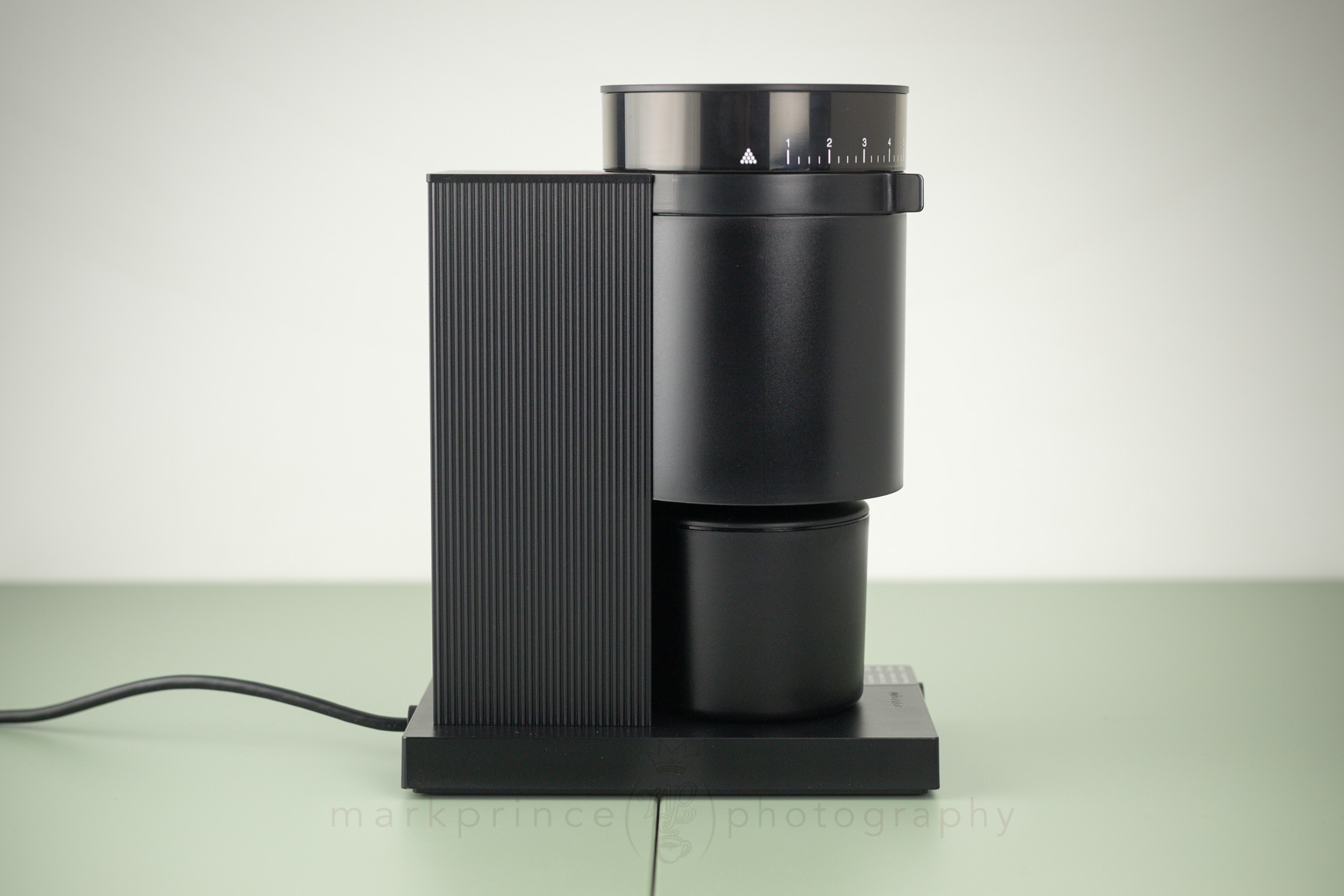
Name: Fellow Opus
Maker: Fellow Products
MSRP: $195 USD / $265 CAD
Typical Sale Price: $165 USD / $229 CAD
Features: Single dose (large volume) grinder; 40mm conical burrs; 41 settings plus internal adjustments; quiet; convertible dosing cup; magnetized dosing cup; all plastic construction; 4 stage digital timer; reduced static and retention; lid acts as bellows.
Fellow’s track record with coffee grinders is… dubious. Their flagship model, the Ode, failed to deliver on a lot of its Kickstarter promises, and the Ode II model, while improved, still cannot do espresso grinds properly. This isn’t the case with Fellow’s new budget-entry grinder, the Opus model. It definitely can dole out a proper espresso grind, but also easily tackles all your main coffee grinding needs.
Priced at $195, it is an easy entry point into the quality coffee world. The grinder has 41 grind adjustment settings for its 40mm conical burr set, as well as an inner adjustment system to further fine tune your settings.
Unlike our runner up in this category, the Opus does have a multi-function timer system. A single short press of the power button initiates a 30-second grind. Double short press gives 60 seconds, triple gives 90 seconds. Press and hold the button for 1 second to get 2 minutes of grinding time. Pressing the power button again at any time stops the grinder.
Though Fellow claims this grinder has anti-static engineering inside, static remains a slight issue, so RDT spritzes are well served here. Also the grinder isn’t nearly as zero-retention as Fellow claims, but in a sub $200 grinder, this is expected and acceptable. We do like the design of both the catch cup (it can be used for larger batch grinds, or with an insert for a portafilter doser cup) and the lid on the bean hopper can be used as a bellows. The lid also features cutouts to measure coffee without the need of a scale.
Overall, an excellent all around grinder, and our top pick in this category.
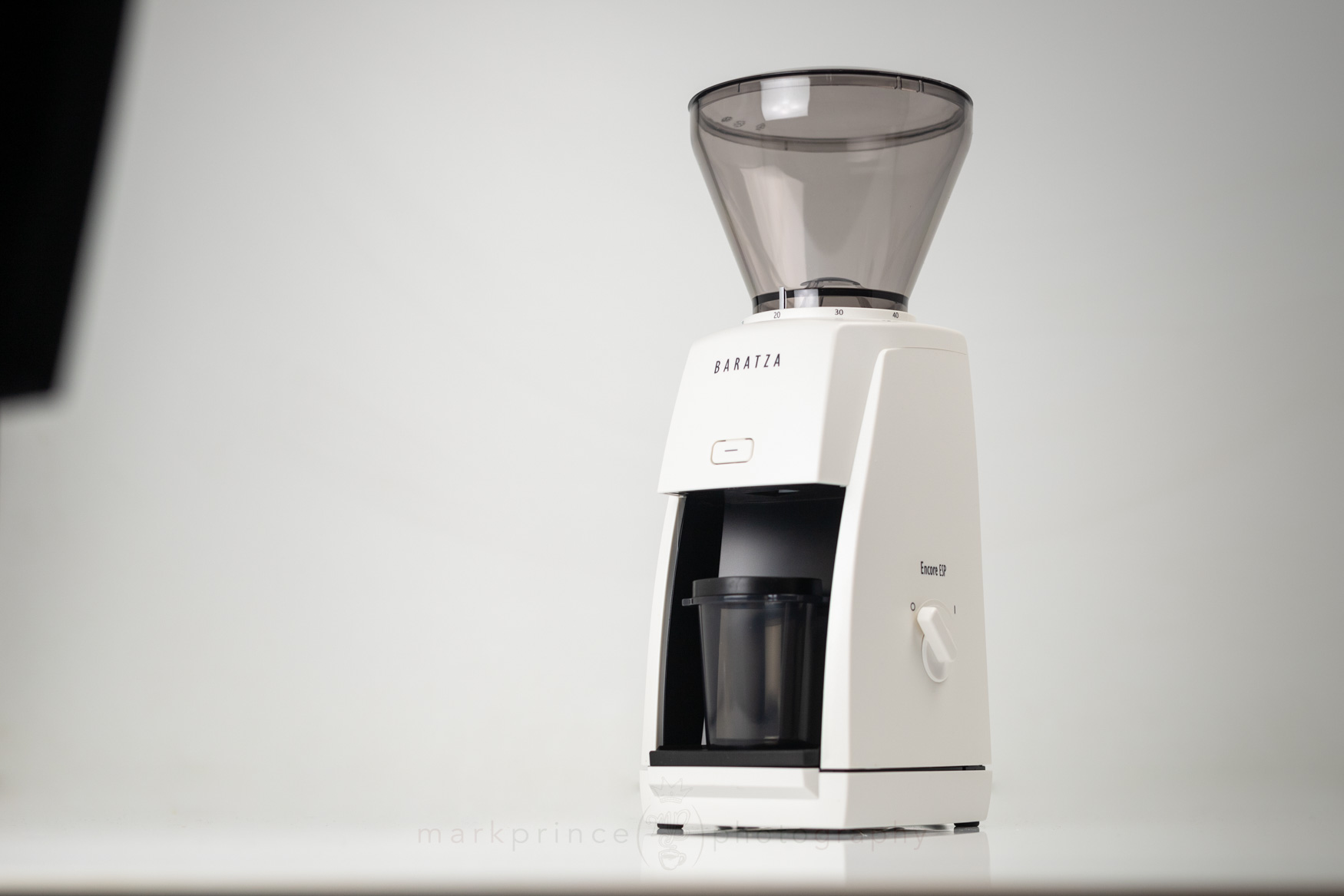
Name: Encore ESP
Maker: Baratza
MSRP: $199 USD / $299 CAD
Typical Sale Price: $179 USD / $269 CAD
Features: On demand grinder; can be converted to single dose; includes both dosing cup and grinds bin; 40mm Etzinger M2 conical burrs; innovative dual-stage grind adjustment for espresso / brew coffee; pulse button up front; easily serviceable.
Right off the bat: the Encore ESP would be swapping positions with the Fellow Opus on our list, if it had a built in timer system. It does not, and that is the main reason why it is the runner up. In this day and age of excellent coffee grinders in the $200 range, this is an unwise omission by Baratza.
With that out of the way, the Encore ESP is an excellent all around choice for the vast majority of the coffee loving market out there, especially with the addition of the finer-tuned grind settings on the first half of the adjustment dial, making for excellent espresso output. Baratza’s M2 conical burrs are time tested and proven, and the inclusion of a dosing cup system as well as the standard grinds bin make this a nice complete package.
Baratza’s legendary after sales service, easy availability of parts at fair pricing, and how these grinders fit the dictionary definition of “right to repair” for years to come, all add up to this $200 grinder being one of the main standouts for 2024.

Name: X-Utra Grinder
Maker: 1Zpresso
MSRP: $169 USD / $229 CAD
Typical Sale Price: $149 USD / $200 CAD
Features: 12.5um per click; external click adjustment; multipurpose burrs with espresso-primary desigh; easy to disassemble; can be used with power drill; silicone outer ring; magnetic catch cup; fluid, friction free turning; three colors available.
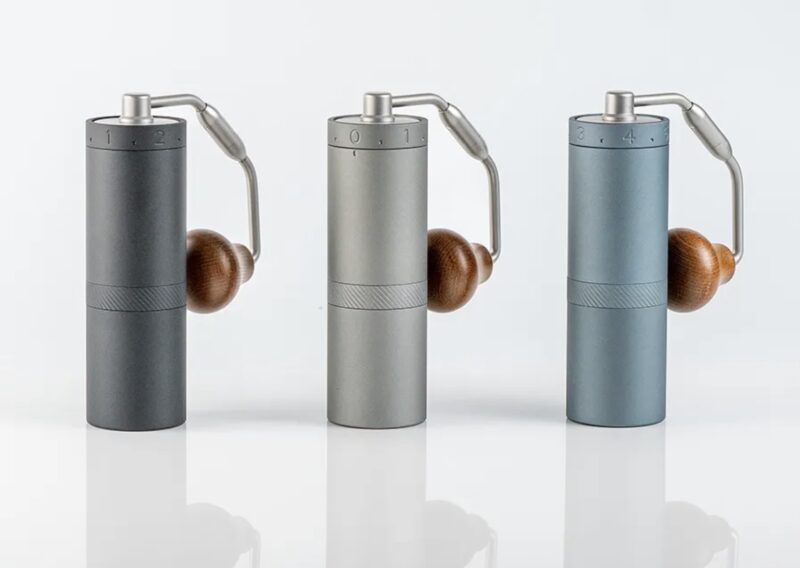
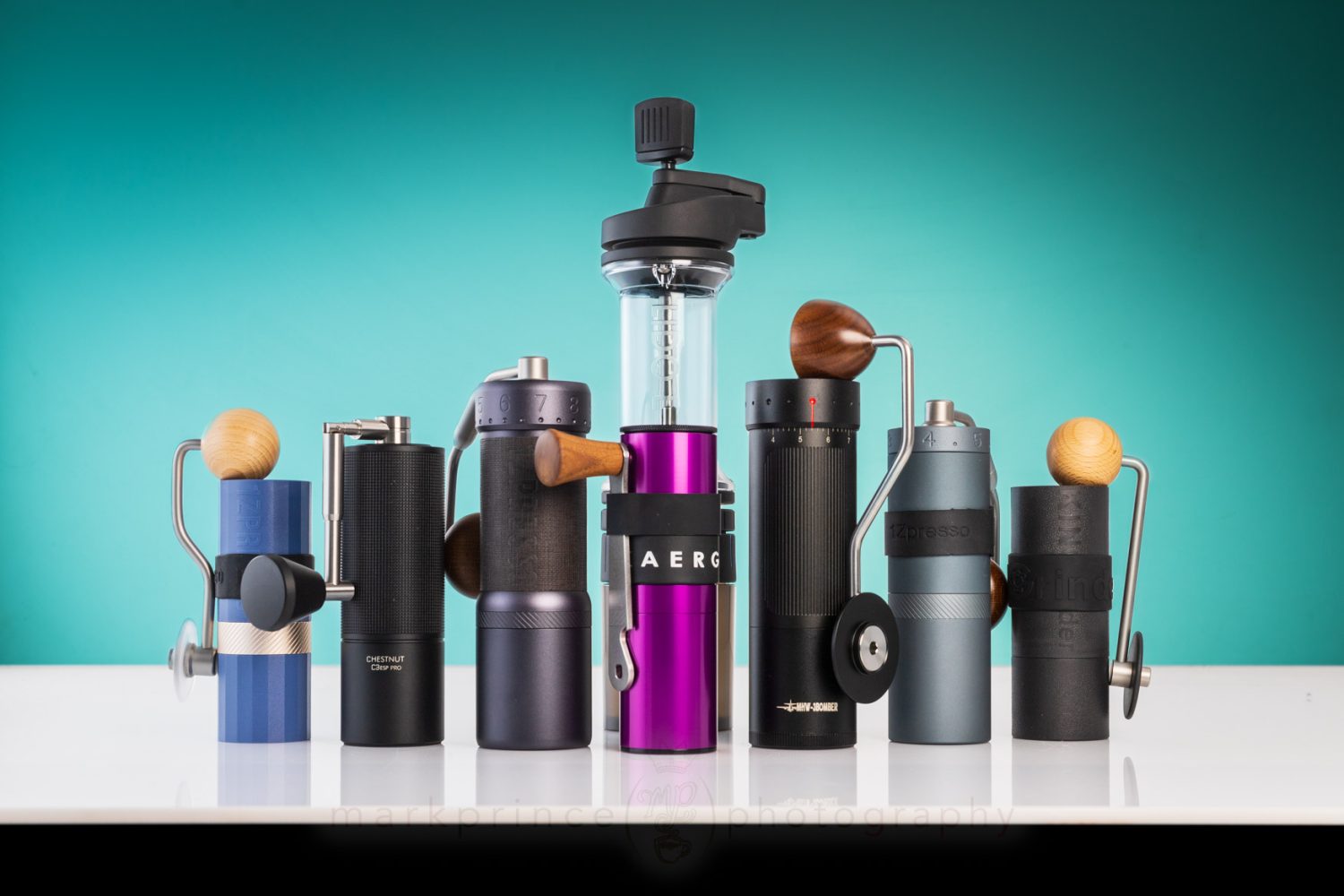
We tested a lot of manual grinders last year, (and we are way overdue in getting our reviews out, including the one for the X-Ultra) but one model stood out over all the others: the X-Ultra grinder from 1Zpresso. It was a standout based on price, ability, output and build quality.
1Zpresso has three flagship grinders: the K-Ultra (brew primary, multipurpose), the J-Ultra (espresso primary, some multipurpose) and the X-Ultra (equal for espresso and multipurpose). Of the three, the X-Ultra is the least expensive, and also the smallest. In using all three grinders equally, the most comfortable and efficient model was the X-Ultra, at least in our testing. This isn’t to say the other two models are bad – they most definitely are not – but between the three, we enjoyed using the X-Ultra the most.
The adjustment range on the X-Ultra is just 12.5 microns per click, very suitable for espresso fine tuning. The burr set is tuned for multipurpose grinding, but is better for espresso than the K-Ultra model. Grinding out 18g of espresso is fast for a manual grinder, taking between 40 and 55 seconds in our testing. Everything about the grinder is class leading, including the external grind adjustment system and how easy the grinder is to take apart, no tools needed, for deep cleaning. The central spindle is also extra thick, and the grinder can be used with a power drill if you don’t want to hand crank.
At $170 or less, this is the best manual grinder on the market in 2024, dollar for dollar.

Name: Blade R3 Grinder
Maker: MHW-3Bomber
MSRP: $99 USD / $135 CAD
Features: 40mm conical burrs; external grind selection; built in sieve system; magnetic catch cup; 16 micron grind selection.
Innovative grinder with a built in dosing system, external grind adjustments and very precise click adjustments of around 16 microns. It does have some static issues, but the sub $100 price (typical) makes it a solid choice.

Name: J-Ultra Grinder
Maker: 1ZPresso
MSRP: $199 USD / $279 CAD
Features: 48mm coated conical burrs; external grind selection; heavy duty build, power drill compatible, magnetic dose cup; tool-less disassembly; 360 grind marker indicators.
The best manual espresso grinder on the market today. 8 microns per click adjustments, espresso tuned conical burrs, comfortable to use and operate, and built extra tough, letting you use a power drill with it.

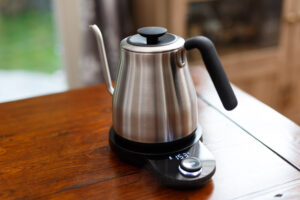
By far and away the best temperature control pour over kettle on the market today, especially when price is a factor. Our initial review unit from 2019 is still going strong today, approaching nearly 15,000 heating cycles. In the meantime, 3 of the 11 other kettles from various brands we’ve tested have failed. Read our full review on this sub $100 kettle for more info.
We’ve been seeing these cups show up in a lot of Youtube influencer channels as the preferred cups displayed and used when reviewing espresso gear. Now that we have a few sets in our lab, it’s easy to understand why: so much about the design of these cups is not only unique, but the form definitely equals excellent function. The inner vanes alone are a major aid in improving cup analysis and quality. Our review is coming soon.

A recent darling of various influencer circles, we were one of the first coffee content producers to highlight this new scale, though our review is delayed because the scale is currently making rounds amongst our writers. The Bookoo Themis scale is the real deal, a better overall scale than the 2x priced Acaia Lunar, and it fits into manual espresso machines where the diminutive Lunar does not.

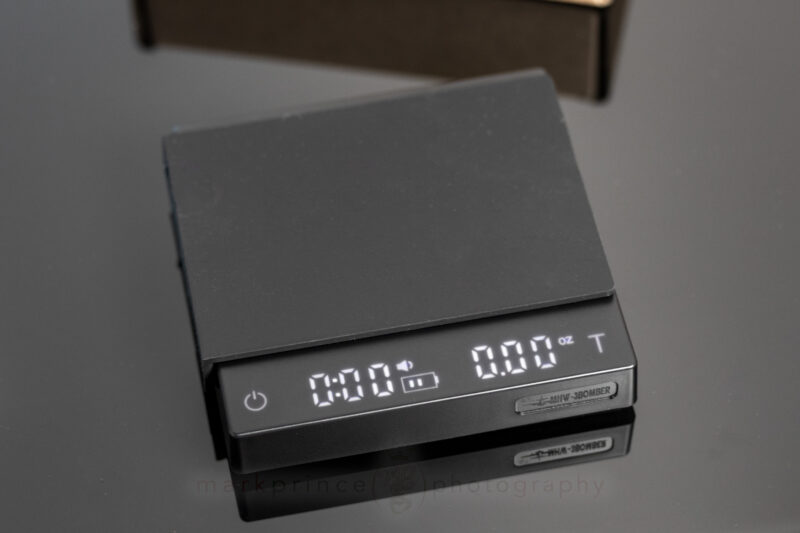
This scale has its quirks (like how the T button isn’t for tarring the scale; it starts and stops the timer), but it also has a standout feature that is a major hit in our testing lab: the auto-on ability. Place anything weighing 100g or more on the scale, and it instantly powers up and zeros out. The 3Bomber Mini Cube 2 is also small enough to fit on most espresso machines, has a bright readout, smart modes, and is USB-C powered.

Inexpensive, pretty, and unique. And surprisingly, less bypass than the standard enclosed Hario V60 filter holders. Has something to do with water adhesion. Anyways, at $22 or less, this is a unique and pretty way to brew your standard V60 coffees.

Mark has certified as a Canadian, USA, and World Barista Championship Judge in both sensory and technical fields, as well as working as an instructor in coffee and espresso training. He started CoffeeGeek in 2001.

Natia loves coffee and relishes at the chance to write about it. She's competed in regional barista competitions in the past, and while no longer a Barista as a profession, she says espresso runs through her veins.

Allison's day job is highly sought after dog groomer, which encapsulates one of her three loves: dogs. Her other two loves: writing and coffee, are what brought her to the CoffeeGeek writing team. An unabashed V60 fan, Allison also explores Portland's cafe scene with gusto, often taking Max, her border collie with her.
-
Allison Gainey
-
Allison Gainey






18 Responses
Loved this guide! Super well done. Yeah, it’s a long one, but honestly, I get it. Your team clearly has a lot to say about their picks, and I appreciate the effort to go deep. It’s refreshing that you’re not afraid to call out the downsides of products too. A lot of reviews sugarcoat things, but can always count on coffeegeek to keep it real, and I respect that.
I’ve got the Encore ESP, and while I’m a fan of almost everything about it, 100% agree with you on the timer issue. Like, seriously, why doesn’t it have one? There are $50 grinders on Amazon with timers, and this one just gives us an on/off switch?
Half the time I use it to grind for a 6-cup auto-drip, and I can’t even tell you how many times I’ve overground because I got distracted. It’s such a vibe killer, especially since I like keeping the hopper full and ready to go. For espresso on my Delonghi Dedica, I’ve gotten decent at eyeballing the grinds bin, but let’s be real, it’s not ideal. I basically have to babysit it the whole time, or I end up wasting coffee. And when you’re buying beans from Nice in LA (shoutout to their amazing roasts), wasting even a little feels like throwing money out the window.
It’s honestly wild how something as basic as a timer can be a make-or-break feature. Like, I don’t need a fancy .1-second precision timer, but *something* to stop me from overgrinding would be a game changer. I really like the ESP otherwise. it’s great for what I need but this timer thing is a pain point for sure. If they ever added one, I’d be hyping it to everyone. Until then, I guess I’ll just keep standing there, grinding in fear of wasting my Nice beans. First-world problems, but still.
Hey coffeegeekers! Fantastic guide! Takes some balls to go to bat for what you believe are the best products out there, it’s often a source of big debate on reddit and discord, so props for that. I see some comments on discord to ignore this post with a few Lance fan boys calling Mark a shill for Breville. I don’t believe that for a second. You set your parameters (basing your choices on products you know and have evaluated) and give your reasons. That’s all good. Maybe if Zerno and Decent want to make a list like this, they should get you access to their machines. ’nuff said on that.
My only point of contention is no matter how good a price it may be, picking a machine like the Breville Bambino Plus as the best espresso machine today, even if it is a runner up, seems off. I get it is feature packed and great value. But seems to me that would be reserved for a “best value espresso machine” category, and not best overall. I like what Rocket is doing, like what Ascaso are doing, were any of those machines under considerations?
Fantastic timing on this guide because I’m in the market for an espresso machine that I’ll never have to think about replacing. I was considering the Linea Mini and the Lelit Bianca as the finalists. Read your “best espresso machine” opinion article too, saw all the reviews on YouTube, did a lot of research.
The kicker for me is long term service of the machine. I see Lelit has a lot of parts available, all at reasonable prices. The same can’t be said of La Marzocco. I heard the drip tray cover on the GS3 is something like $300 alone, and the reservoir is a $400 part. By comparison, the water tank for the Bianca is a more reasonable $80.
Another one: to upgrade the GS3 MP to the latest version with the flow control cap top is something like a $1,500 upgrade in parts cost, and another $300-$500 in a service call because it’s so complicated. But if you have an older Bianca or a Mara, you can get the paddle upgrade for the E61 group for just $250 from Lelit and it’s an easy upgrade for anyone to do.
I was already leaning to the Bianca. Your guide is the final bit of convincing I needed. Thank you so much for sharing your knowledge.
I love that I have two things you picked as the best of the year!!! I bought a hario surien based on your early posts about them (I got mine for just $17!) and I also have the bomber mini cube scale which works really well in my home setup. I may soon have a third product on your list! My pour over kettle is having issues (sometimes it won’t power up), so I’m thinking of getting the oxo kettle you are all big fans of.
Keep up the great work. I have loved visiting this website in the past few years.
Mark, Natia, and Allison: awesome job on this guide! Super insightful and well thought out.
Mark, based on your feedback in threads, here are my thoughts on the list:
– Best Overall: I’d go with the Ninja. For its price and versatility, seems the total standout. A $2,000 espresso machine, even one as feature-packed as the Oracle, feels a bit over the top and for a very select audience.
– Top Espresso: Totally agree with the Lelit choice, but like others said, the Bambino Plus feels out of place. It’d be better in a “best value” category. For this spot, I’d go with the Linea Micra.
– Mid-Range: Made a great case for the Victoria, but I wouldn’t have the Infuser as the runner-up. It’s not really mid-range. Maybe the Mara X would fit better here?
– Best Grinder: You guys need to try the Zerno. My buddy has the Z1, and it’s in a league of its own. Haven’t seen the Philos yet, but I’d definitely go Z1 for this category.
– Encore ESP: Agreed with everyone else—how does a timer not make it onto this grinder? It’s such a basic, useful feature. How did they figure it wasn’t necessary?
– Manual Grinders: Have you tried the Kingrinders? I’ve got the K6, and it’s fantastic. Would love to hear your thoughts if you’ve used them.
Natia, thanks again for your kind and super helpful email! Really appreciate the time you took.
Hi Henry; I really appreciate the detailed response.
I hear you (and other comments) on the Bambino Plus choice. We didn’t have a “best bang for the buck” category, and perhaps next year we should have that instead. Re the Zerno, we were supposed to get a review unit from Zev, but that didn’t happen; I should try and get in touch with him about that again. We don’t have YT 400K+ subs money to spend, and most of the income we bring in, I use to pay our writers, so budgeting $2,000CAD (including import fees) is not on my radar to buy a Z1, but I’ll see what we can do.
On the Kingrinders – no experience, and only one of our writers owns one (i think the K2 or K3?). I should reach out to them this year about getting some review samples to put through the paces.
This is awesome. It is probably not up to your standards, but I do brew a pot of coffee every morning. Is there a coffee pot that you could recommend?
Hi Noelle!
We didn’t recommend any auto drips in this guide, but I have some good news for you: we’re working on a Best Coffee Makers for 2025 Guide, featuring six or more choices that we feel would really hit the mark. On the budget end, I recommend the Zwilling Enfinigy (especially if you can find it on sale). I also really like the OXO models, particularly the 8 and 9 cup brewers, both SCA certified.
Thank you so much for taking the time to answer. I really appreciate it.
Hey,
My drip coffee maker died this morning so I need to find a replacement ASAP. Would love to get a preview of your reviews to inform my decision!
Thanks
Billy
As always, I found your guide to be very thorough and informative . Coffee Geek is my go-to source for information about all things coffee as I am a newcomer to home espresso.
Recently, after reading your short (rave) review of the Baratza Sette 270Wi, I bought one on sale ($479.99) since I old Encore wouldn’t grind fine enough for espresso. I still have the Encore for grinding for Chemex, etc. So, I was a little surprised that it wasn’t mentioned in the guide, especially since you mentioned it was one of your lab standard grinders. In any case, I’m sure the category winners are great machines and I’m nevertheless very satisfied, even excited, about my new Sette 270Wi. The loudness gripe is really inconsequential in my opinion. The point is to get a great product and since it is so much faster than most grinders, especially anything in its price range, it just doesn’t seem to be a problem. My Encore is almost as loud and takes 10x as long to grind. So, thanks for all the information you share throughout the year. When I am inspired to make a purchase base on your reporting, I do it through your affiliated links if available.
Hi Bill. I still have much much love for the Sette 270Wi, but we’re changing our lab test grinder to the Philos for 2025; The i200D burrs are that much better at the output overall and one thing I struggled with on the Sette at times was it would be challenging to properly dial in lighter roasts on it. I could get there, but it would require a lot of fine tuning on the micro adjustment. I’m not having that issue at all with the Philos. I will be putting the Sette 270Wi next to the GS3 in our kitchen going forward though, as it has really good output with the main espresso blend I enjoy – Social’s People’s Daily – and it seems to work awesome with the GS3. But the Philos is now set up next to the Breville Dual Boiler in my testing space.
Thank you Natia, Allison and Mark. This was a great guide. I am not currently in the market for something new just yet, but I certainly appreciate all the work you put into the guide. When it is time for a new electric kettle, the OXO gooseneck looks perfect. Thanks again.
Repeating: I only brew coffee and was also looking for reviews on auto drip machines.
Please include information/reviews about reusable coffee filters. Which are best and which machines work best with reusable coffee filters.
Seems like most of the picks are well reasoned, but are sponsors on this site. Did you consider all brands in your selections?
Our picks are based on products we have actually used, owned, and or tested. This is covered in the introduction section.
I’d also like to point out, the majority of the products selected and their manufacturers – Turin (DF64), Rancilio (Stile), Mazzer (Philos), Superkop, Flair (Flair 58+) Ninja (Luxe Cafe), Fellow (Opus), 1zpresso (X-ultra, J-Ultra), MHW-3Bomber, OXO, Bookoo, Hario, Nextlevel – are not advertisers or sponsors of CoffeeGeek and none of them have ever been such. Of all the product choices, only Breville, Lelit and Baratza are.
I know Breville got a lot of top choices here, but fact is, they are making the best range of consumer espresso equipment on the market, and other players are all playing catch up to them. Consider the Gaggia Classic, which some 40 years after being introduced, still can’t seem to get it right (the 2024 unit we have has the coating boiler issue, with flakes coming out into the brewing water). Breville has 4 machines all costing less than the Classic Evo Pro, and all are just way better machines.
I purchased the Turin SD40S and absolutely love it! I mainly brew aeropress, pour over, and stovetop espresso (the cool gadget from Garret Wade). That said, I’d like to look into an espresso maker. I’ve bought cheap ones before and want to find the best quality I can, but my budget is $200 or less. Any thoughts on the Casabrews CM5418? Or machines like it?
Does the Philos do well on light-roast espresso? I currently have a Niche Zero, but as my tastes have developed I’ve wanted to experiment with fruity, lightly-roasted espressos. I’m considering the Philos but I don’t know how well it would achieve that goal.