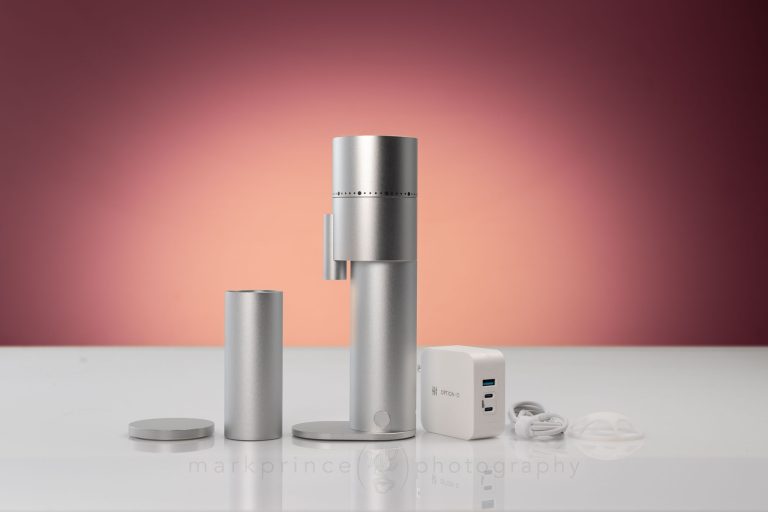







The manual coffee grinder market is a remarkably crowded space right now. There was a time when, if you wanted true precision grind quality, you bought a Comandante and accepted the price tag without flinching. Then 1Zpresso and Timemore arrived, collectively proving that serious burr geometry does not require a serious financial commitment. The mid-range segment they created is now seriously competitive, and a new name is trying to wedge itself right into that conversation.
That name is Mavo. The brand is not exactly a startup; they have been operating out of China since 2012, building a solid domestic presence while selling glass drippers, kettles, and electric grinders. For most of that time, their manual grinders were squarely aimed at the casual consumer market: somewhat capable, not particularly exciting.
The Phantox Pro is a deliberate break from that. It is their first genuine shot at the specialty coffee enthusiast crowd, and it makes a reasonable case for itself. We got a sample unit in to check out for our forthcoming Best Budget Grinders for 2026 Guide, and have been putting it through its paces for a full Snapshot Review. Here are the initial impressions.

Build and Feel
Out of the box, the first thing you notice is the weight: a substantial 630 grams of CNC machined aluminium alloy. The fit and finish feel tight from the factory. There is no rattle in the handle assembly, no loose play anywhere. The “champagne” coloured unit we received looks sharp (a black version with slightly more readable markings is also available), and the cutouts and textures in the body give it a purposeful, grippy feel in hand. A silicone ring ships in the box for extra purchase if you need it.
The external grind adjustment dial is the thing you will notice first, and keep noticing. It moves with a dampened, deliberate resistance that is genuinely reminiscent of adjusting a manual f-stop ring on a high end camera lens (I’m talking Leica levels here, folks). There are 120 clicks per full revolution, with each click representing 0.0167mm of burr travel. It is a satisfying mechanism. More practically, it makes documenting and repeating your grind settings refreshingly straightforward. No guessing how many clicks from zero. No fumbling around with an internal adjustment collar while juggling a catch cup full of coffee you spent good money on.
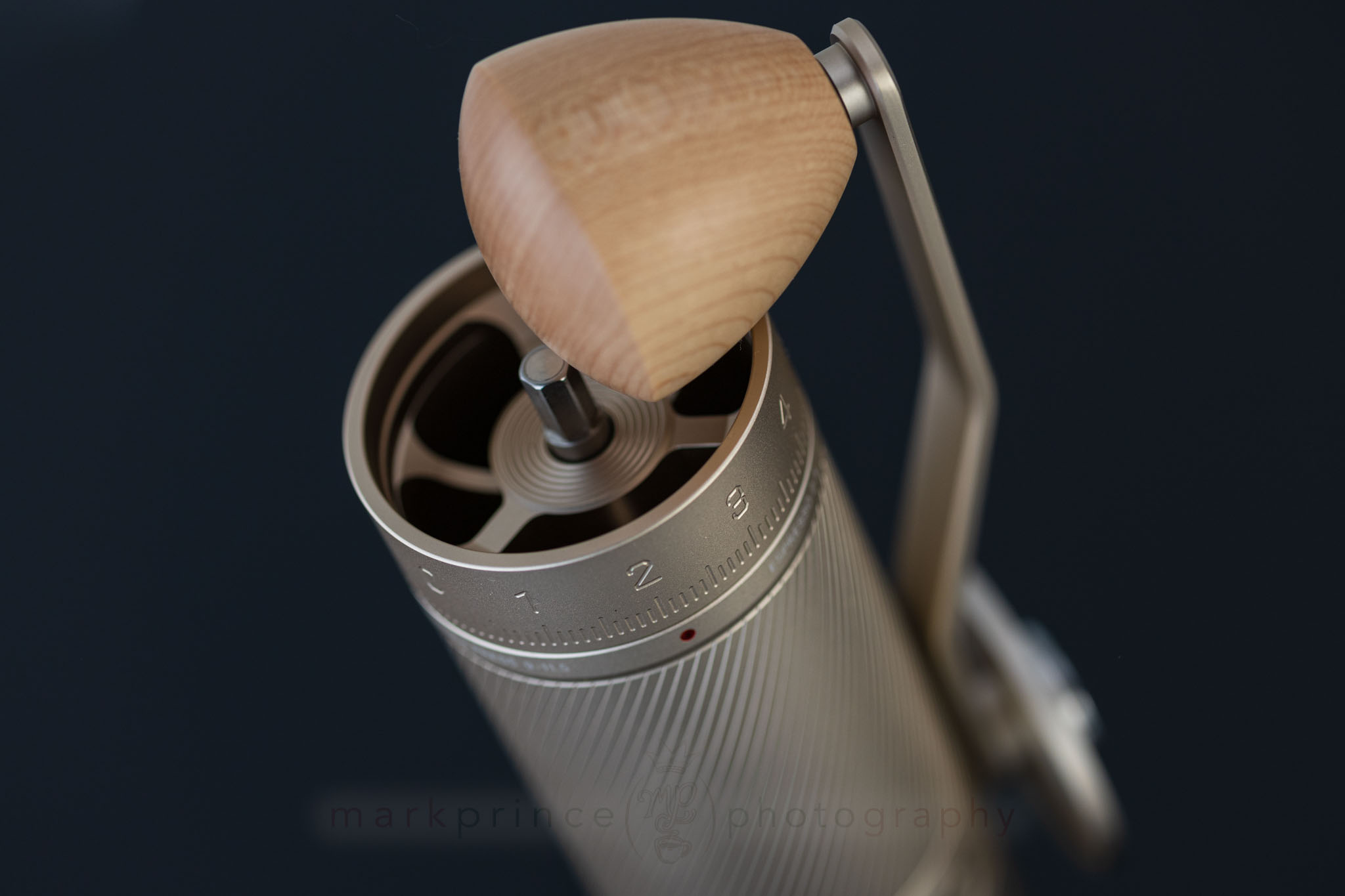
Inside the chassis, Mavo uses a triple bearing stabilization system on the central axle to keep the inner burr running concentric under load. It is beefy and designed to work with a power drill if you’re so inclined (and don’t want to hand crank). In fact, the company ships the grinder with a secondary lid designed to work with a cordless drill.
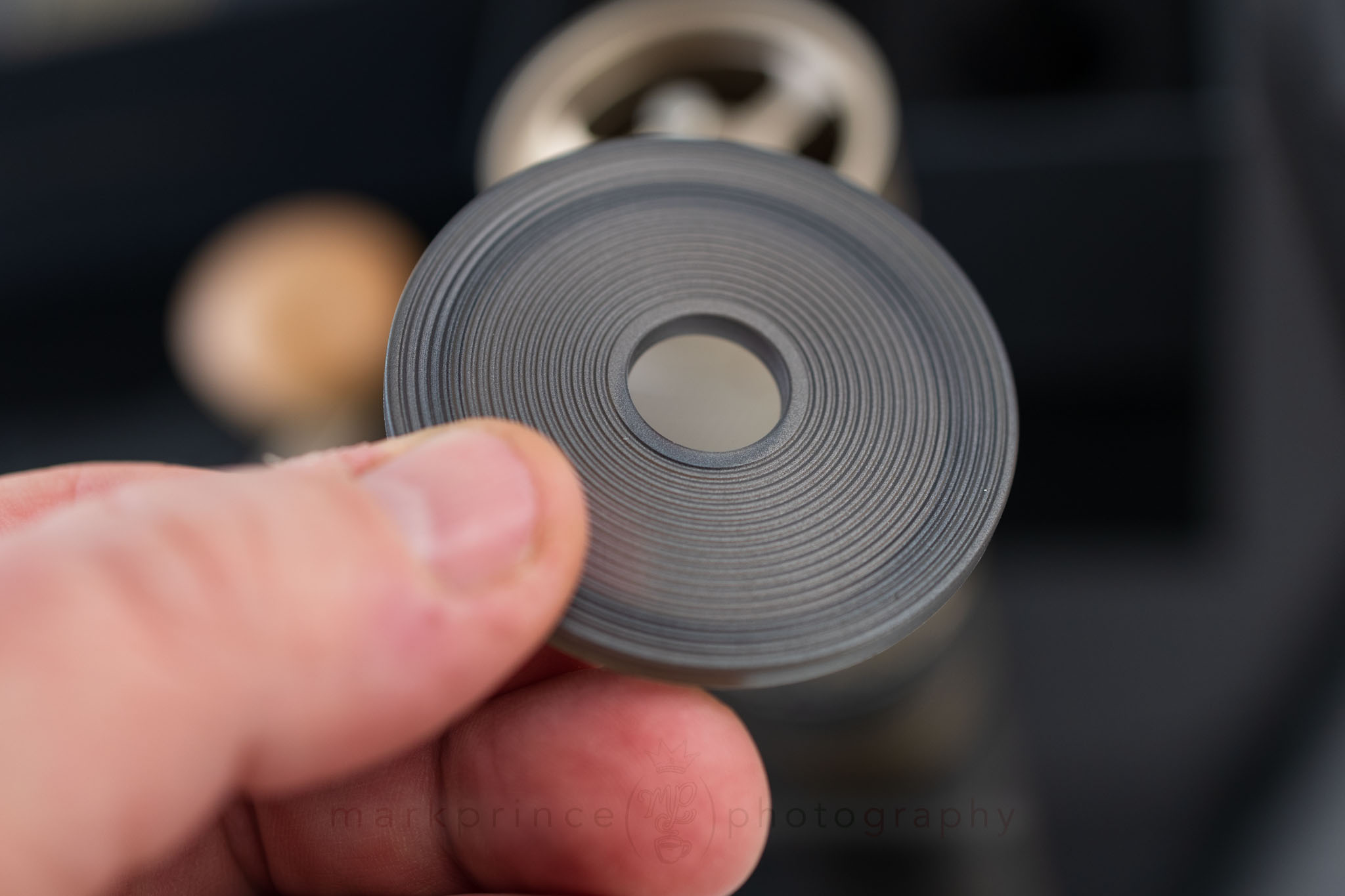
One thing to note here: when you disassemble the grinder for a deep clean, the axle needs to be carefully realigned during reassembly. It is not complicated once you understand what is happening, but the first time you take it apart and find it does not quite want to go back together, do not force anything. Look closely at the axle alignment first.
The Burrs: What They Do Well, and What They Cannot Do
The 45mm seven-sided stainless steel burrs are the big picture story of this grinder. The cutting surface is noticeably larger than the 38mm to 40mm burrs common in this price bracket, and that size advantage pays off in grinding speed. In our initial testing, the Phantox Pro turned out roughly 0.5 grams per second at a standard pour over setting, which is a respectable clip for a hand grinder.
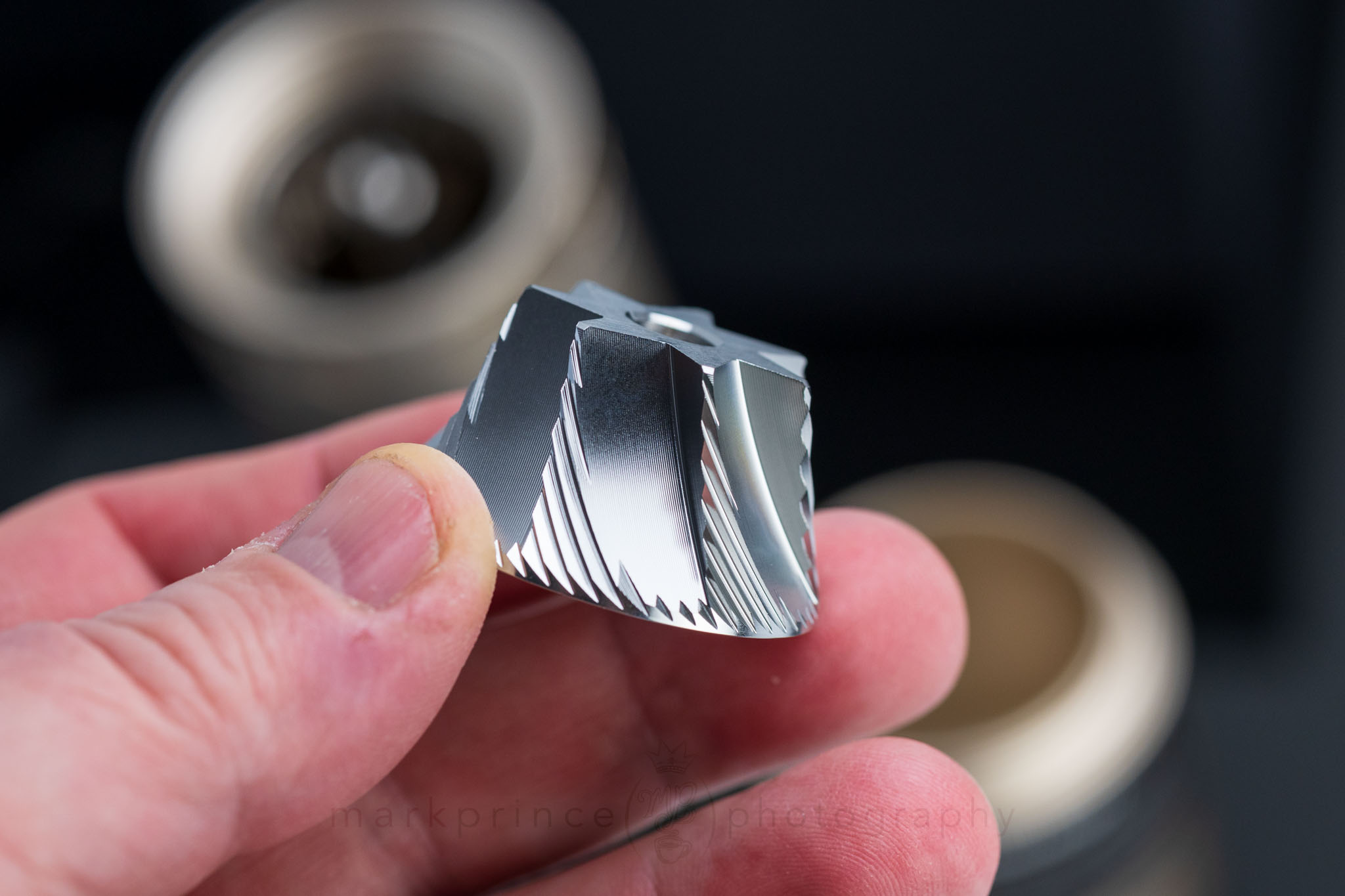
The geometry of these burrs is genuinely unusual. The bottom third of the inner static burr does not use the standard conical cut pattern you would typically expect. Instead, it uses an aggressive hatch design that closely resembles a flat ghost burr, similar in principle to the burr design used in the much pricier Orphan Espresso Apex. Ghost burr geometries are known for producing highly uniform particle sizes while sharply limiting the production of fine coffee dust.
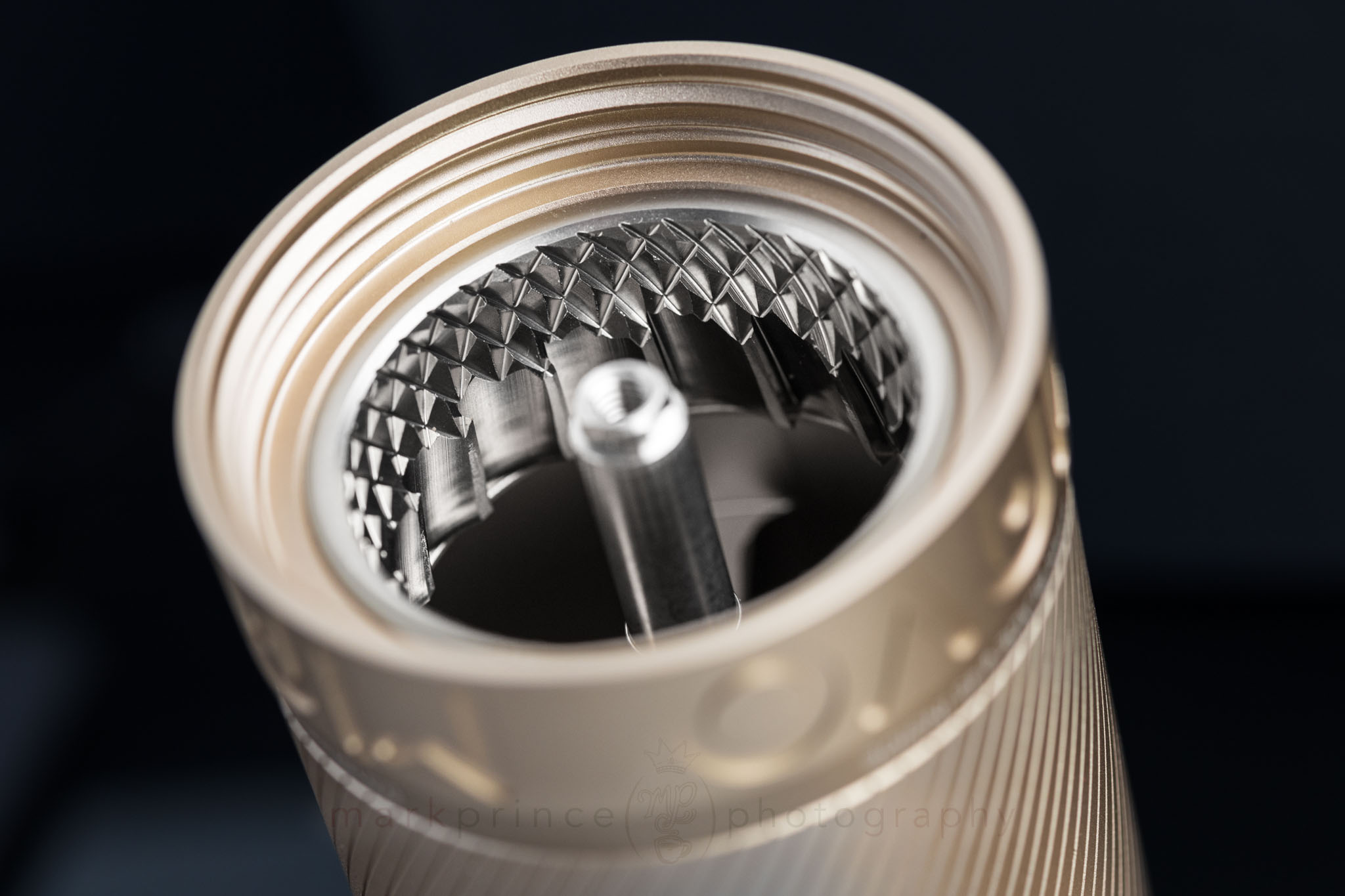
That approach is very apparent in the cup. I’ve already pushed roughly 8kg of coffee through our test unit so far, and the output for pour over and full immersion brewing is impressive. The Phantox Pro produces a clean, well-separated flavour profile with good clarity and sweetness. For a Chemex, a press pot, a siphon, or a V60, this grinder punches well above its $140 USD price point. In early head to head testing, it is holding its own against our current filter benchmark, the 1Zpresso K Ultra, which costs considerably more.
The trade-off is straightforward and worth stating plainly: this burr design makes it a poor espresso grinder. Mavo markets the Phantox Pro as a multi-purpose tool capable of everything from Turkish coffee to French press, and the external dial has the mechanical precision to dial very fine. The problem is physics, not mechanics. Espresso extraction relies on a specific volume of fine particles to fill the gaps between larger grounds, building the puck resistance needed to generate nine bars of brew pressure.
Because these burrs are engineered to limit fines production, you simply cannot build that resistance. Shots run fast and extract poorly. No amount of careful dialling changes what the burr geometry is doing. Buyers who primarily pull espresso should look elsewhere, at something like the 1Zpresso J Ultra or the Kingrinder K6.
Where Things Stand
All that volume testing had a purpose: we wanted to know whether the Phantox Pro had earned a spot in our forthcoming Best Budget Grinders for 2026 Guide as a filter-focused recommendation. It has. For a brewer who lives and breathes pour over and immersion methods, $140 is a very reasonable entry point for this level of cup quality and build refinement.
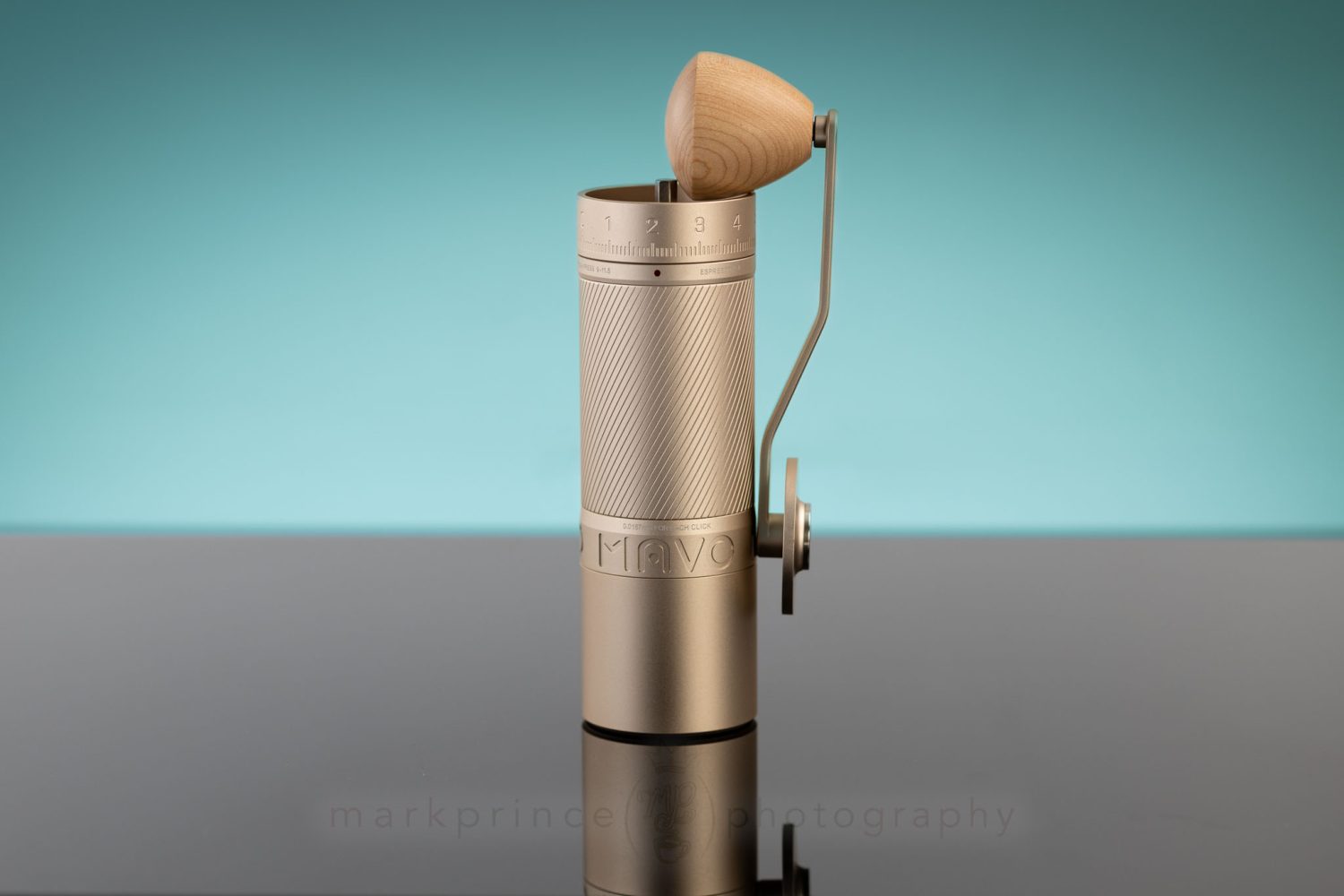
We are wrapping up formal testing protocols now, including particle analysis and head to head comparisons with established competitors. Expect a full breakdown in our forthcoming Best Budget Grinders Guide, and a complete Snapshot Review of the Mavo Phantox Pro later this summer. In the meantime, the grinder is available on Amazon or directly from Mavo.

Mark has certified as a Canadian, USA, and World Barista Championship Judge in both sensory and technical fields, as well as working as an instructor in coffee and espresso training. He started CoffeeGeek in 2001.