







If there’s a brand that enjoys “cult” status (and I mean that in the best possible way) within the world of espresso, quite possibly few companies can top Olympia Express.
This Swiss company has been making espresso machines for over eight decades now, and has a storied history in the commercial espresso world. That said most of the upper-geek tier of home baristas know the brand for one very special machine: the Cremina.
Olympia Express has been making the Cremina for 50+ years now, with the most recent update being designed in 2008. I own a Cremina 67 model (manufactured in 1982) that was refurbished entirely (including the removal of an asbestos wrap around the boiler for insulation) in 2007. This machine is 42 years old, but still works great, only needing the occasional gasket replacements. Even the portafilter itself is original (though I did get an aftermarket chopped portafilter made for it).
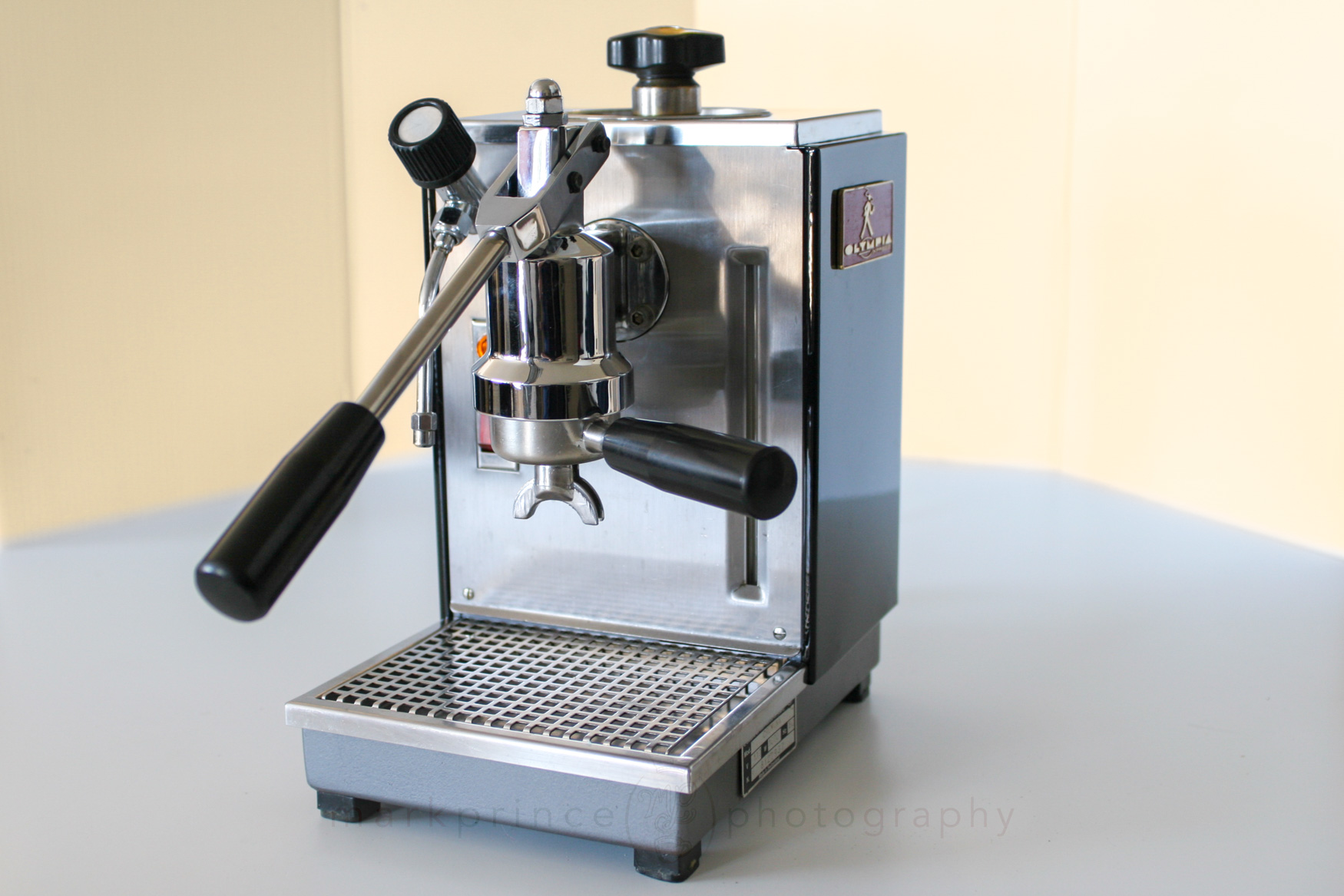
The Cremina is also a very hands on espresso experience. 49mm portafilters, direct lever, rudimentary temperature control on the machine, no visible pressure gauge for the lever pressure, and absolutely no guarantees other than your barista intuition that you’ll get a good shot.
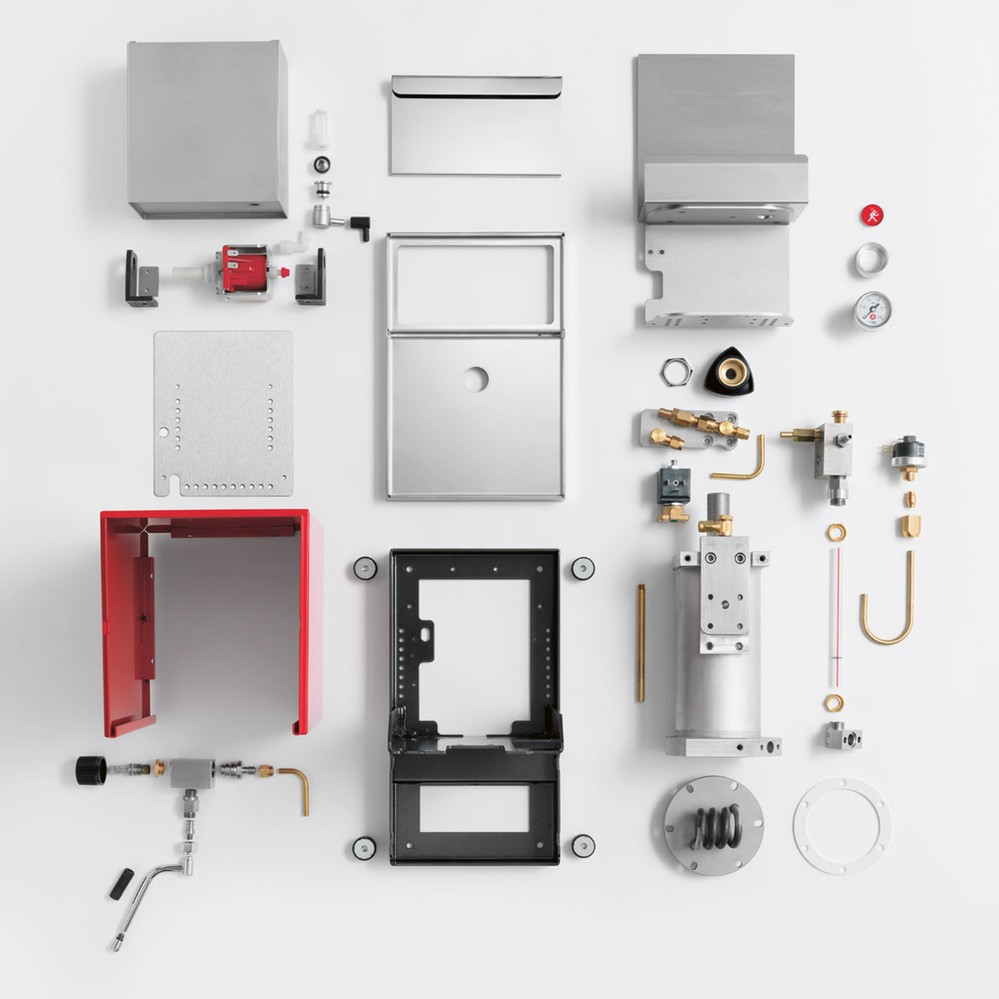
This is why a very niche segment of the espresso making public adores the machine and brand: very few machines give you this kind of intimate connection to producing a great shot of espresso. La Pavoni is there too with the Europiccola and Professional lever machines, but La Pavoni’s huge; Olympia Express is “boutique” small and very hand crafted (and also 4x the price of a La Pavoni Europiccola). Have a look at the parts breakdown of a Cremina machine (photo from Olympia Express).
Because of Olympia Express’ stature and position in the market, they don’t often come out with new products, but the past two years have seen some new and exciting things from the company. Last year, they introduced the Moca SD single dose grinder. This year, they’re introducing a machine that many of the company’s most ardent fans and insiders have been looking forward to. It is the Olympia Mina, and we have one on loan to do our full First Look and Snapshot Review process on. Many thanks to both Olympia Express and Canada’s Quality Coffee Systems for facilitating this.
Please note, this post is not a review or any kind of proper evaluation of the Mina. This is our introduction to the product, pointing out it’s build quality and potential position in the market. Our forthcoming First Look will be the first time we properly evaluate the product and provide initial opinions on it.
The Olympia Mina
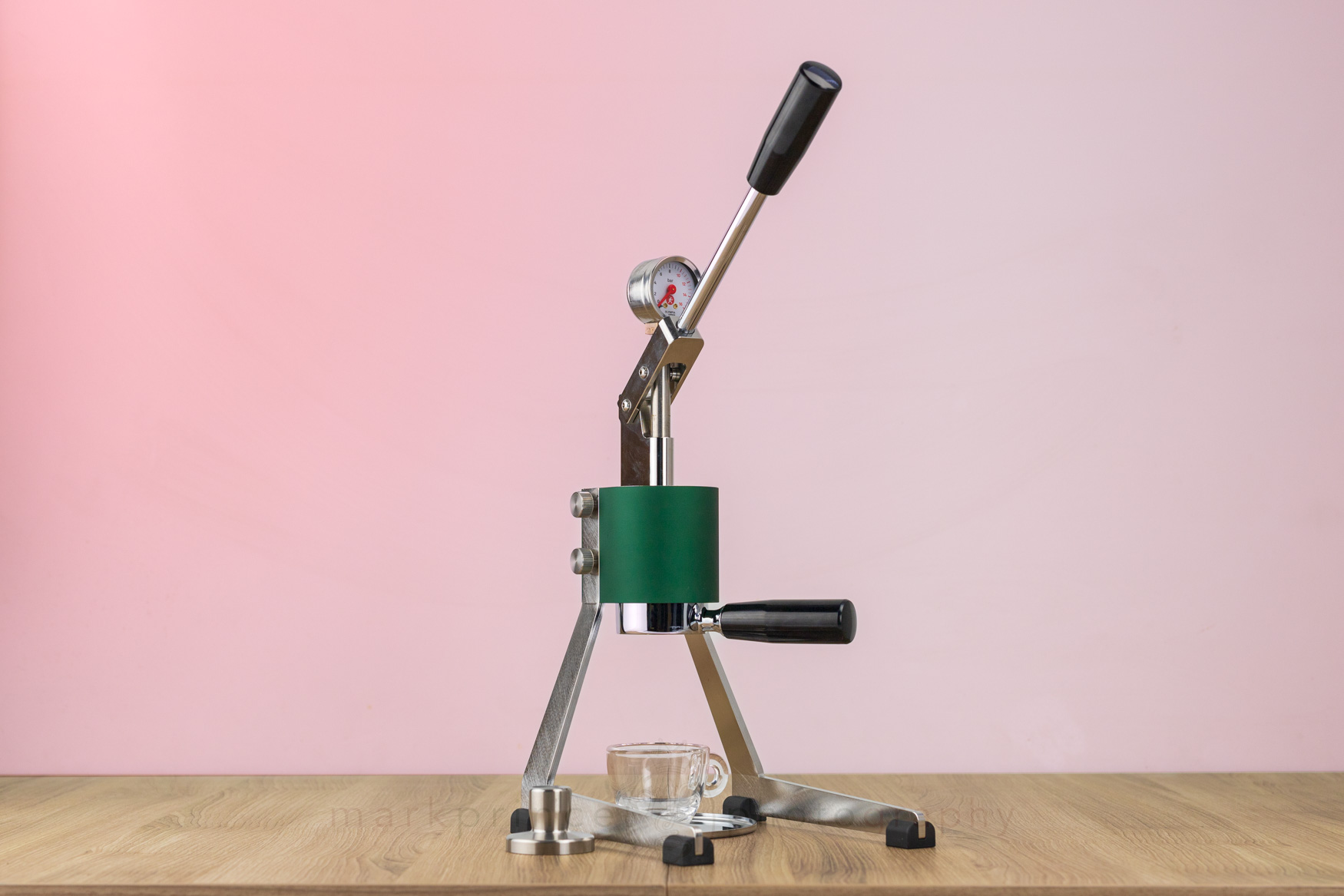
Take the core bits of the Olympia Cremina and distill it down to a 2.5kg package that could be carried in a small carry case. That’s essentially what the Olympia Mina is. It is based around the Cremina’s lever system design, using the same portafilter size and lever arm, all fitting into an aluminum housed reservoir and plunger system.
Unpacked and its case, the Mina is made up of the central anodized aluminum wrapped steel reservoir, plunger, and pressure gauge assembly, two metal legs with rubberized feet, the unscrewed lever arm, four thumbscrew bolts, a chopped 49mm portafilter, a double wall filter basket, a custom (and very tiny, but also very heavy) tamper, and a mirror finish steel drip tray.

Assembly is very quick: the very first time I put it together, it took me under 2 minutes, and it is very intuitive. Grab a leg, mate it to one side of the reservoir, and screw on the two thumbscrews. Repeat for the other side. Screw on the lever arm. Insert the portafilter. Done.


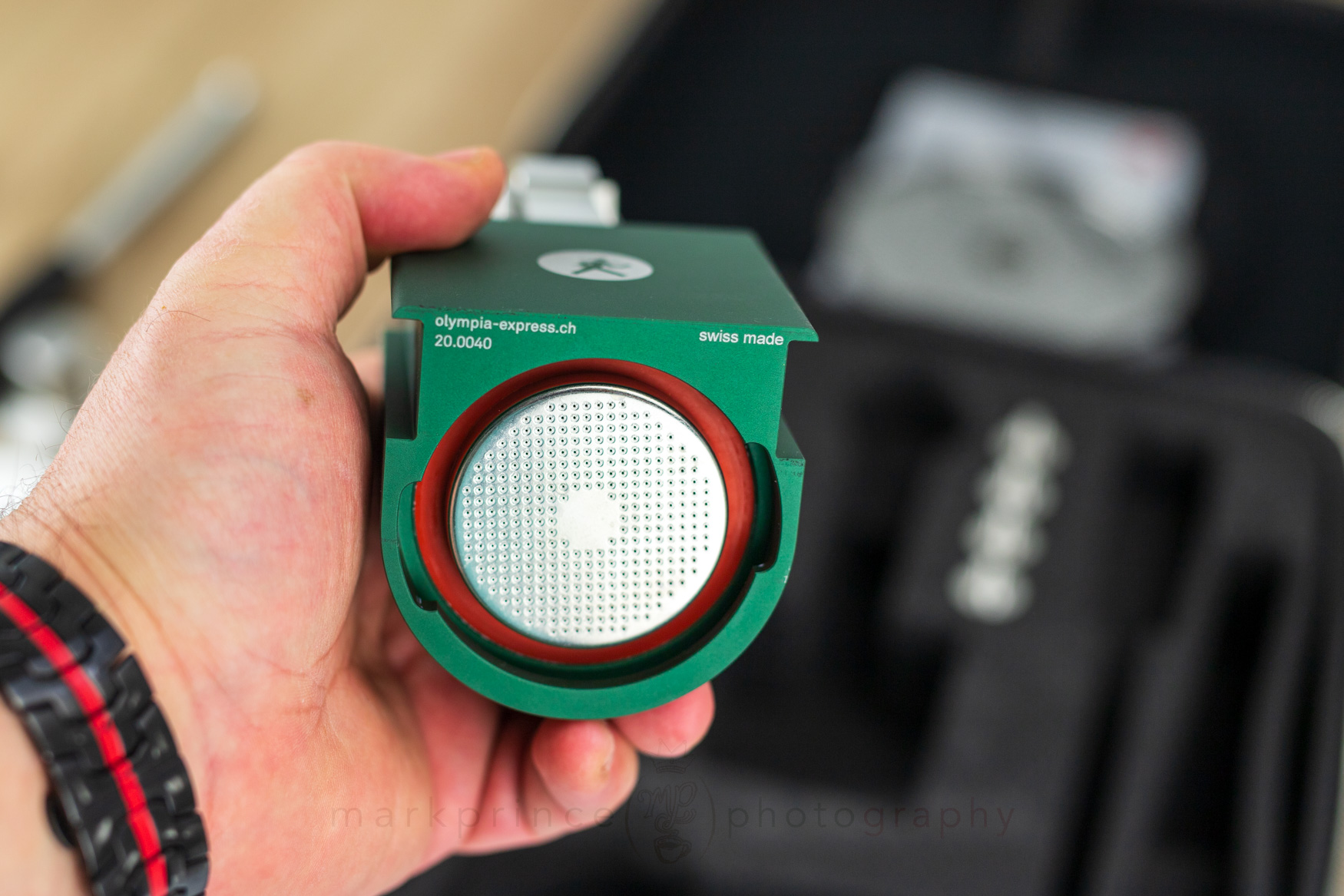


Looking over the machine, everything is absolutely top tier in the fit, finish and look. The machine comes in only one colour: hunter-green anodized aluminum and steel, with black accents. Most of the metal parts are stainless steel, though the portafilter is chromed brass, and the dispersion plate and screen inside might be brass: I will have to confirm later on. Olympia did jacket the main reservoir in an outer clad of anodized aluminum, which gives the machine an extra unique look.


The fit of the legs into the sides of the reservoir is… perfect. The portafilter slots perfectly into the machine, and when new, the gasket connection as you tighten it is very tight (but should become easier with use). Nothing creaks on this machine. Everything feels tight, secure and purposeful. Olympia, as far as build quality goes, hit an absolute home run of “Swiss engineering” with the Mina.
Workflow on the Olympia Mina

Make no bones about it, the Mina is a machine that needs a fair amount of warm up time. The central reservoir and plunger area is thick steel, most likely with a brass dispersion plate inside (will confirm that), and an outer jacket of aluminum. It also holds only about 50-60ml of water. Even 50ml of flash boiling water won’t heat up all that metal.
So to really coax a great shot out of the Mina, get ready to really preheat that grouphead and reservoir. Figure on at least 3 or 4 full fills and flushes before it starts to get up to temperature. The good news is, once you do get it fully preheated, it should retain heat very well.
The process I’ve used so far in pulling shots on the machine is this (keeping in mind, I’ve only made about 20 shots on the Mina as of this writing):
- heat up your kettle to boiling
- put the portafilter in place in the grouphead
- With the lever lowered, fill the reservoir. Let sit for 10 seconds
- slowly lift the lever to engage the inlet valve and V-ring which allows water to flow past the plunger piston to the chamber above the machine’s dispersion screen
- press down on the lever to flush the hot water through
- repeat 3 more times
- lower the lever, fill the reservoir, and remove the portafilter
- grind, dose, tamp your coffee (I’ve settled on 15g in the 49mm basket)
- before inserting the portafilter, raise the lever to allow the water in the reservoir to flush out
- lower the lever, insert the portafilter loaded with coffee
- fill the reservoir to about 1cm from the top
- raise the lever, to allow the hot water to move down into the plunger / dispersion screen area of the reservoir
- press down on the lever for your “preinfusion” session. Let rest for 5 seconds
- raise the lever, and press down, watching the gauge and flow, aiming for 7-8bar of initial pressure
- brew roughly 30ml of espresso
- once brewed, raise the lever, put a different cup under the portafilter, and press down again to push out any remaining liquid and dry the puck
- lift the lever, and remove the portafilter, dump the puck and clean the portafilter with some water from your kettle
- enjoy your espresso.
It is worth noting, this is all based on very early use, with no actual temperature testing done. Just tasting the results, and modifying the routine to get better results. As we move on with the First Look and full review process, I will be finding the optimum work process for this machine for different bean types.
Who’s the Mina For?

Let’s get something out of the way, right away. This is not the machine to buy if you want an exceptional espresso experience with very little fuss and muss. That’s not the Mina’s target market, at all. In fact, this is not the machine to buy if you want a relatively easy manual lever espresso experience that can deliver exceptional shots repeatedly. For that, you should consider the Flair 58 or the Superkop.
The Mina is for two types of people in espresso world: the person who already owns an Olympia Cremina and wants a sister machine that can pack up for travel, and the person who wants to get very close and intimate with the espresso making process. The type of person who realises the journey is much more enjoyable than the destination.
There’s already a lot of speculation and discussion about this machine in some usual channels (by folks who haven’t seen the Mina in person yet, or used it). It is frequently compared to Cafelat’s Robot, to the Flair 58, and the Strietman CT2 machine.
Probably the most “fair” comparison in terms of use and ability is to the Cafelat Robot. A machine that costs about ⅓ the price of the Olympia Mina. I own one, and if I’m honest, the better shot experience is going to come from the Robot. It’s easier to use, can hold more coffee, is easier to heat up, and is also built exceptionally well. Like the Mina, the Robot is a bit of a work of art for your counter.
But there is something very special about the Mina. It too is a work of art, and has a lot more parts to it than the Robot does, which somewhat justifies the cost. Also keep in mind, the Cafelat Robot is manufactured in China, with final assembly in the UK (Paul Pratt, the owner of Cafelat, still does some of the assembly himself!). The Olympia Mina is manufactured and assembled in Switzerland, using some parts sourced from Italy.
I wouldn’t spend too much time comparing this machine to the Flair 58 (half the price of the Mina) or the Strietman CT2 (2.5x the price of the Mina) because these two machines are electric-assist for water temperatures. I have a lot of experience with the Flair 58 (and love it), and none with the Strietman.
There is another machine I’d compare the Mina to, that for some reason, the online forum folks aren’t mentioning much: the Superkop. They are similarly priced and are both full manual machines, but the Superkop’s ratchet system and 58mm portafilter system for full 3:1 ratio shots if you want put it in a different league, both in shot output ability and in actual use. I will say, achieving a fantastic shot on the Superkop will always be easier than it is with the Mina, mainly because of how much preheating the Mina requires, and the lower water volumes it can use.
Wrapup, for Now
We are going to do a proper First Look article for the Mina, with initial unboxing, first use, and initial comparative use, putting it up against the Cafelat Robot and the Superkop. This will come in about a month. We’ll continue the process for our full review, which will most likely be our Snapshot Review process. That will include long term testing, tips and tricks we’ve learned along the way, and some feedback from our focus groups.

You can buy an Olympia Express Mina today if you like: in Canada, it is available from Quality Coffee Systems (unlisted on their site, but contact them, they have stock as of July 30, 2024), or you can try to pre-order (unlisted currently) from Olympia Express’ US distributor, Cerini Coffee. If you live outside of North America, visit Olympia’s vendor page to find a vendor in your country. The machine retails for $995USD, or around $1,450 CAD.
NB: none of the links above are commission or affiliate links for the Mina.

Mark has certified as a Canadian, USA, and World Barista Championship Judge in both sensory and technical fields, as well as working as an instructor in coffee and espresso training. He started CoffeeGeek in 2001.











5 Responses
Greetings,Mark. My Mina arrived a few days ago from Cerini. Having a great time playing around, trying to find my way. Upgrade from a Flair NeoFlex, my entry level lever. Love the build quality, exquisite. If I can be of any assistance in your evaluation, just ask. David Bogie, Boise, ID
Are comments not published? Or did I not push all the buttons? Regardless, I have one of these quirky little units and enjoying it tremendously. Happy to particiapte or assist in your evaluation and gathering of user data.
What temperatures are you able to reach with preheats?
I’m not the esteemed (he really is) Bogiesan, but yesterday I did my first probe tests, and measured 89.5C max in the grouphead after three saturations.
I did discover a trick – on top of pouring water into the reservoir and letting it sit for the first two heatups, on the third one, I fill the reservoir, raise the lever (so it starts flowing through) and continually pour boiling water through it from a kettle for about 5, 10 seconds, (it will continue flowing through) and this really jacks up the temperatures. Still experimenting.
While the machine is impressive, IMO, the lack of temp control of any type, pushes it into the less is less category.