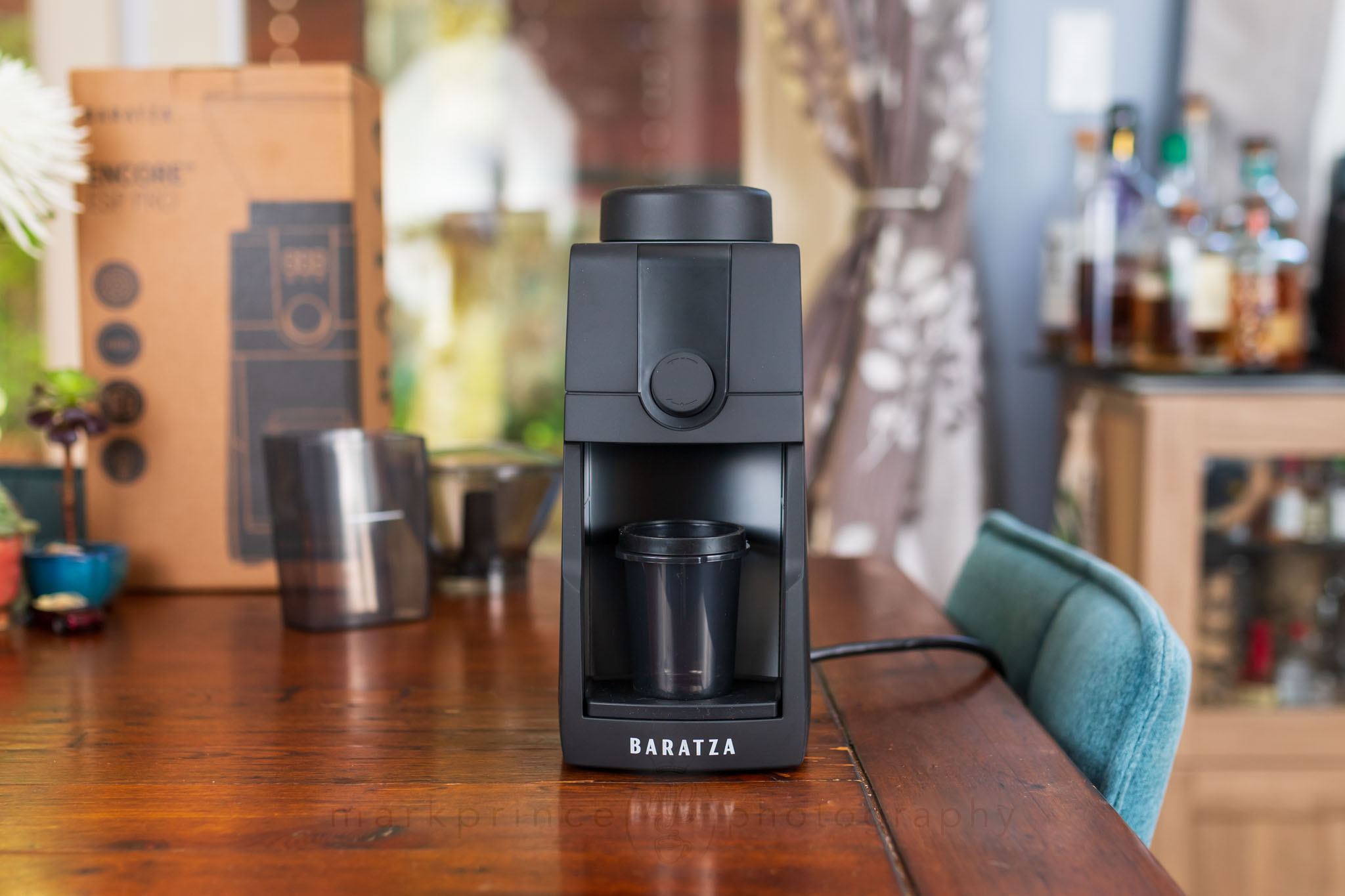

Out of the BoxEncore ESP Pro
I won’t go into a lot of details about what’s new on this grinder, except to reference those new features, because we covered that in our initial post on the Encore ESP Pro. I will highlight and clarify some elements and assumptions based on the initial hands on use. If you do want a concise breakdown on what is new in this grinder, check that article out.
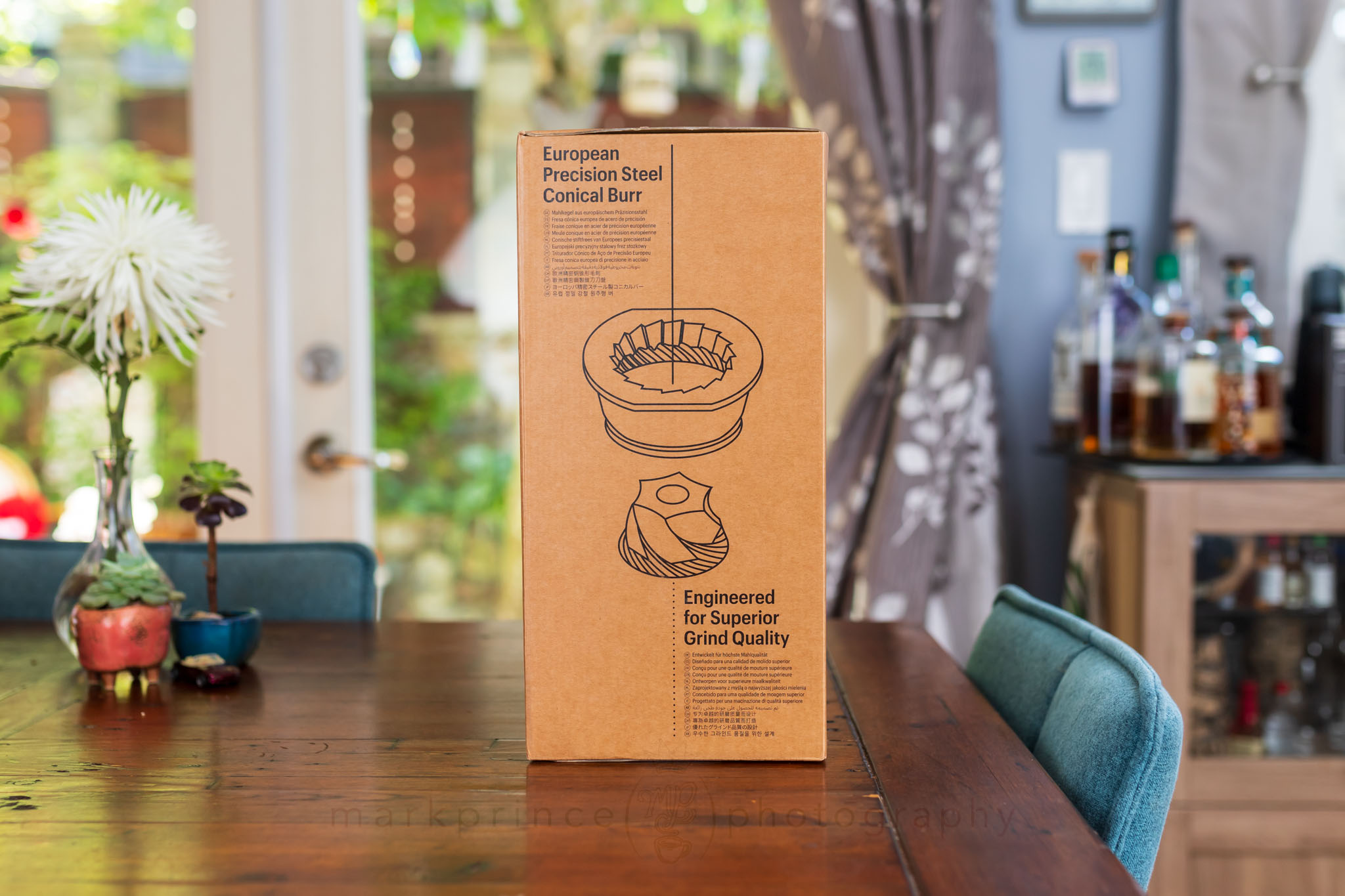
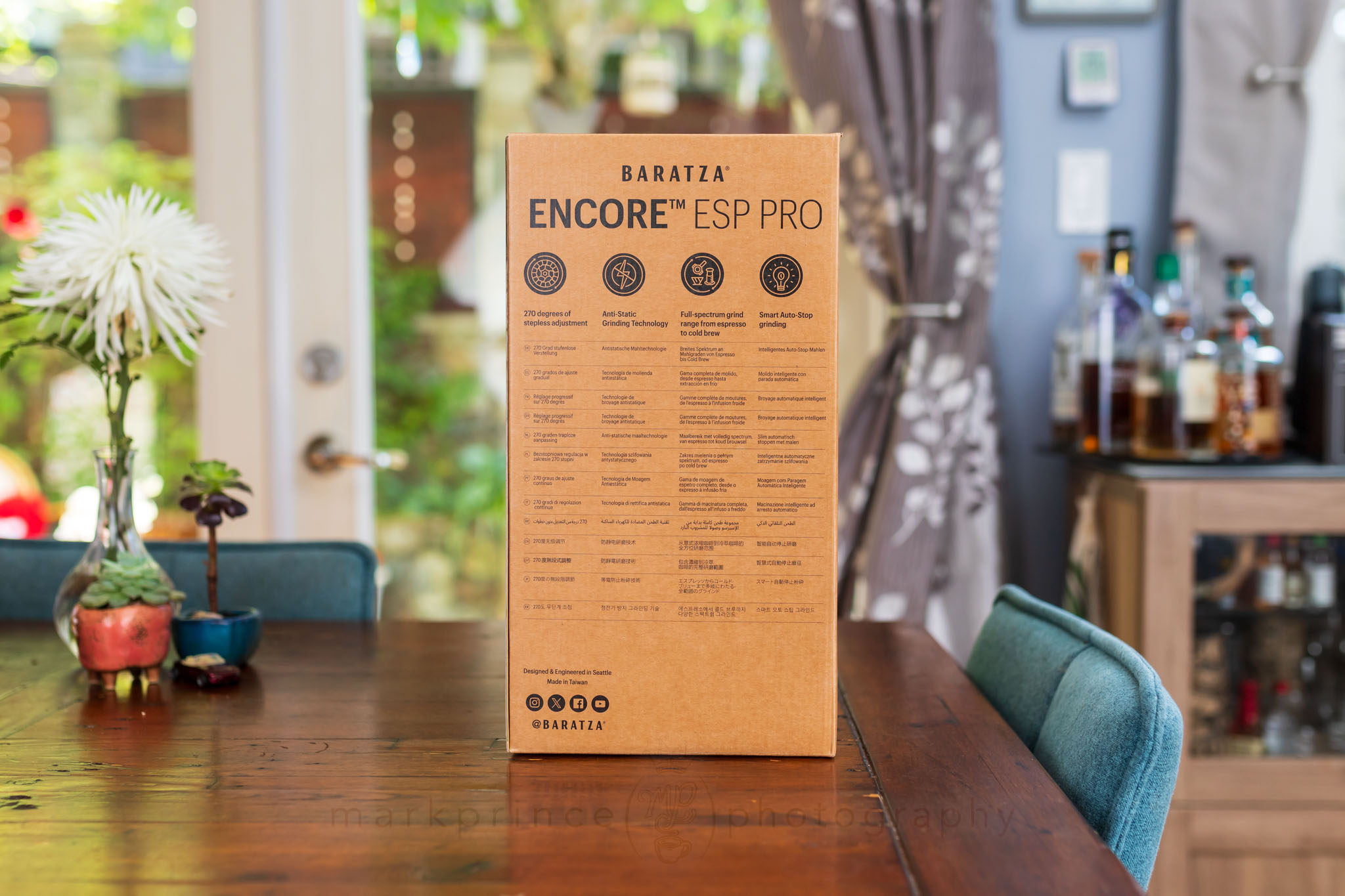
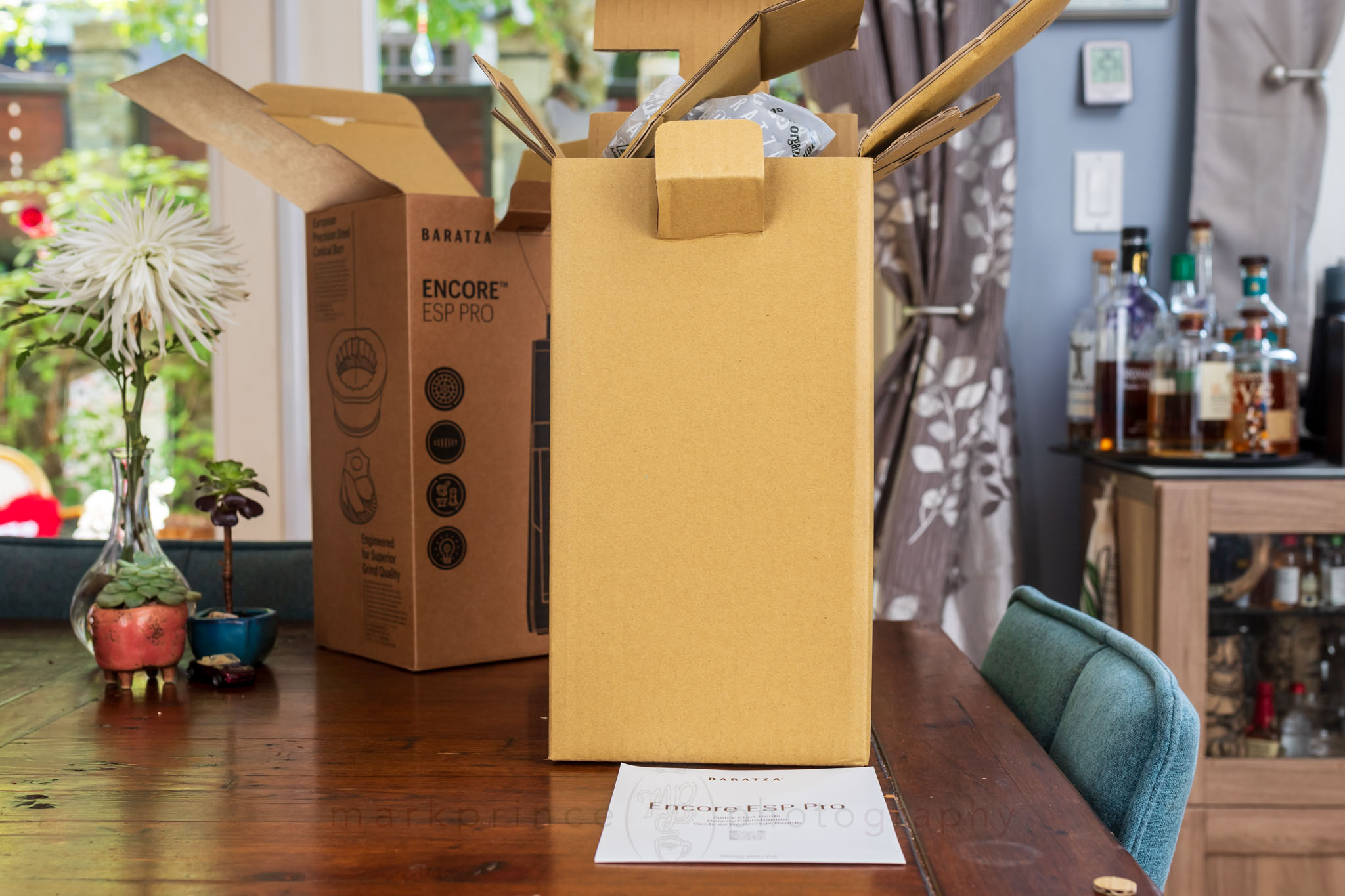
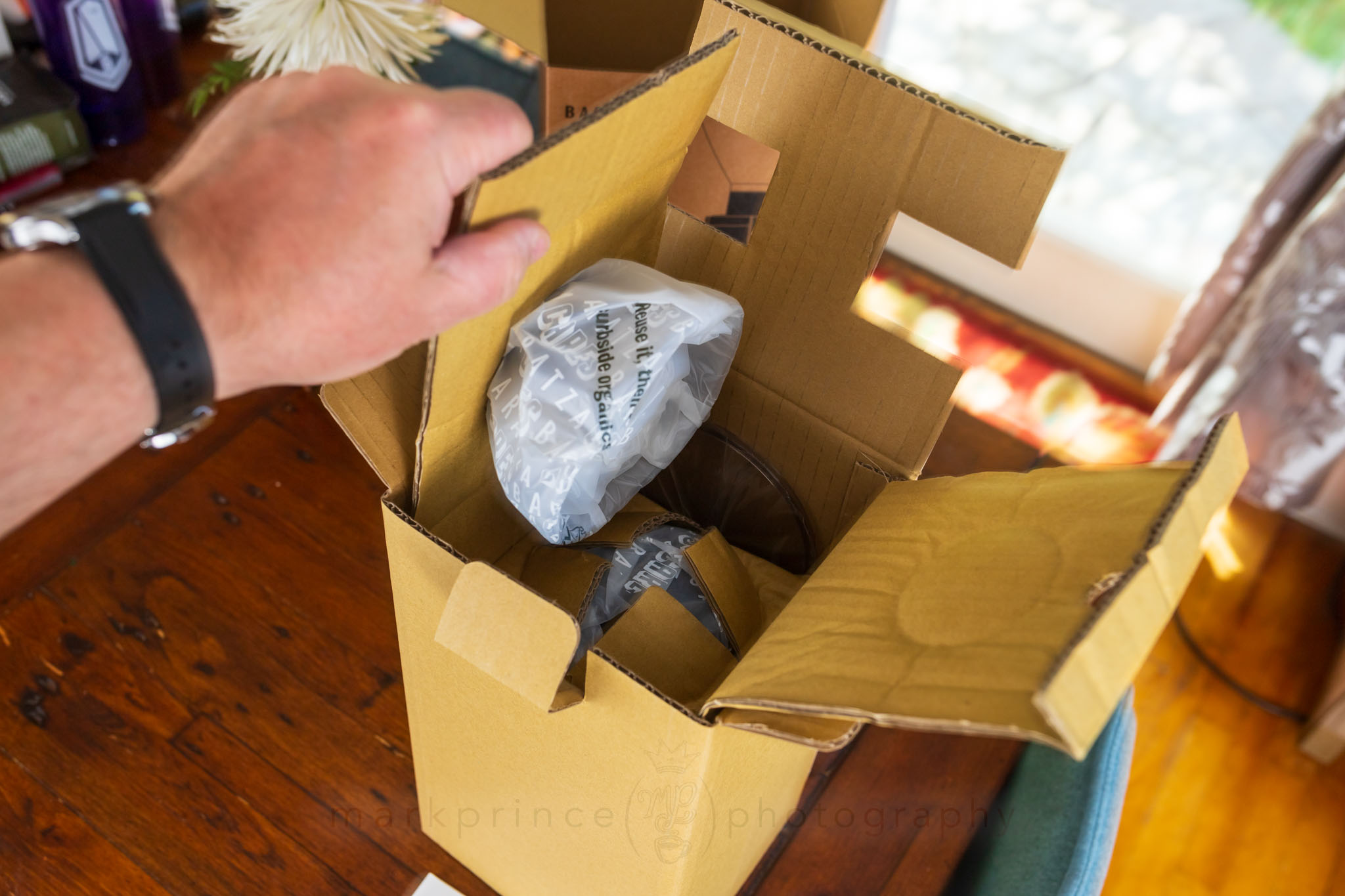
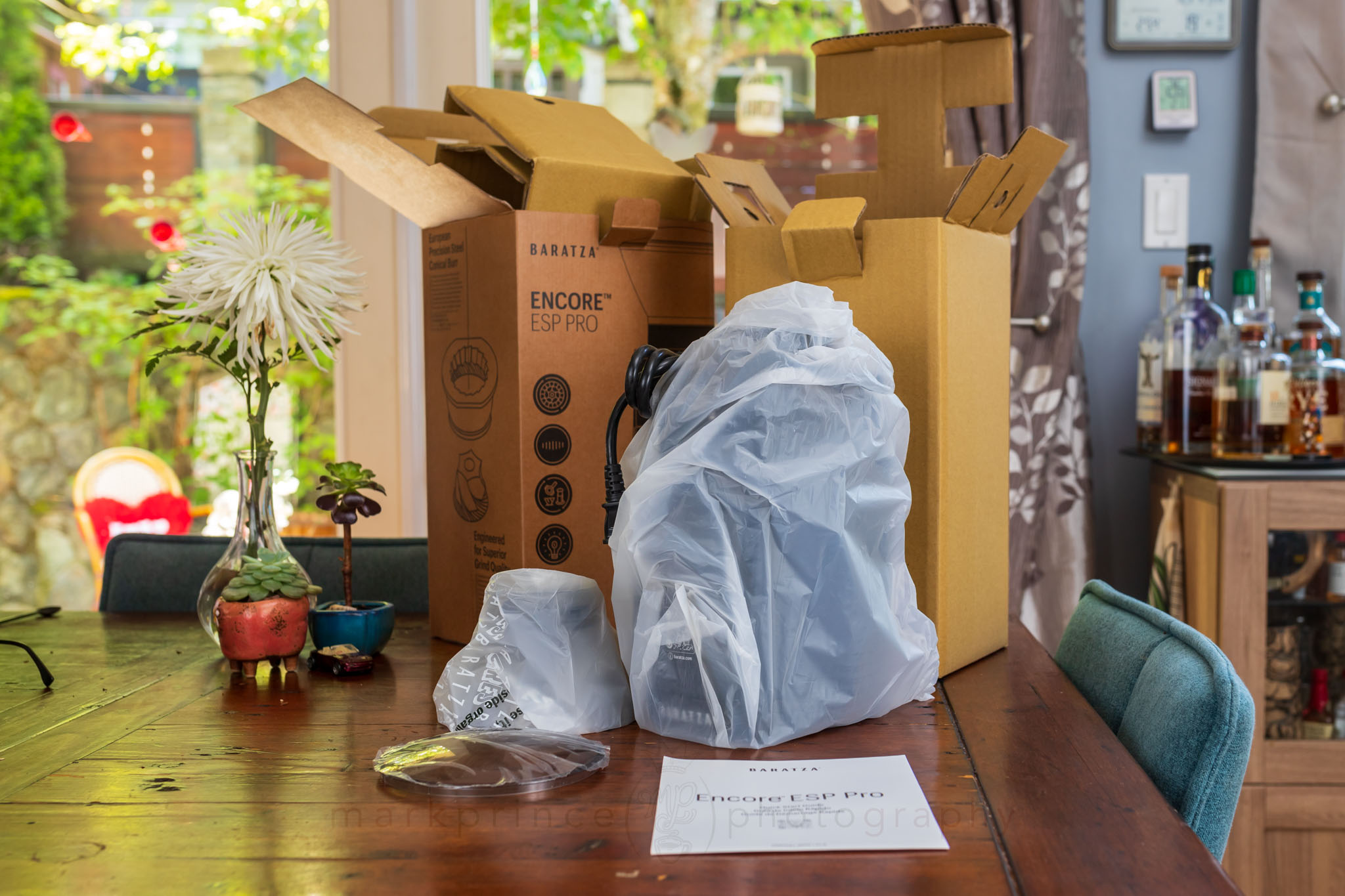
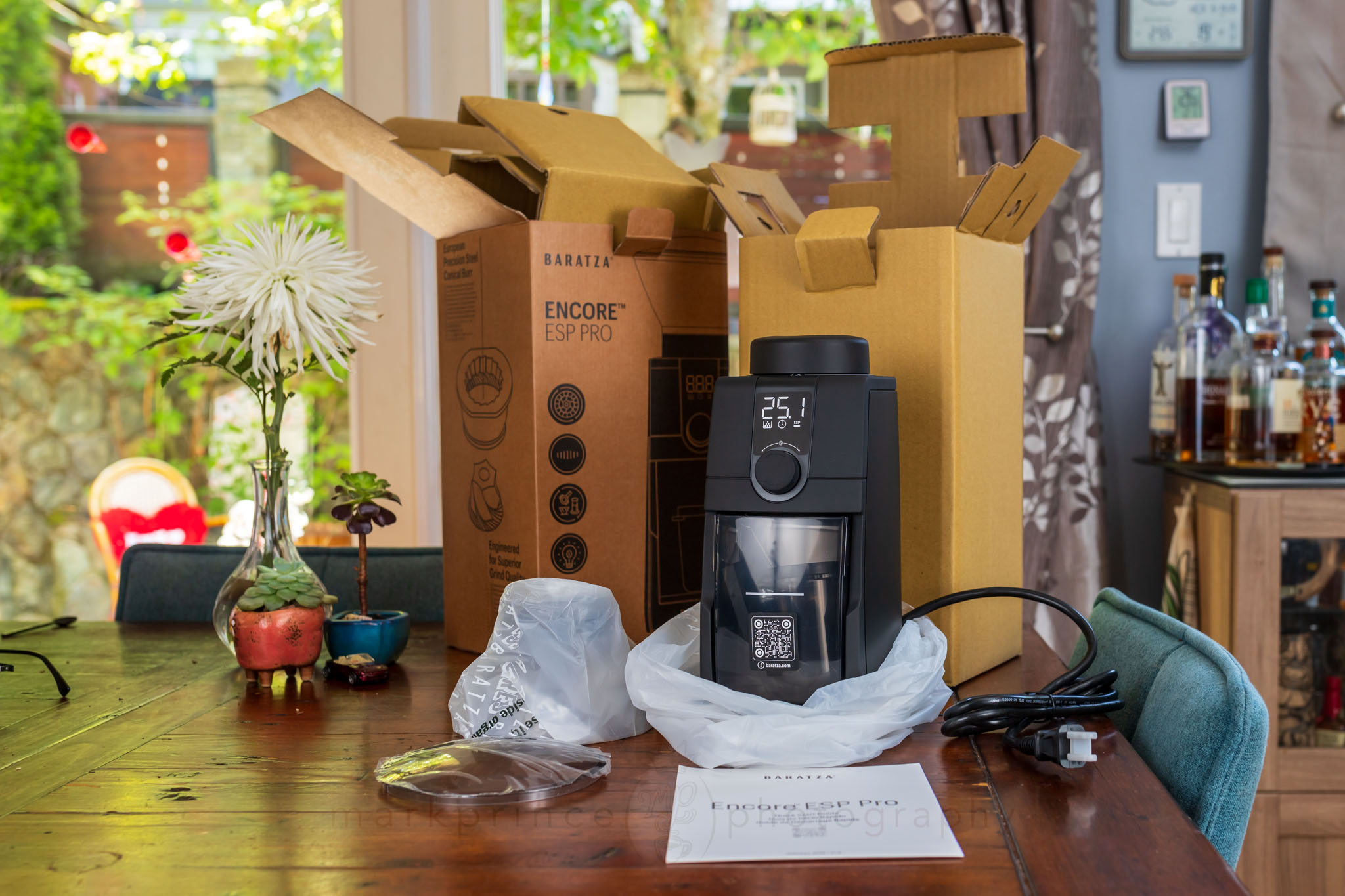
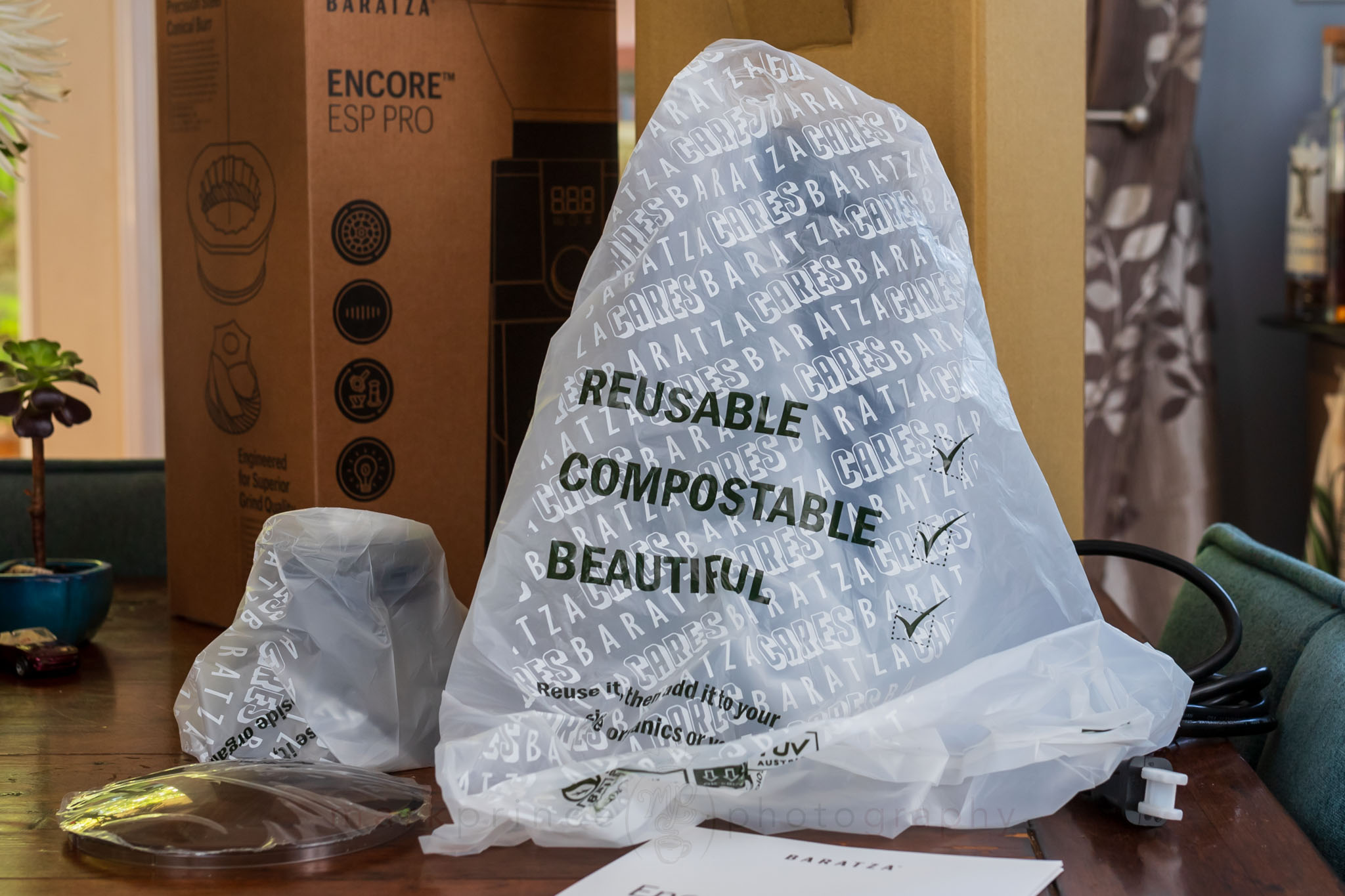
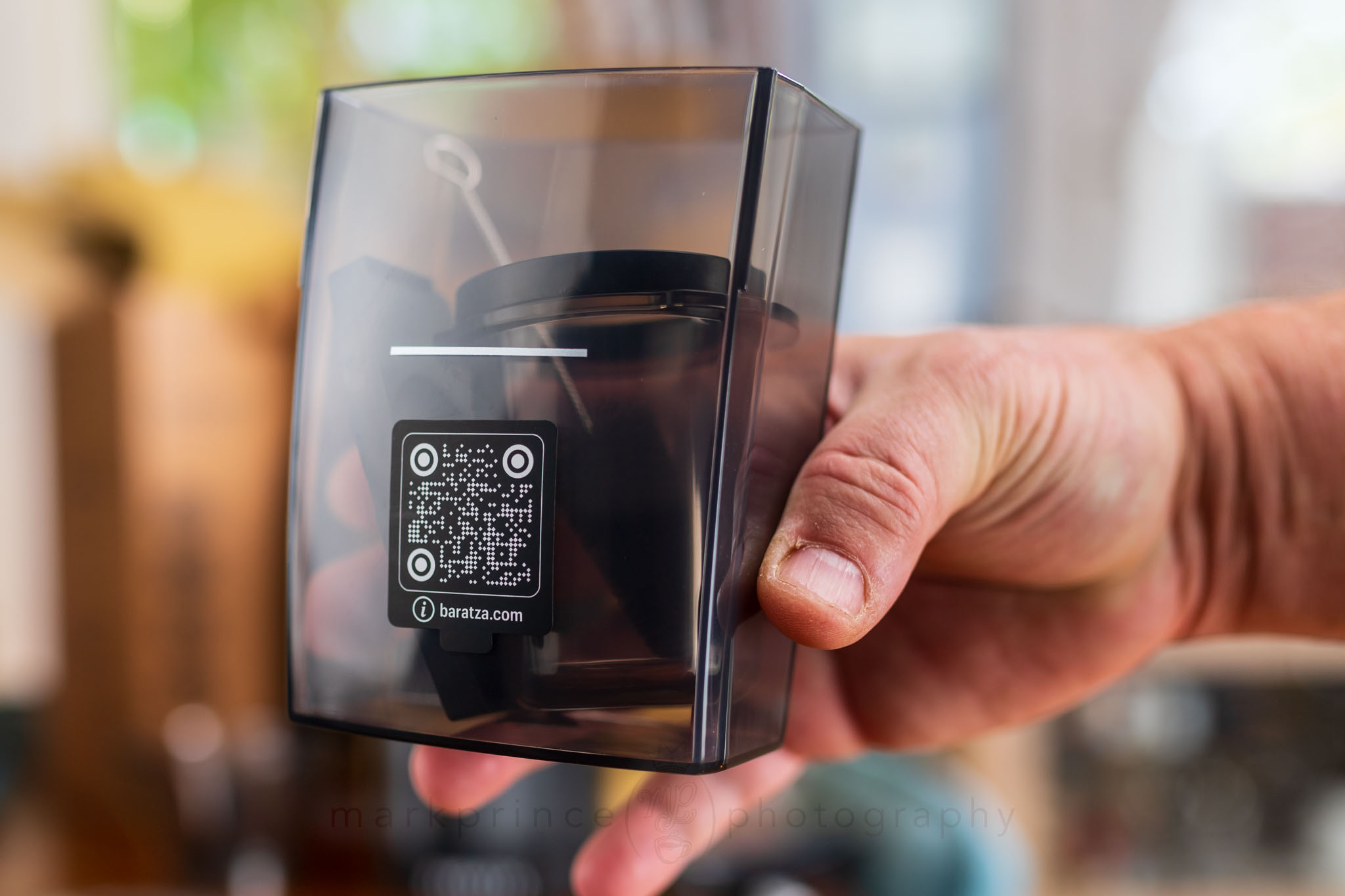
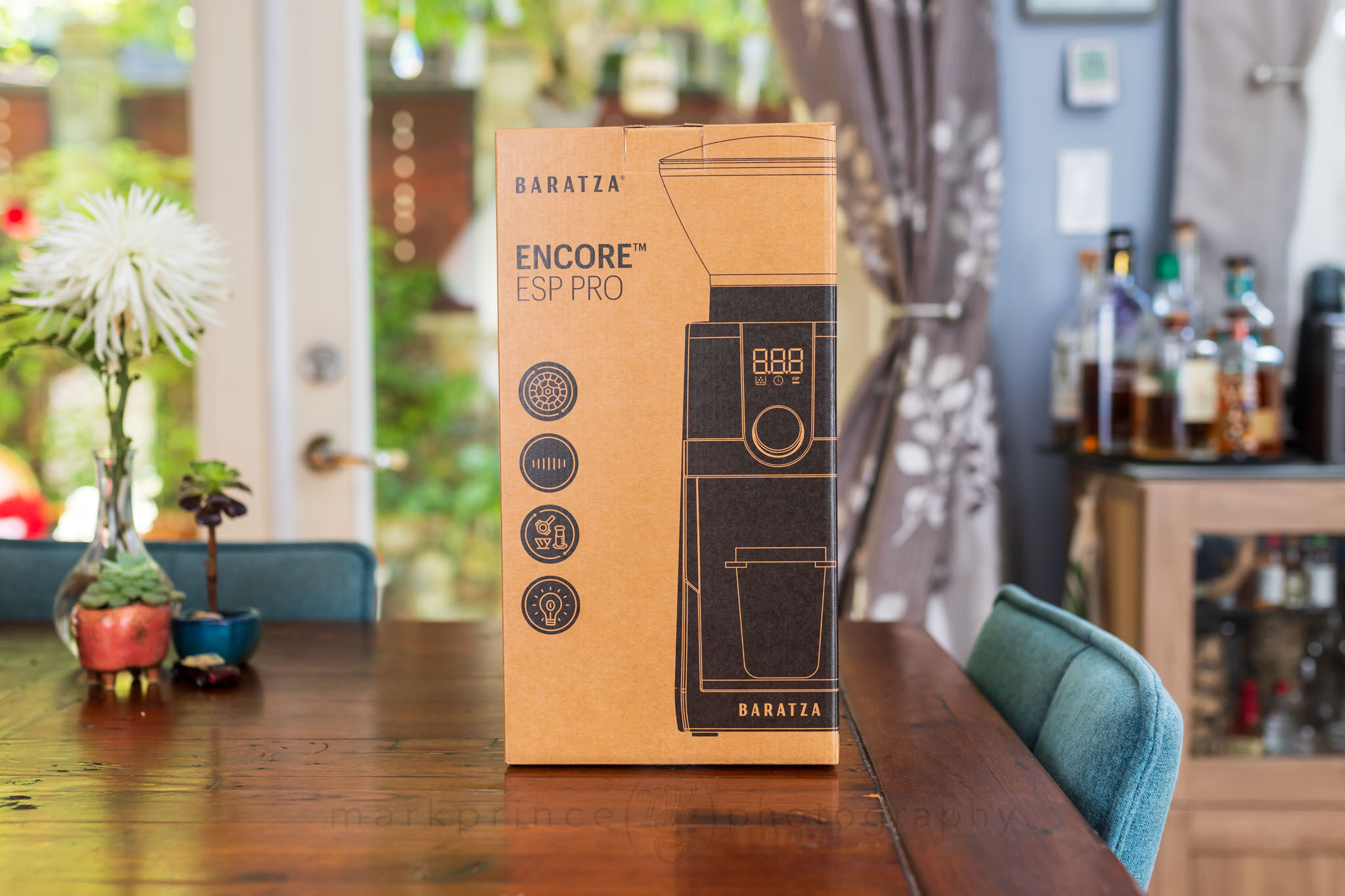
The Encore ESP Pro (or EEP for short) still adheres to Baratza’s “big beautiful brown box” philosophy of having sustainable and environmentally friendly packaging, right down to the compostable bags to protect the grinder from scuffs during shipping, but this time around they’ve also done a lot more printing on the box. It is packed securely and compactly, and when I first unboxed it, I thought perhaps they forgot to include the dosing cup and its little shelf, but nope, there it was, inside the larger grinds bin.
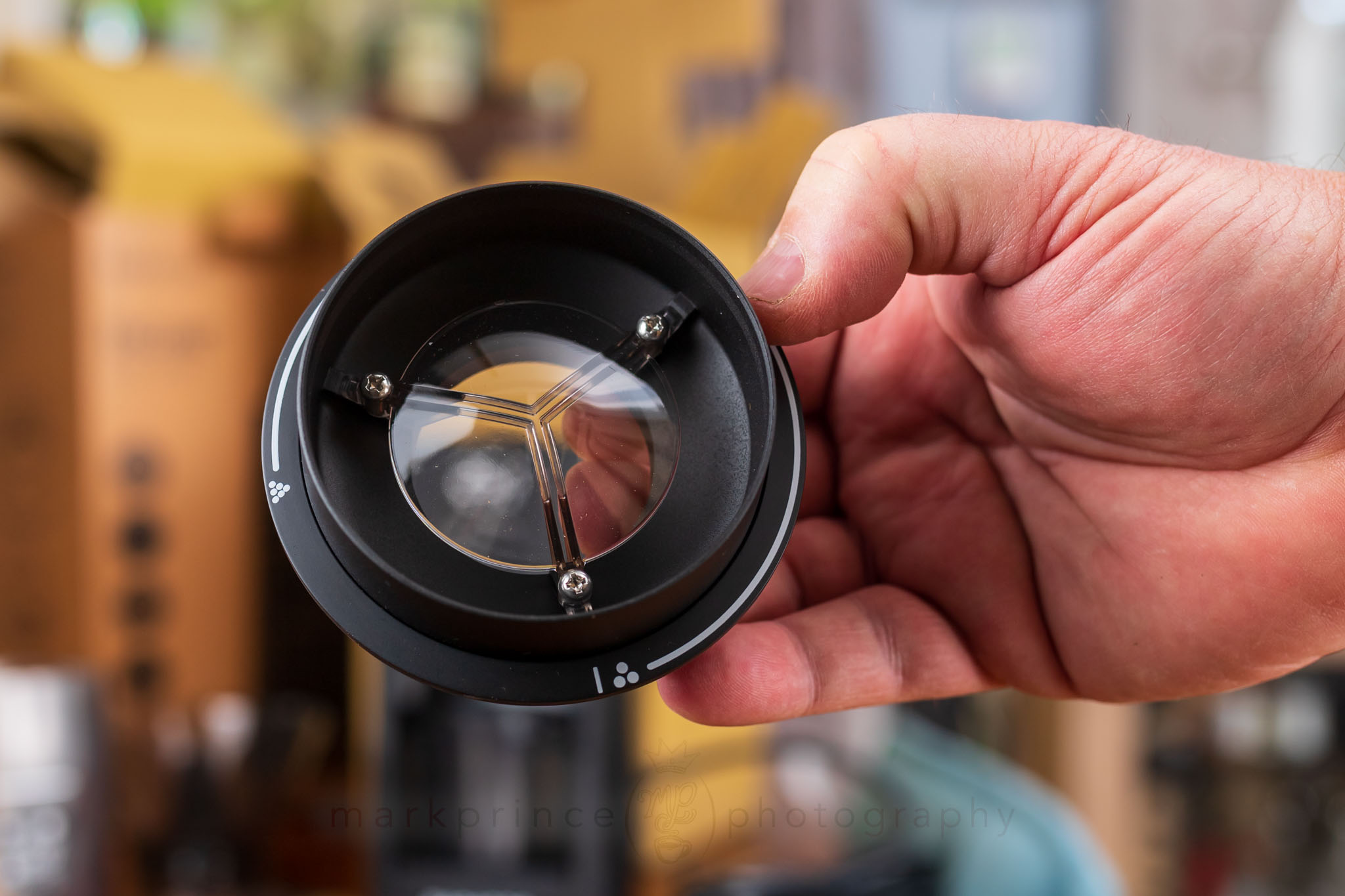
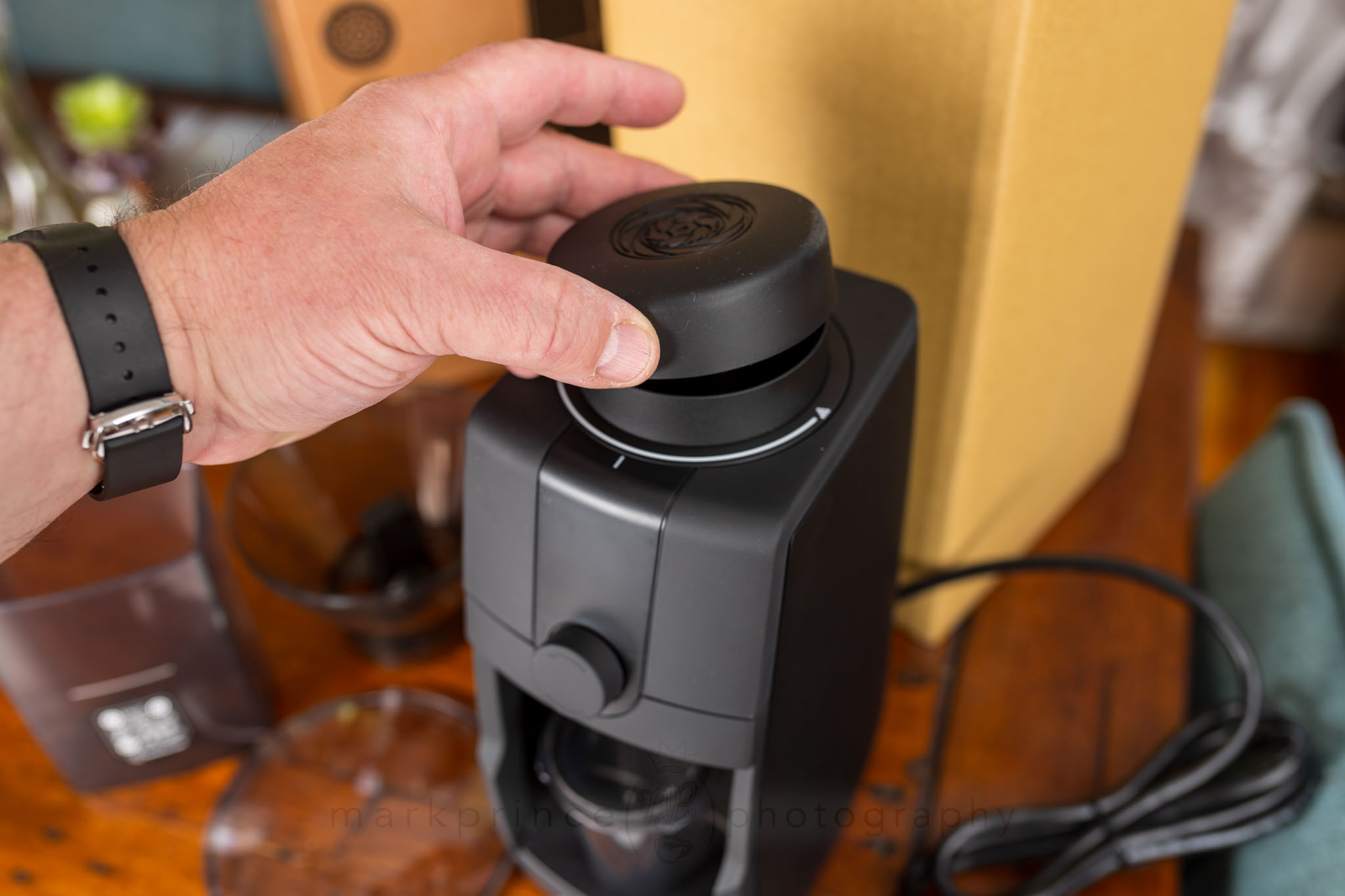
Setting up the grinder is mostly painless, though I did have a brief head-scratching moment that led to a quick call to Baratza support. I couldn’t figure out how to properly attach the bean hopper to the sleek, mostly metal single dose collar and grind adjustment dial. I checked the quick start guide and manual, but didn’t find anything about how to assemble the bean hopper. I noticed tiny “dedents” on the hopper and a subtle ridge inside the collar; it looked like they should snap together. I pressed hard. Nothing. Pressed harder. Felt plastic groaning. I had mild panic and visions of broken plastic.
Turns out, I was doing it all wrong.
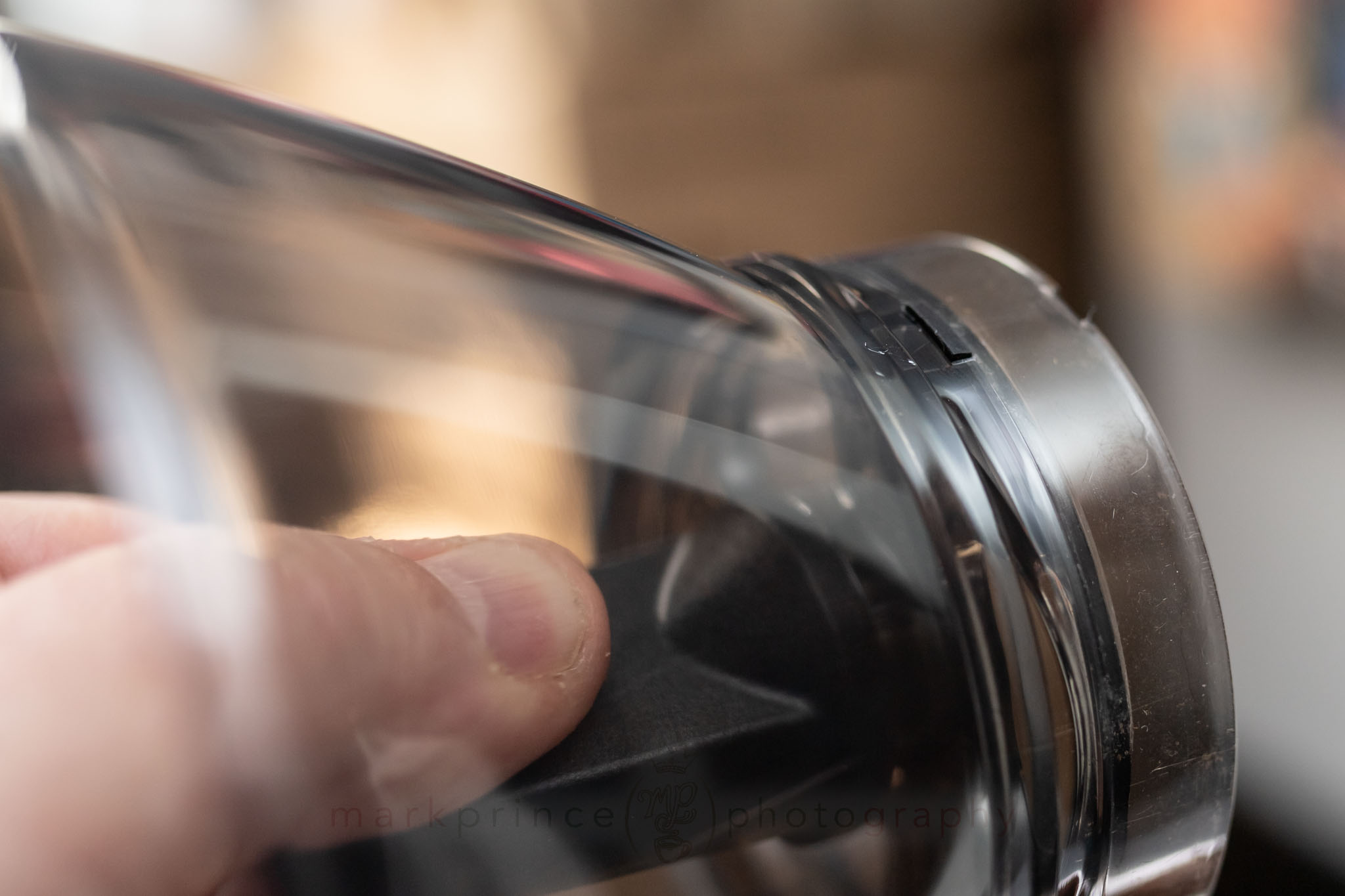
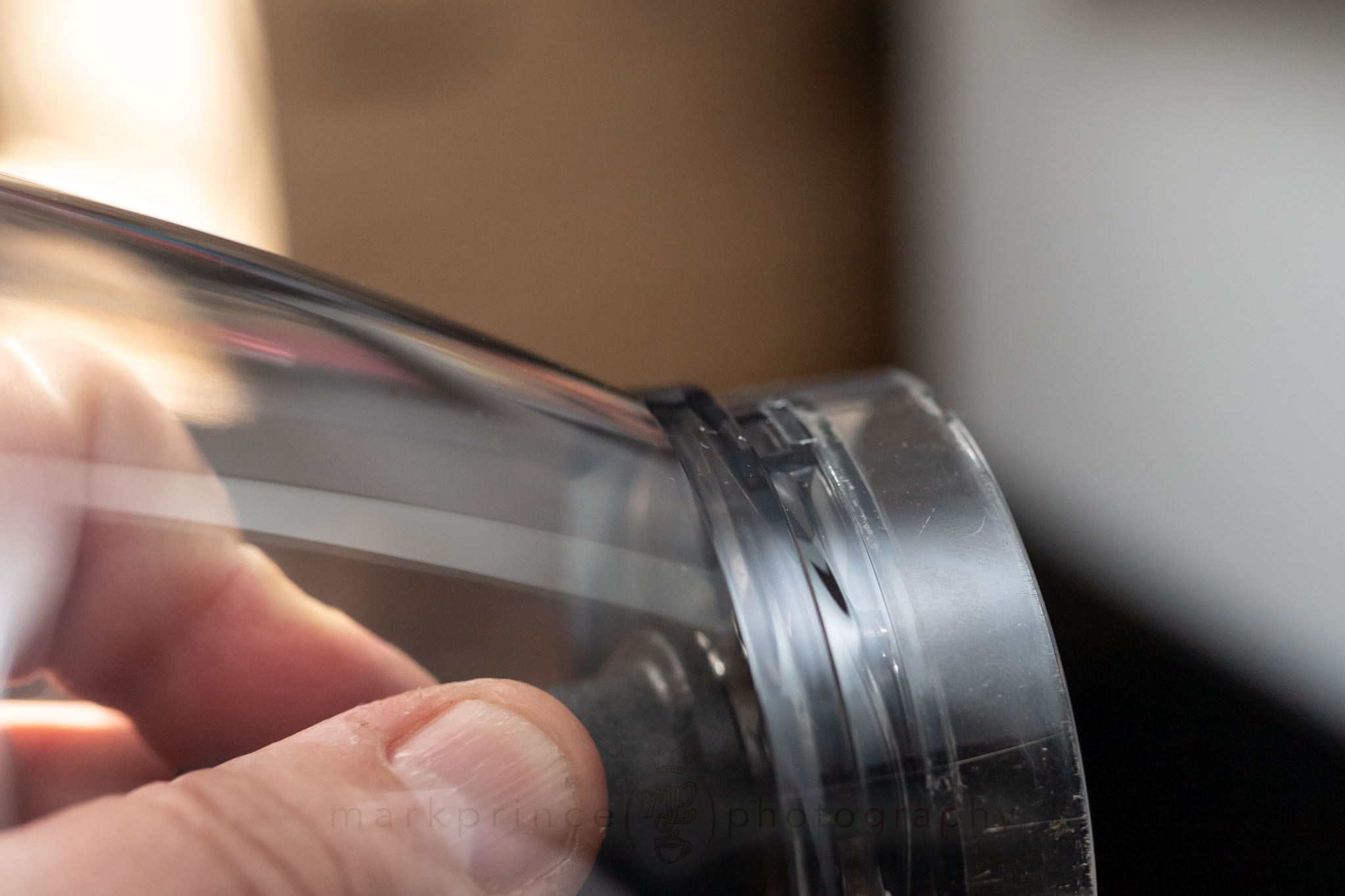
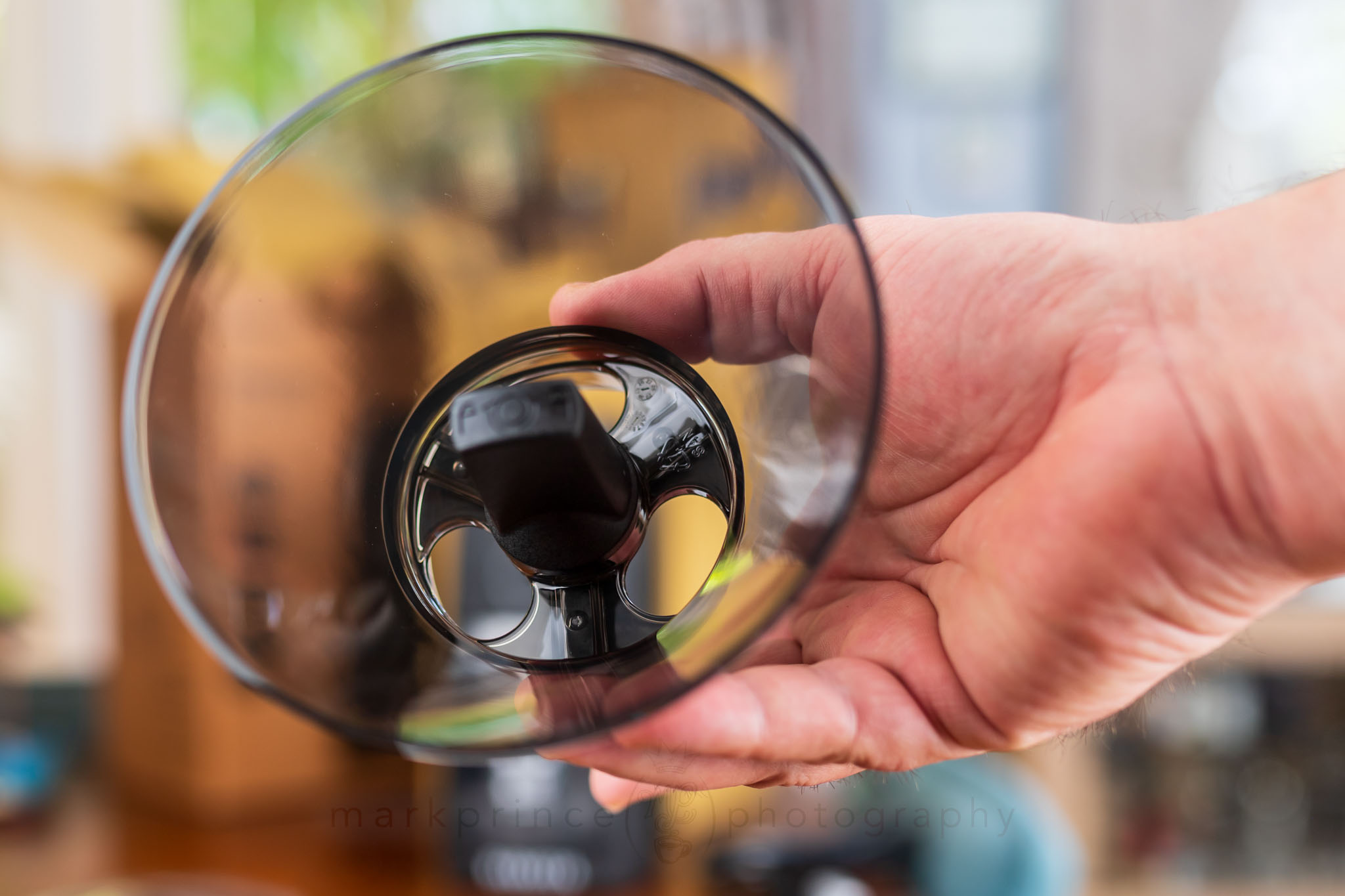
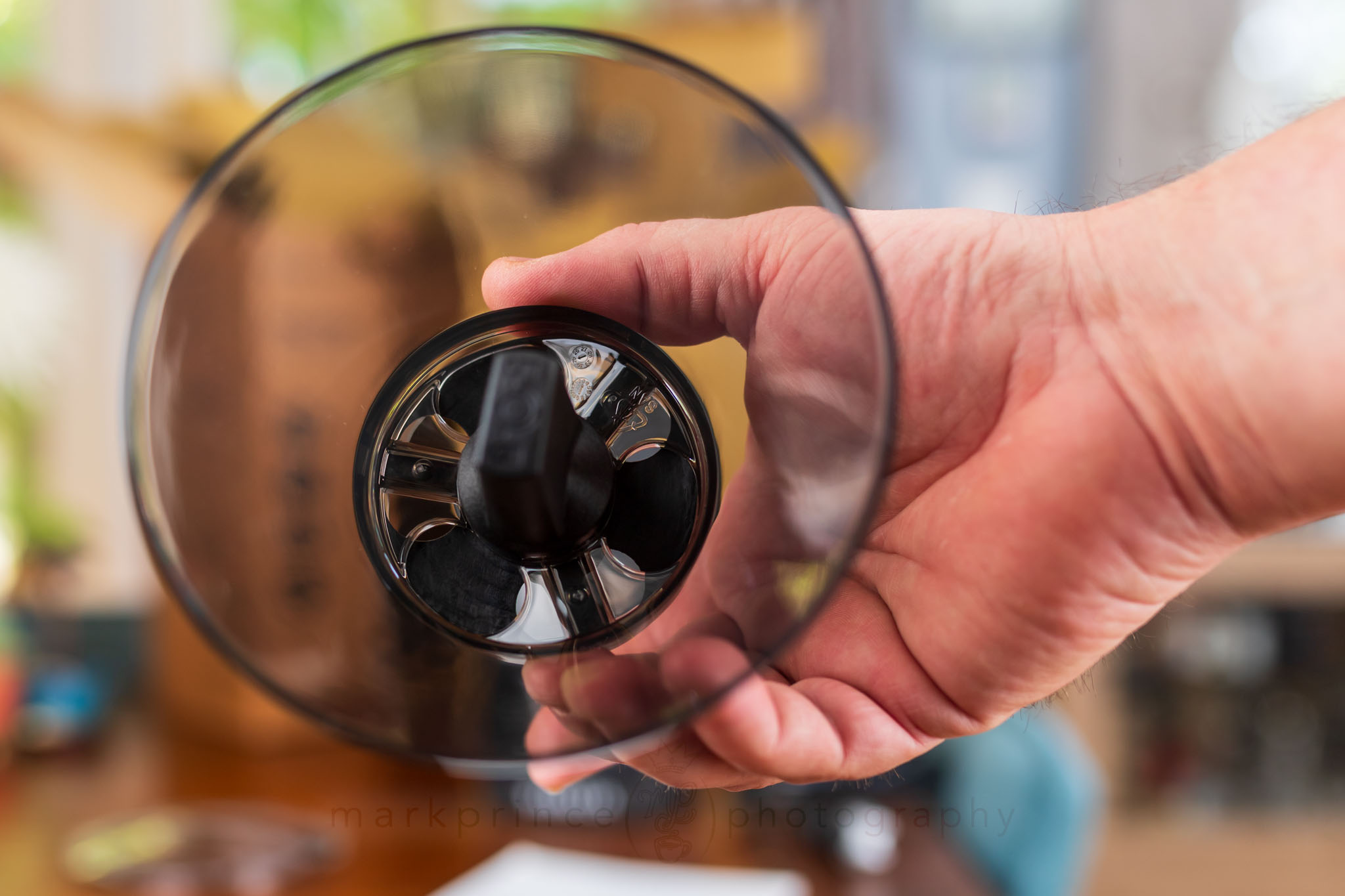
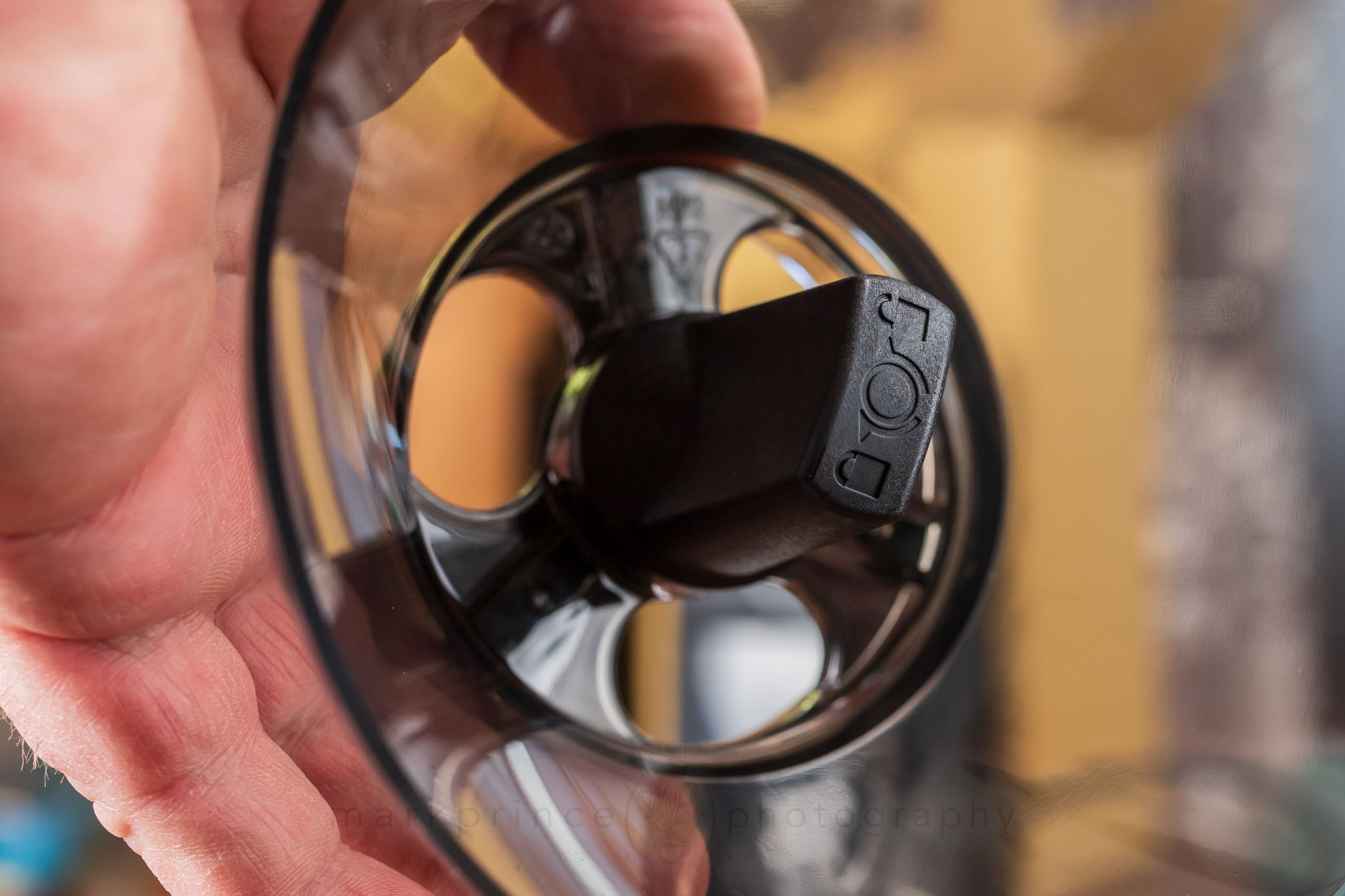
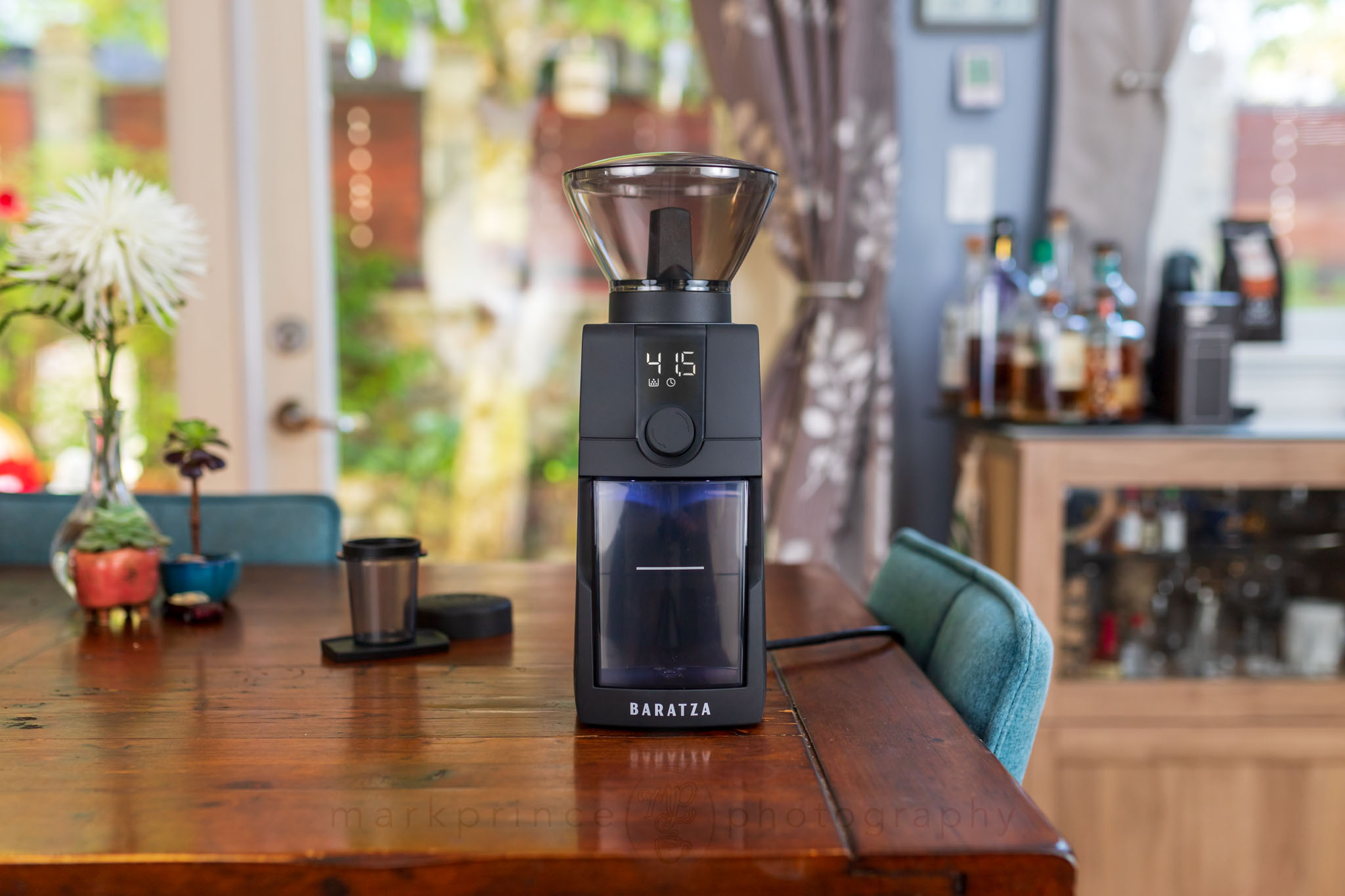
Those dedents are part of a clever new system: they recess into the hopper body when you close the internal “trap door” for the beans, and stick out again when you open the bean flow vanes.The hopper, inspired by Breville’s Smart Grinder Pro hopper, but more minimalist, has a rotating handle inside. Turn one way and vanes shut the bean chute; turn the other and they open. The action also recesses and exposes the little dedents. The trick? Close the vanes, insert the hopper in the single dose bean collar hopper,, then open them. Voilà: hopper locked in place.
With that mystery solved, I set about my first use and exploration of the grinder.
Materials and Build Quality
Let’s just get this out of the way: everything about the Encore ESP Pro (or EEP, for those who appreciate a good acronym) feels like it belongs in the premium league. Starting with the single dose hopper and grind adjustment collar, the construction is mostly metal where your hands interact, with plastic used only where it makes sense.
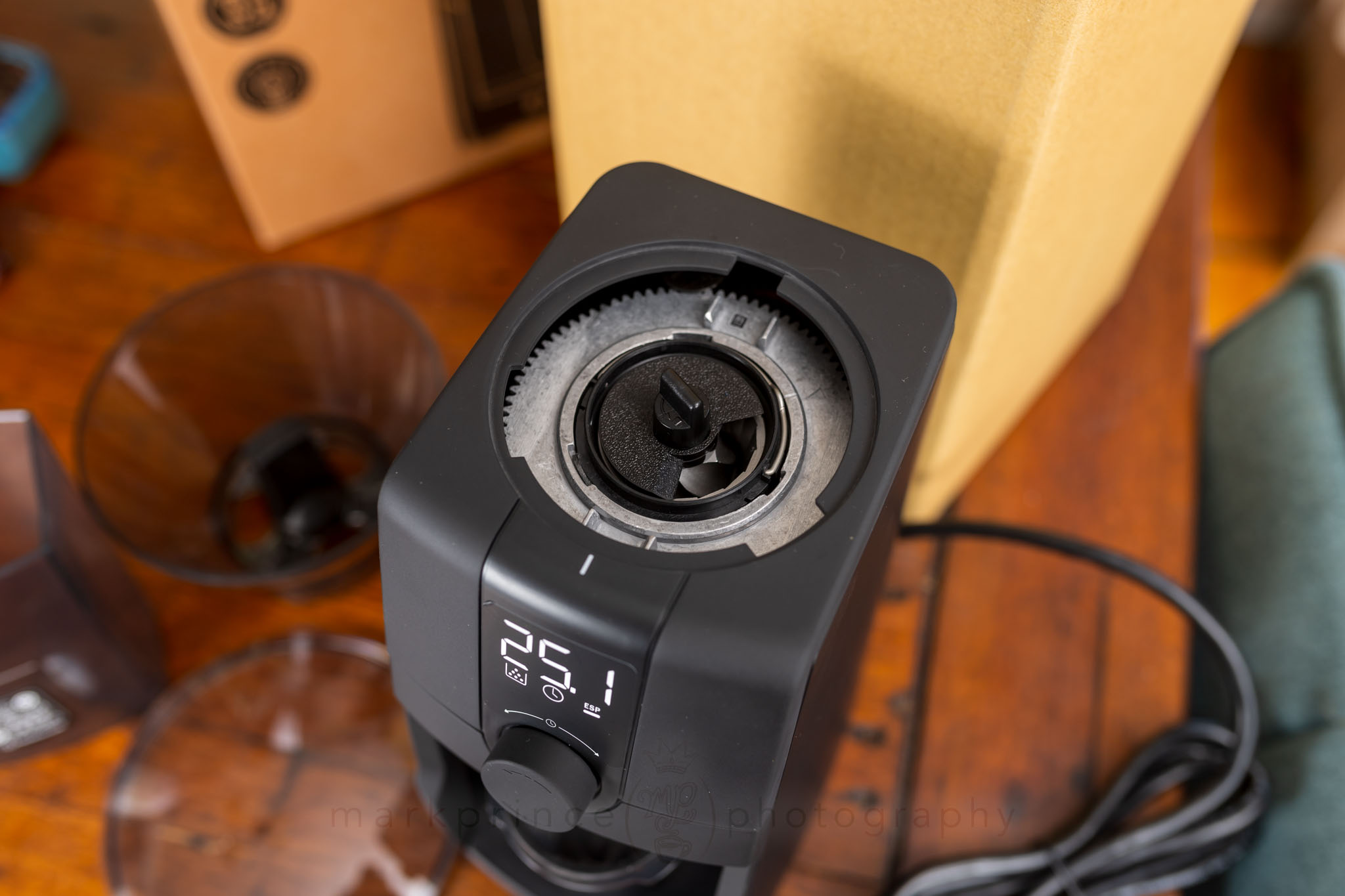
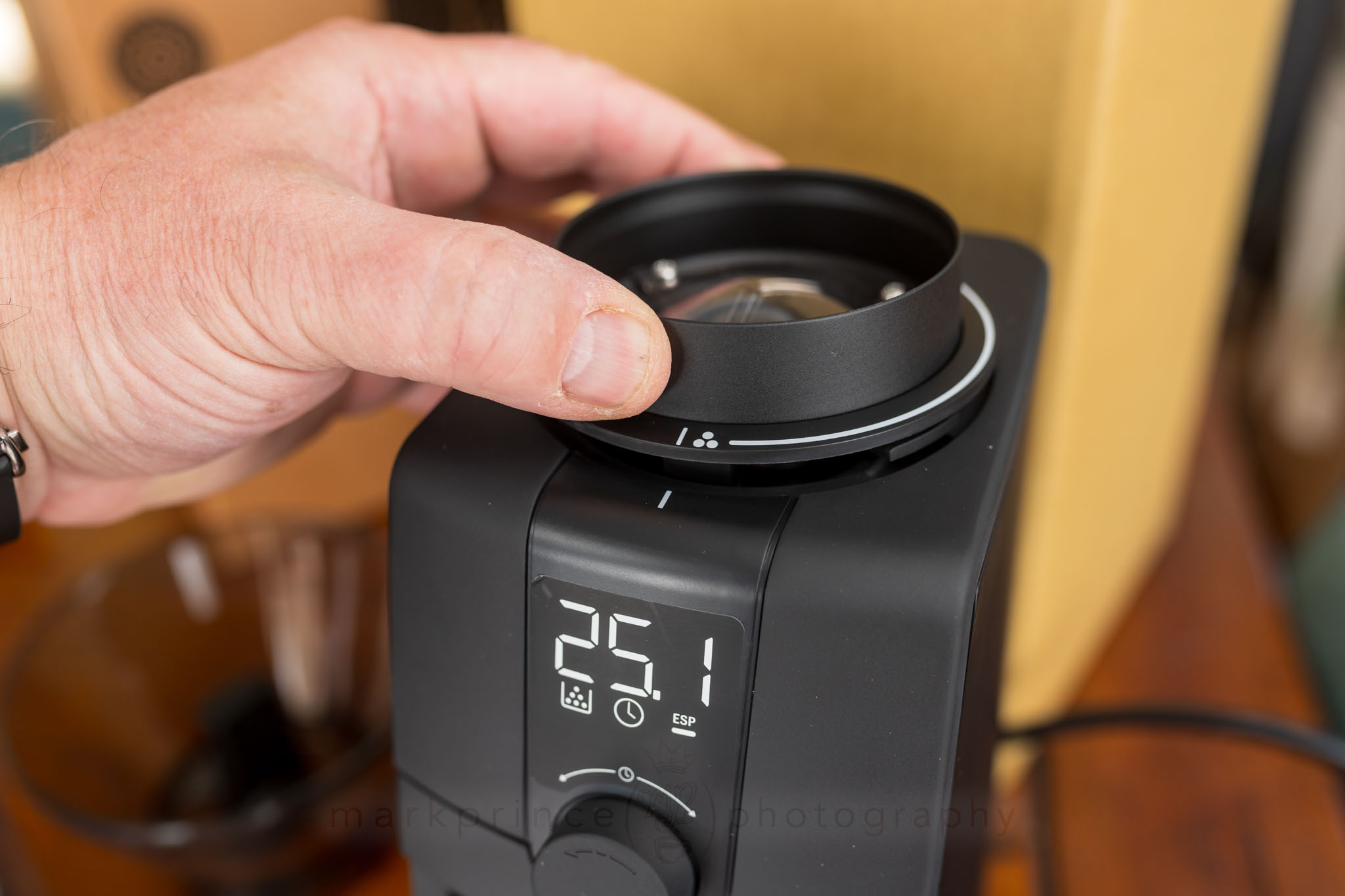
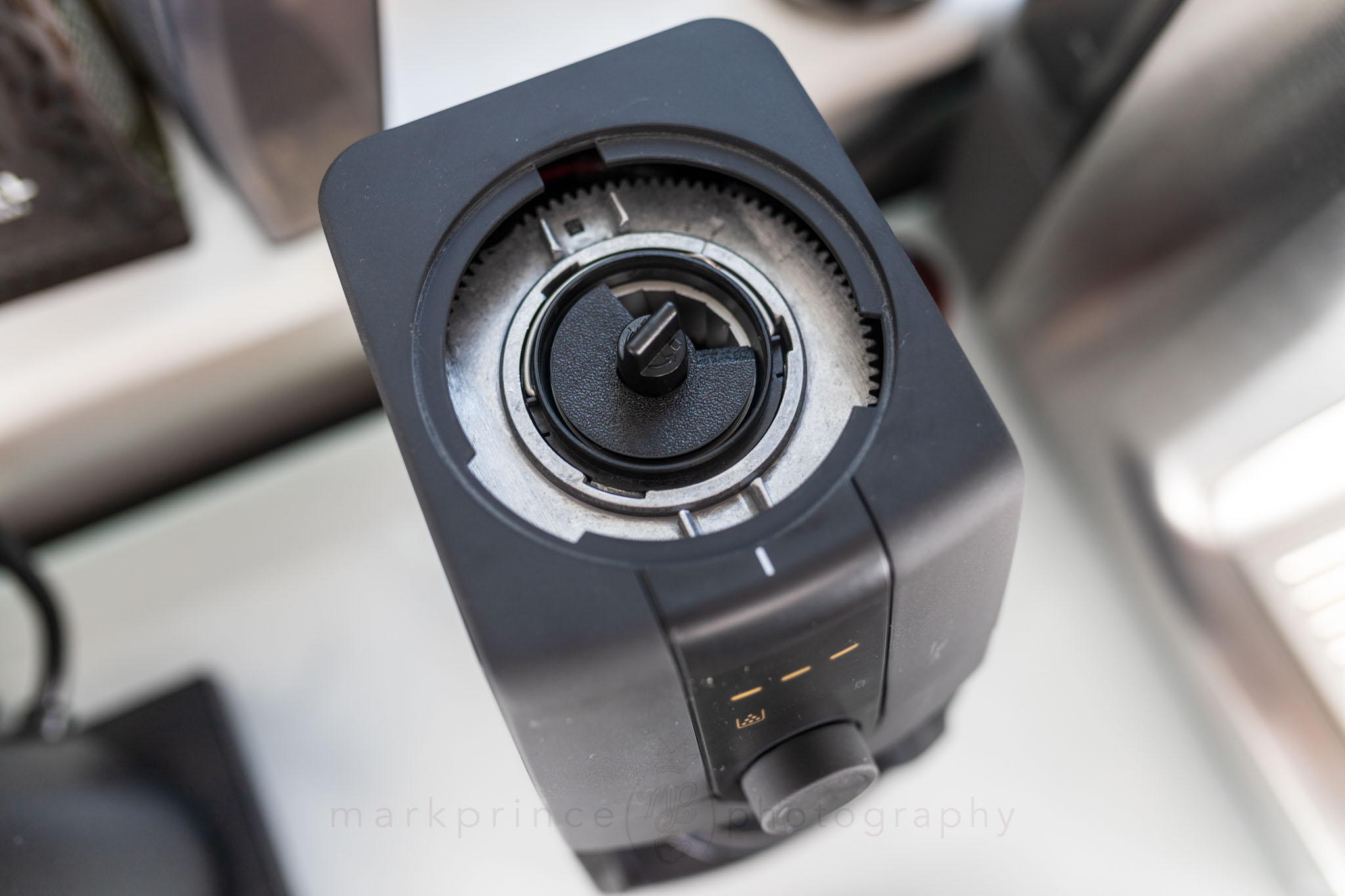
The hopper slots into a largely metal burr carrier and adjustment mechanism. There are no clicks when turning it either. This is a stepless grinder, so smooth rotation is the action you’ll feel. The metal is a sharp, nearly matte black, with bold white lines and bean size icons that are easy to read. It also rotates a full 270 degrees, a big jump from the 180 degrees on the regular Encore ESP.
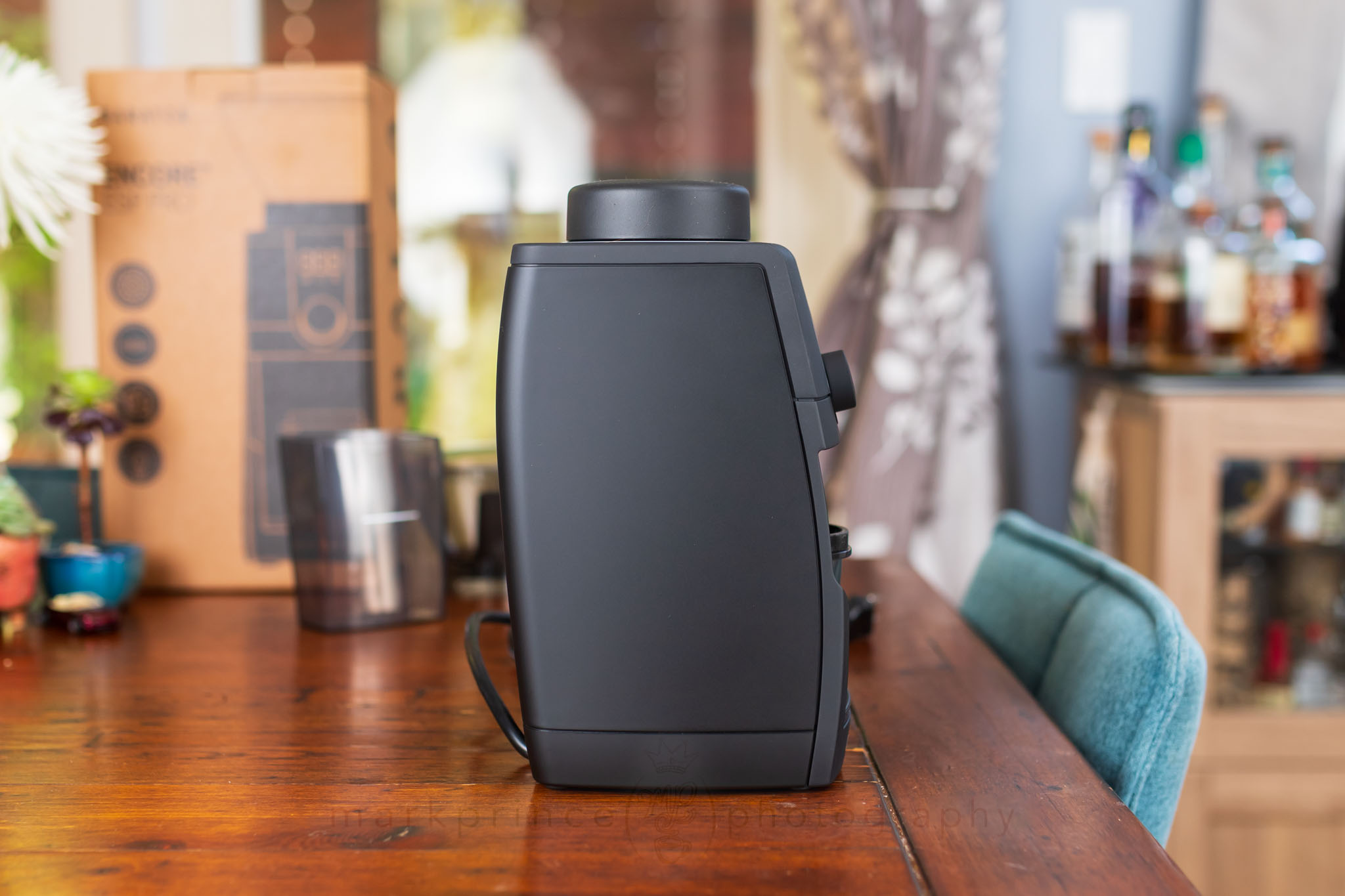
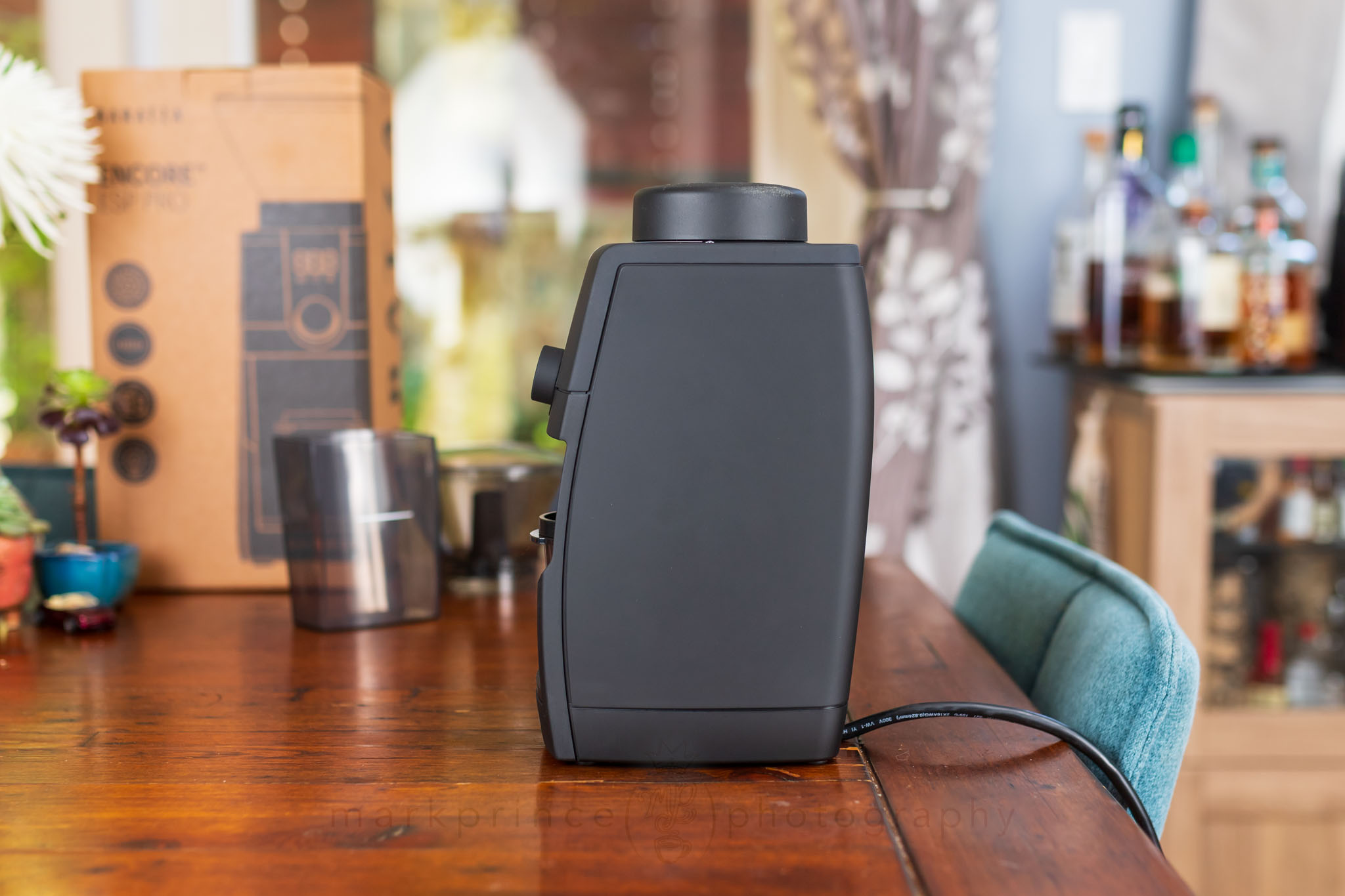
Now for the side panels. I could have sworn they were metal. They even sound like it when you tap them. But surprise: they’re plastic. That said, they’re coated in some mystery finish that feels cool, textured, and convincingly metallic. Bonus points: they resist smudgy fingerprints. Actually, the whole grinder does. Even the front display somehow stays relatively clean despite daily use.
The metal parts of the grinder are mostly in the grinds chamber, motor mount, skeleton, and what I call the “shoulders” of the unit. That’s the section that wraps from the top, around the display, and down the front where the control dial lives. It feels like plastic at first touch, but it’s a coated metal wrap.
The on demand bean hopper has been redesigned too, and is different from the bean hoppers Baratza has been using for over a decade. The EEP full bean hopper has a lower profile, and likely holds less than the older Encore models (I will measure that). But it has a slick new bean stop system that keeps your coffee from making a break for it when you remove the hopper. A lot of the engineering behind it been borrowed from the now 15 year old design of the Smart Grinder Pro hopper, but it is much more refined, more low-profile, with a lot less plastic and moving parts. It’s small things like this that show someone was thinking and evolving a product line.
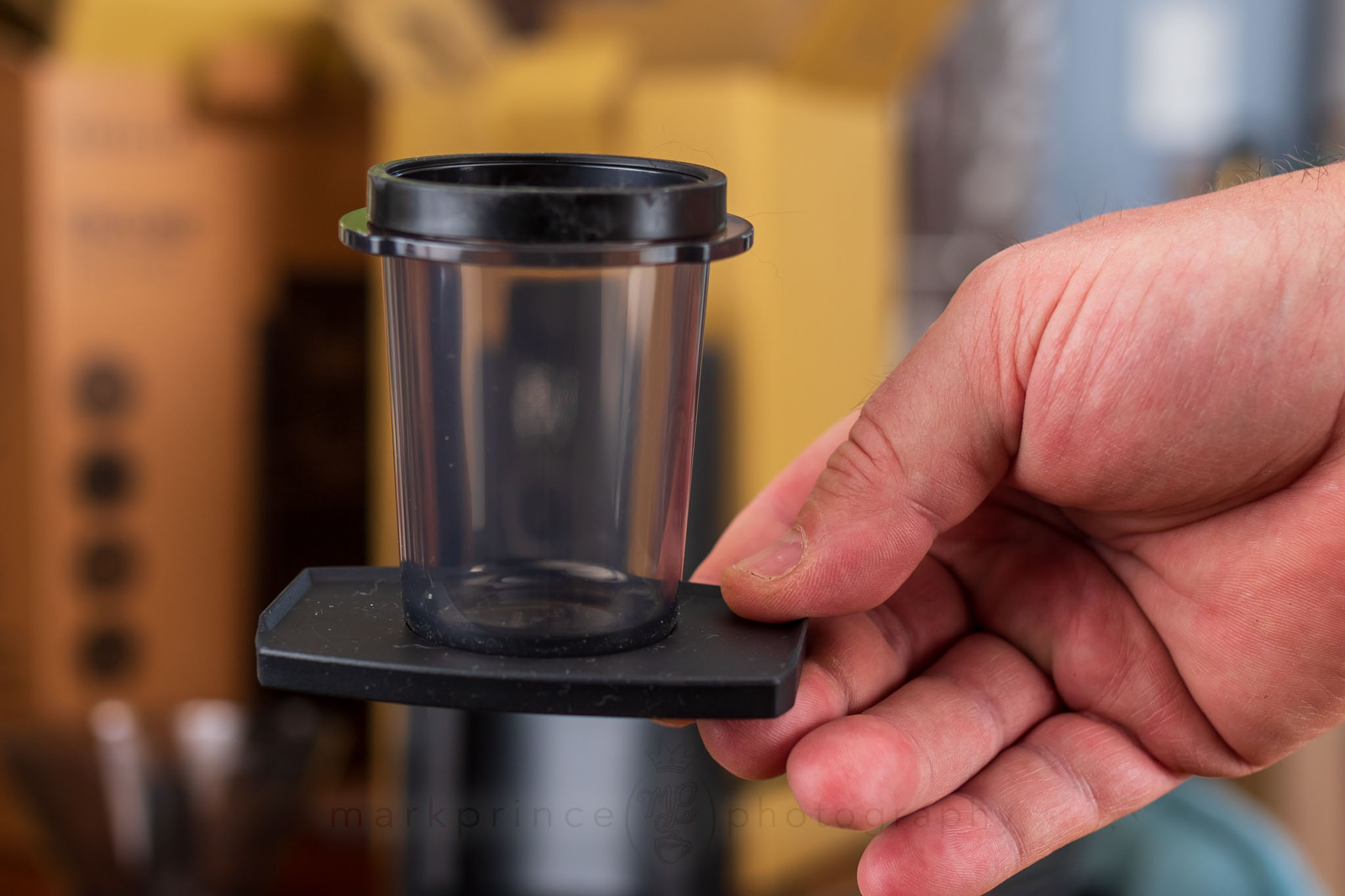
The grinds bin seems to be the same one from the previous Encore and Virtuoso models. I’ll do a side-by-side check to be sure, but it looks and feels identical. No surprises there. Ditto with the single dose grinds catch and the little silicone base it slots into.
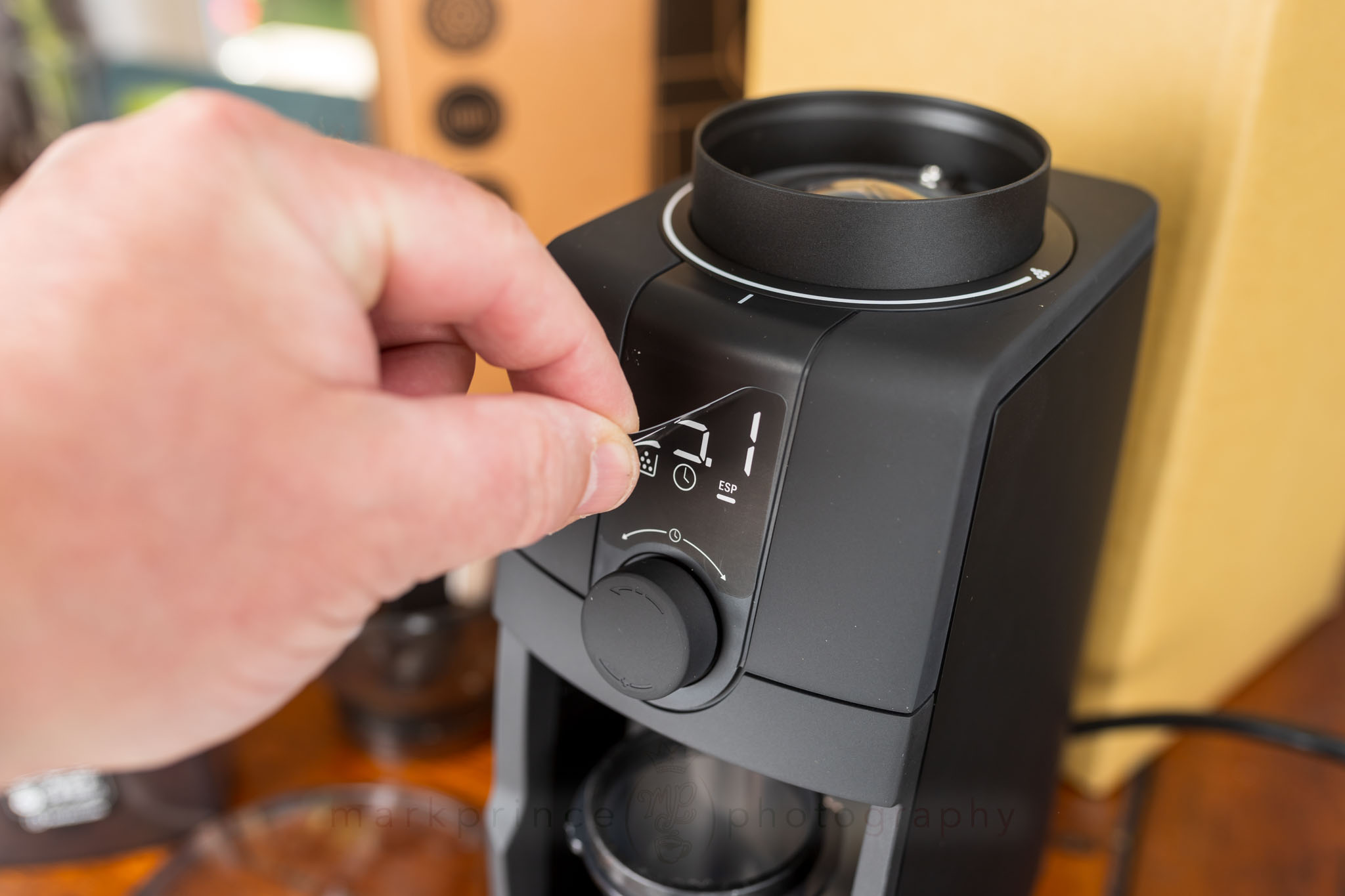
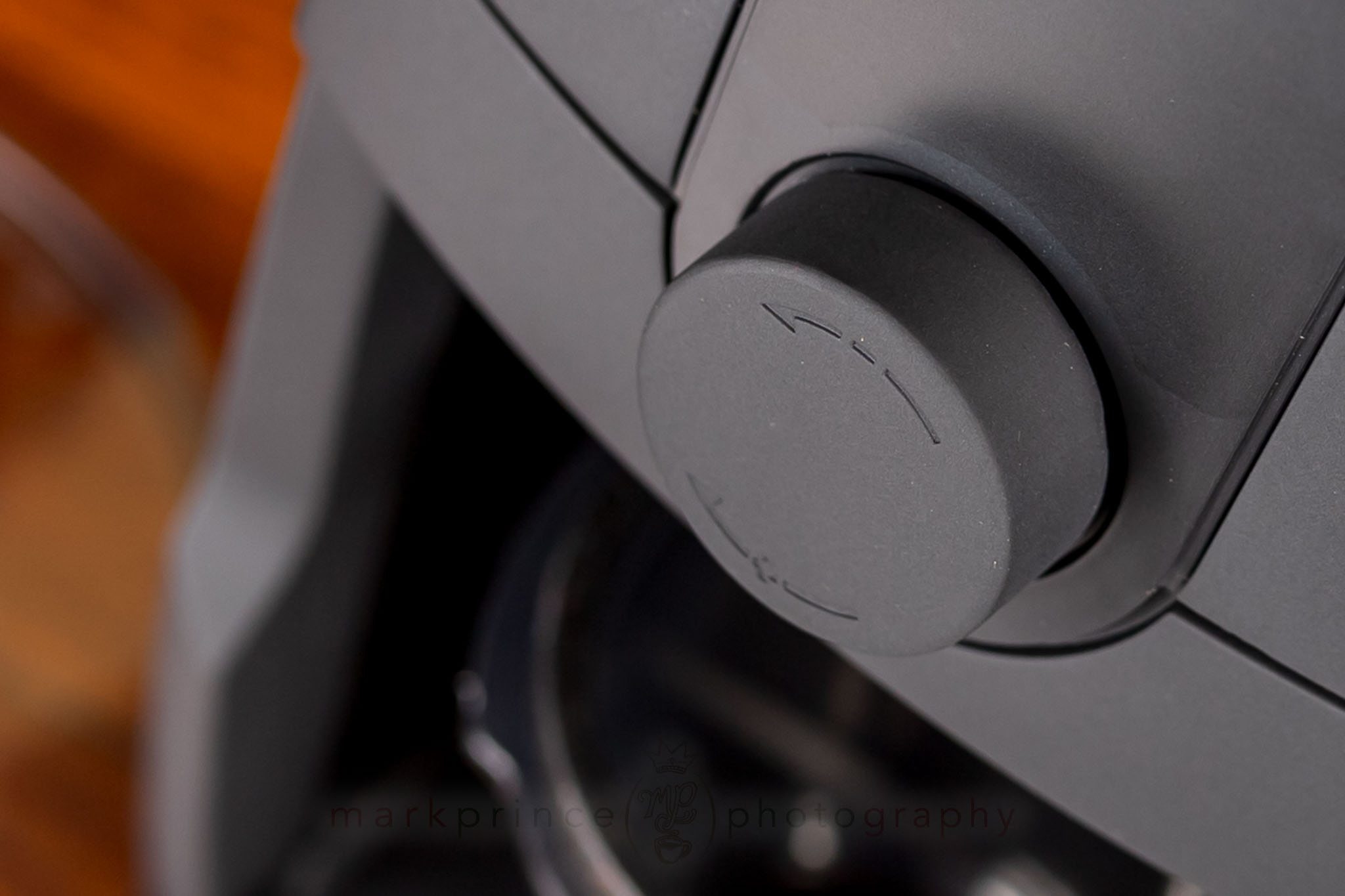
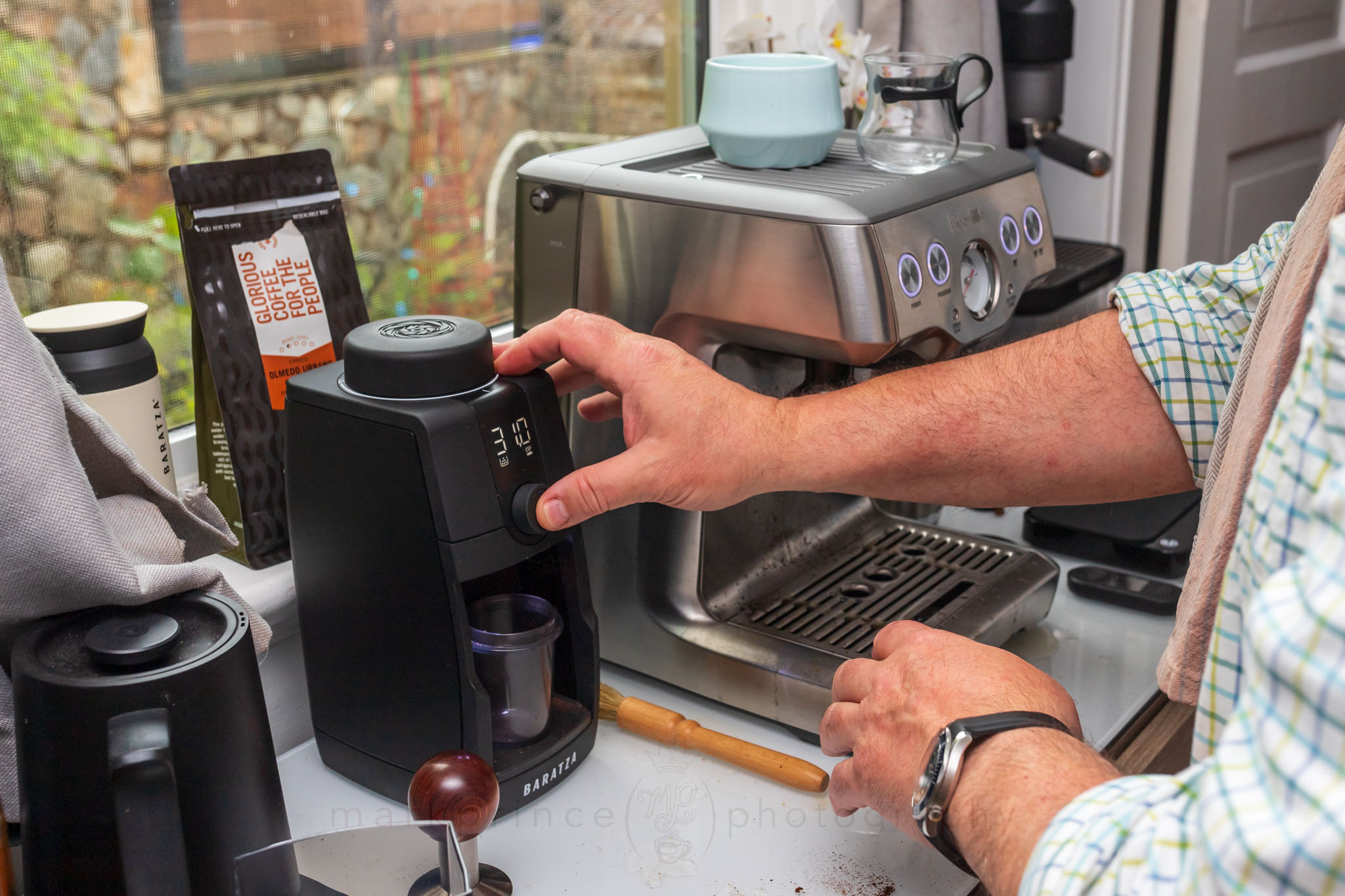
That front control dial, though, is a highlight. It has a good weight to it and turns with a satisfying dampened feel. It’s tactile and gives off a vibe that says, “I’m not like those cheap plastic knobs on budget machines.” Of all the control points Baratza has put out over the years, this one feels the most high-end. Etched into the dial are directional indicators on the front.
You also get a solid accessory lineup: the single dose grinds catcher, the bigger bin, the single dose hopper, and the larger bean hopper. Swapping them out is easy and intuitive. The grinds cup works with both 58 mm and 54 mm portafilters. Just pull out a silicone ring to accommodate the smaller ones.
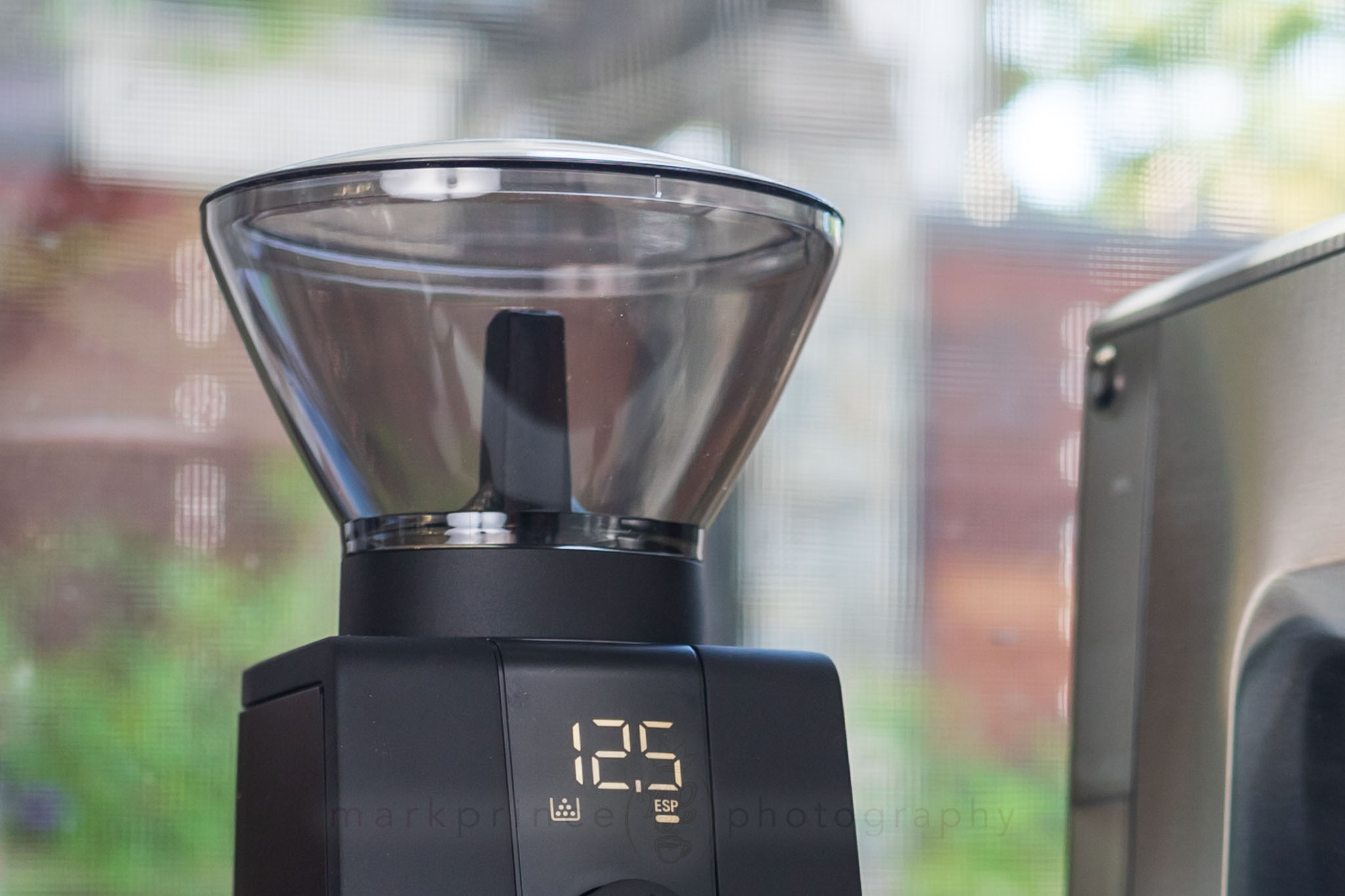
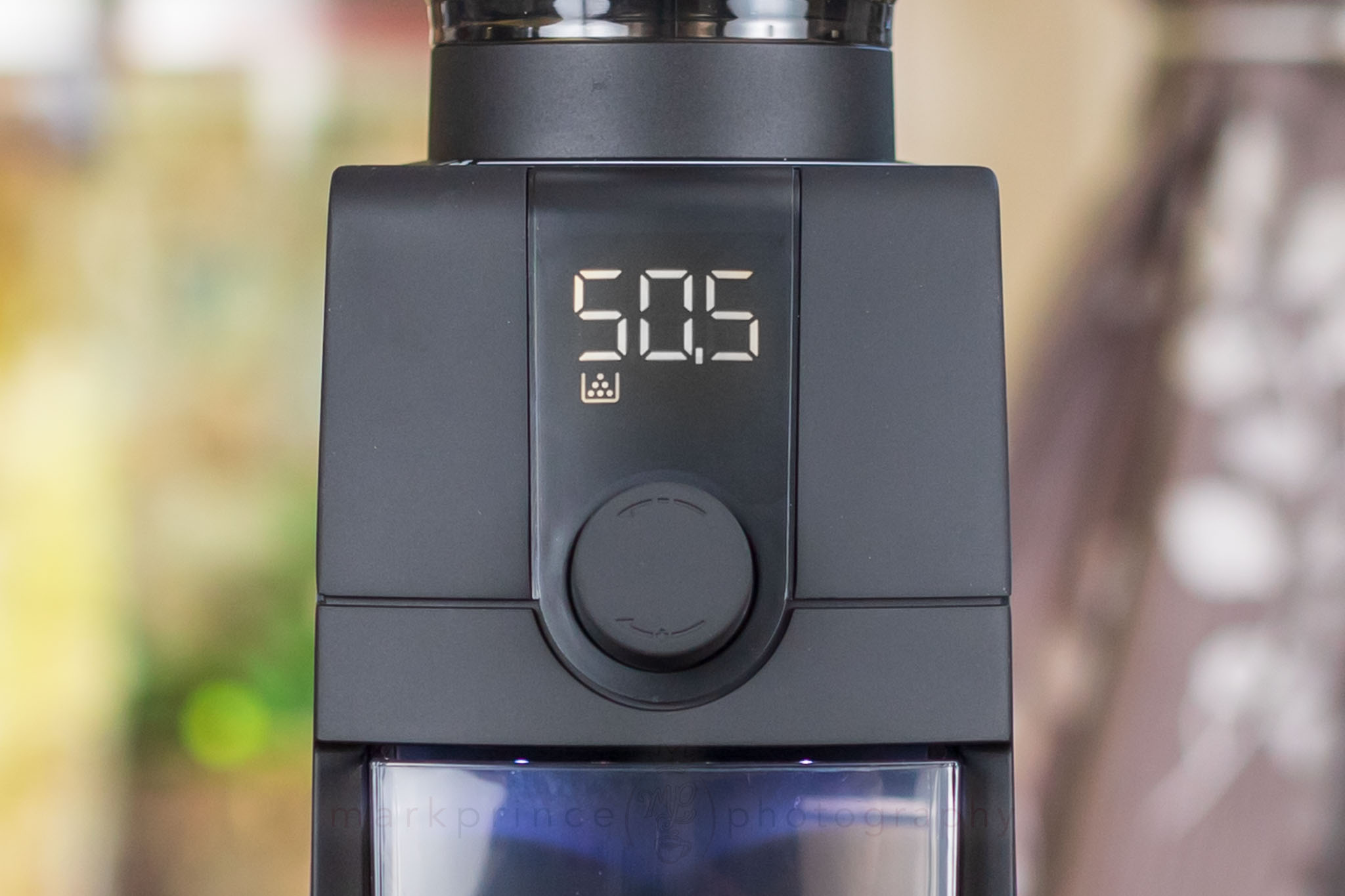
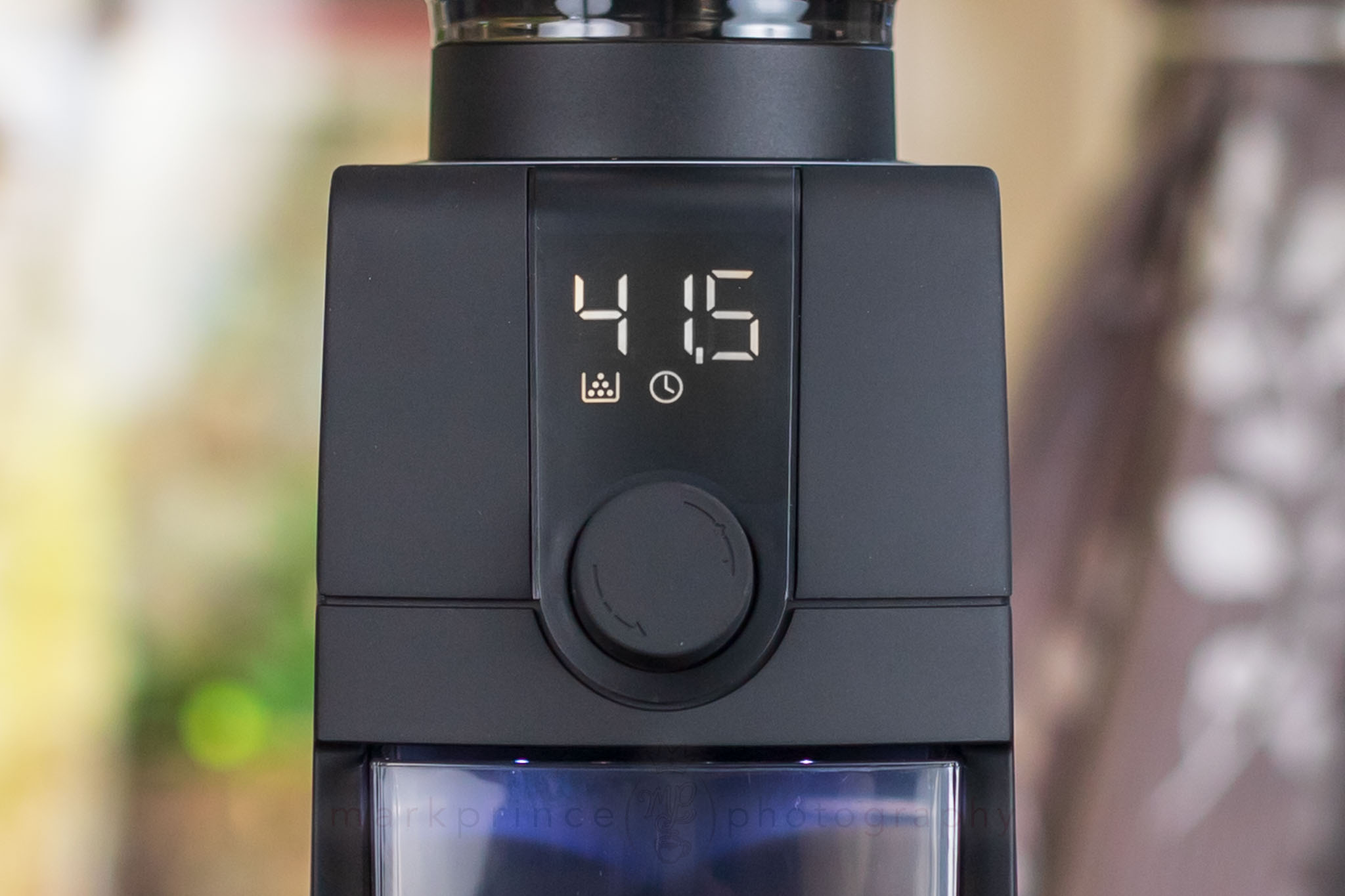
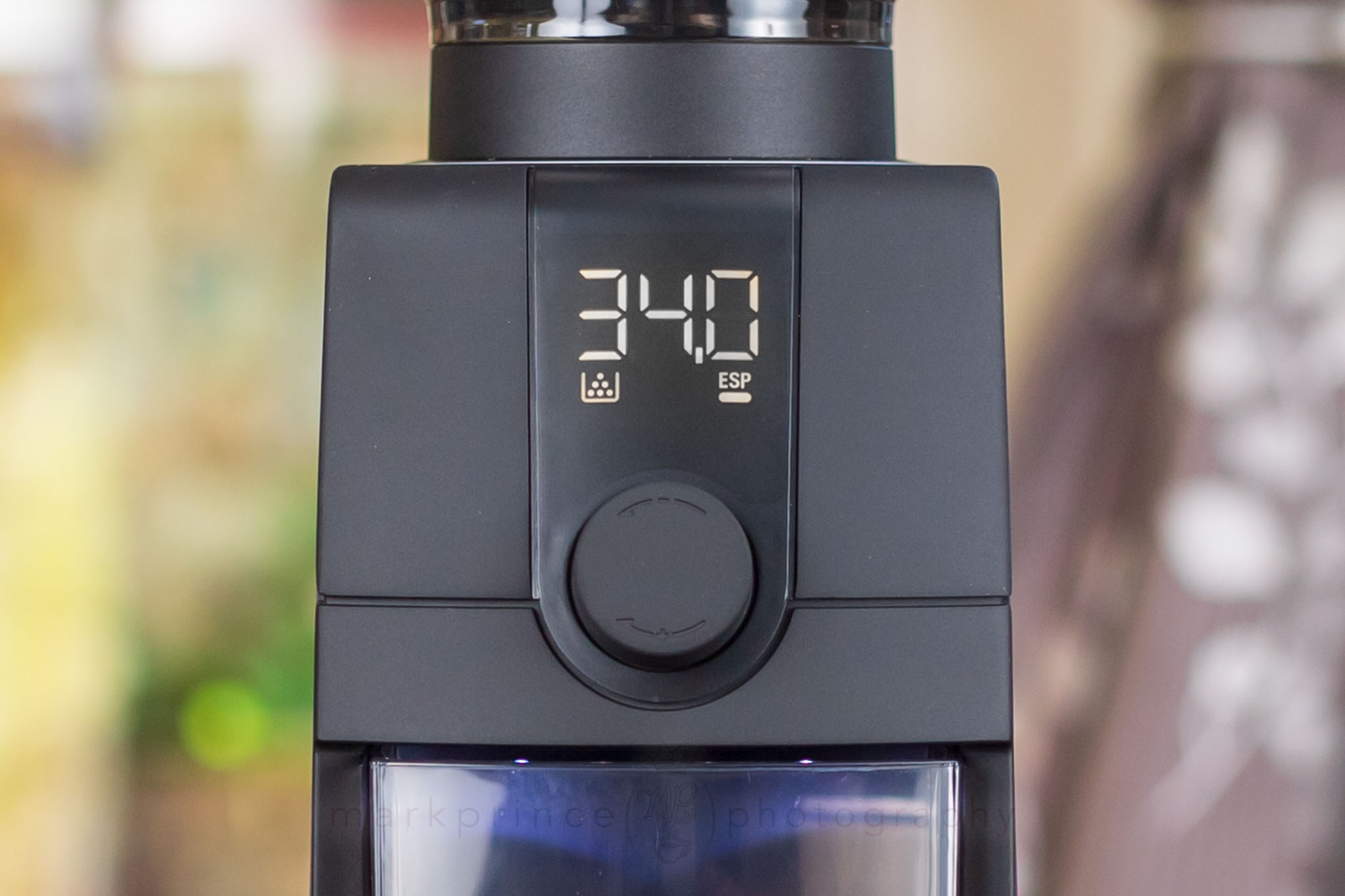
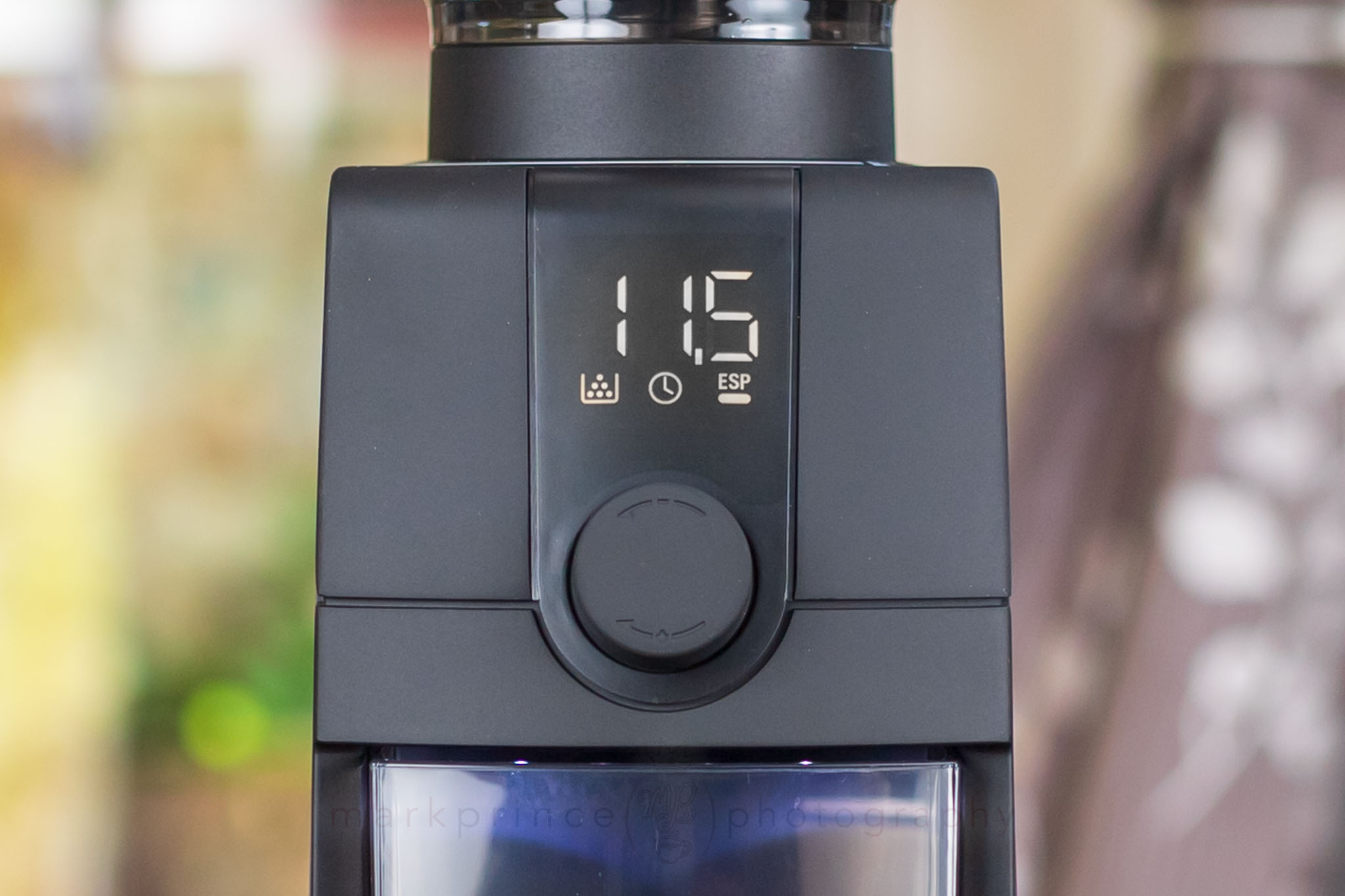
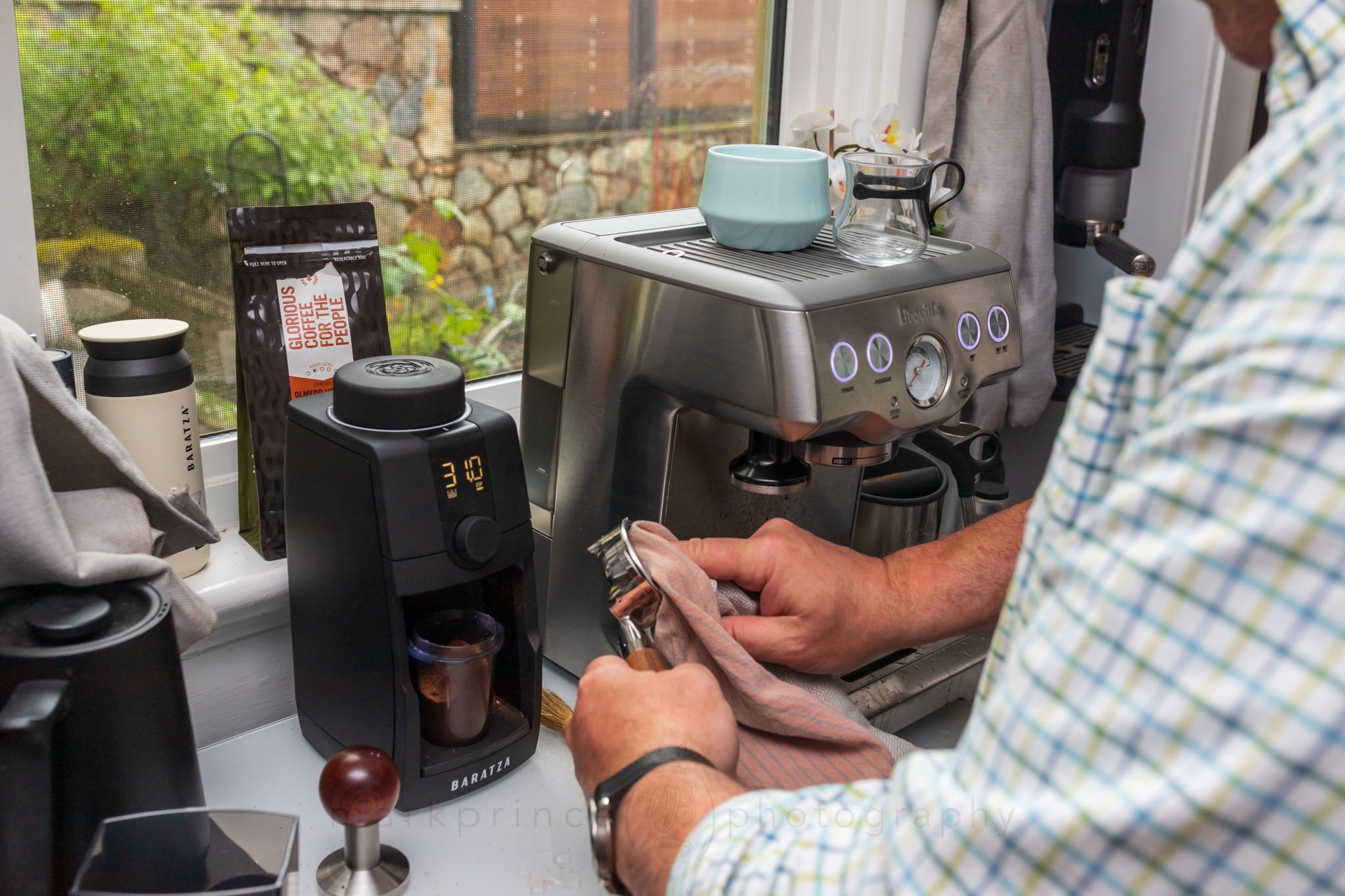
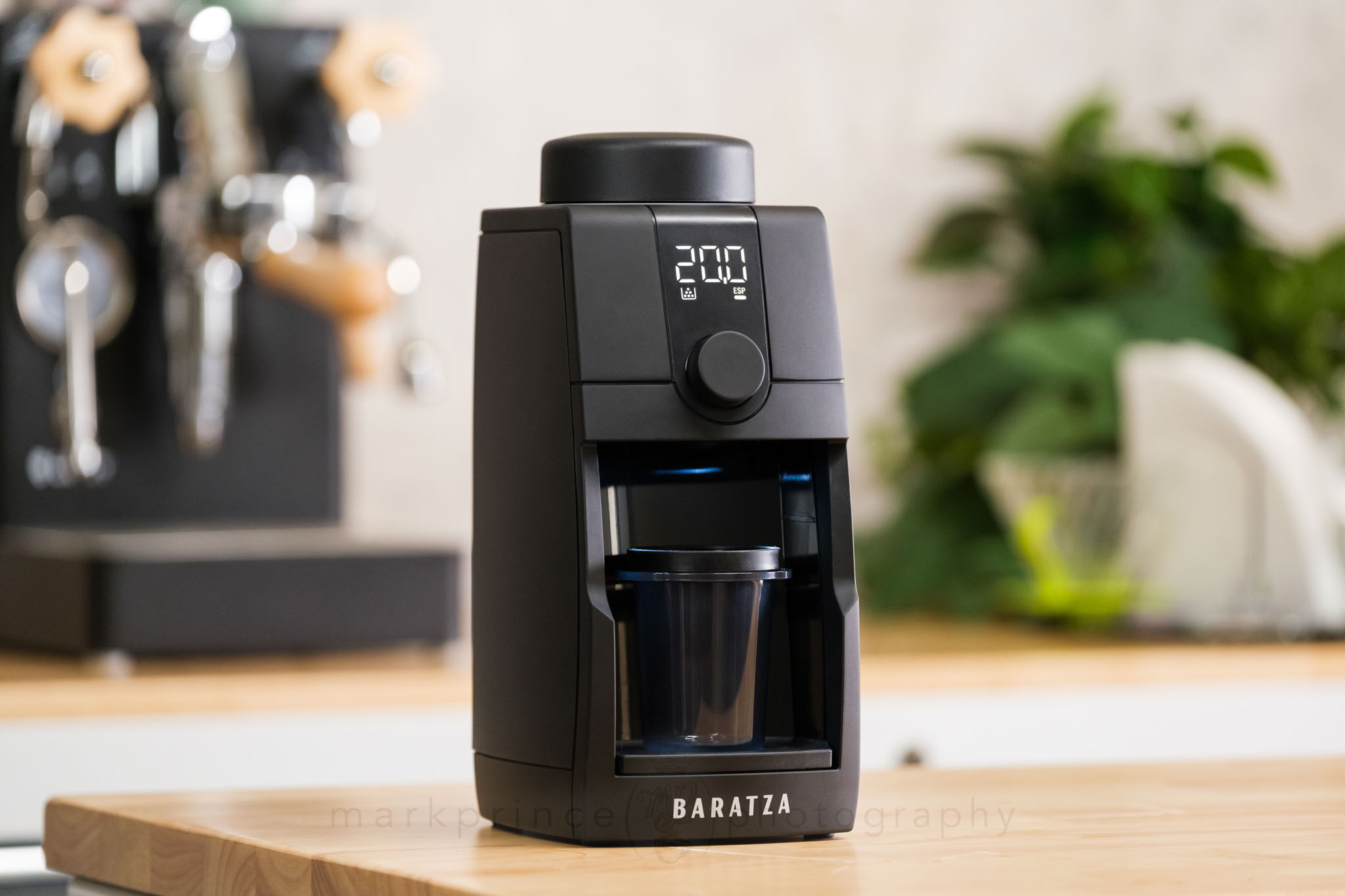
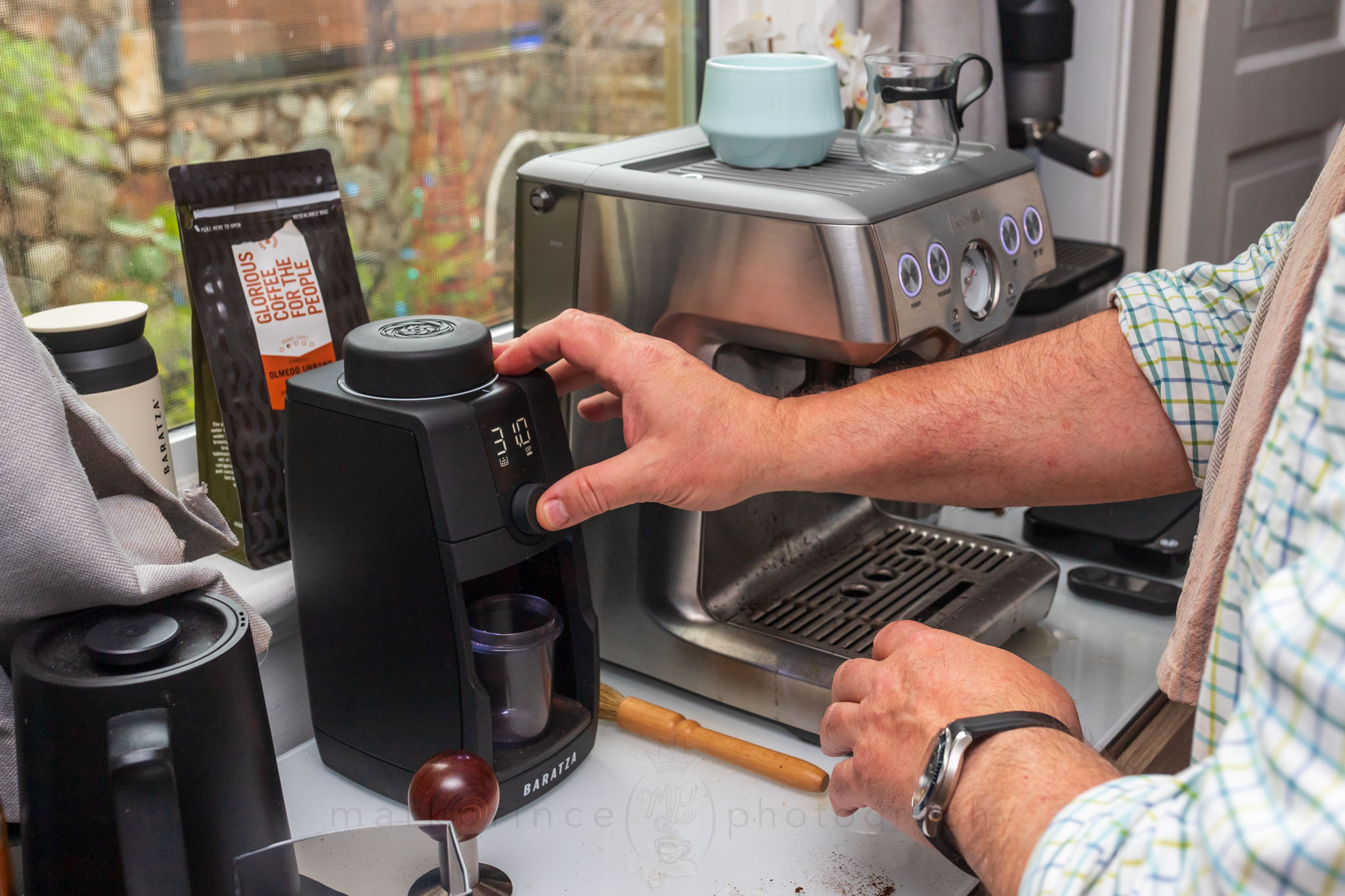
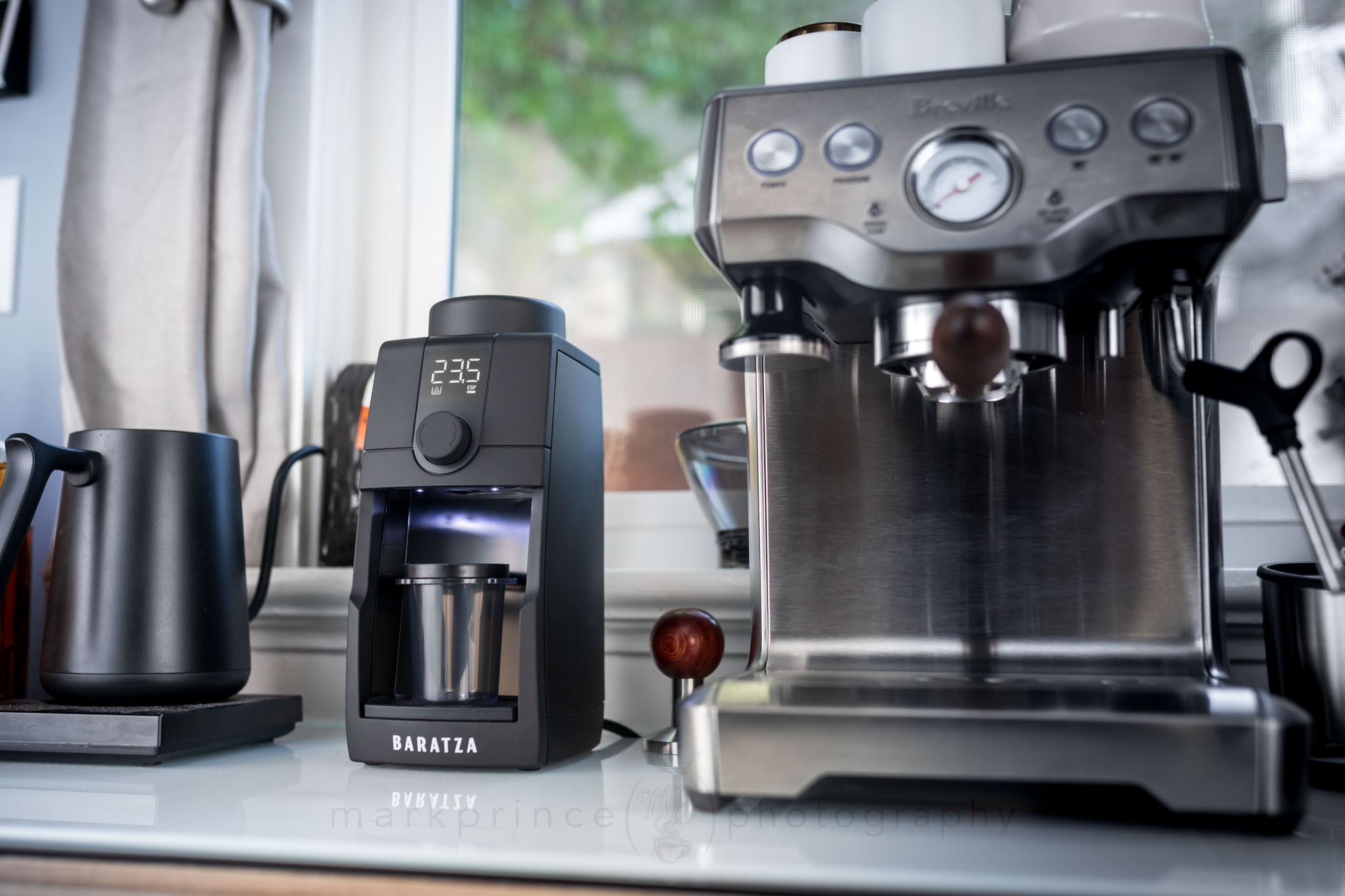
Now the display. In a word, it is slick. When not in use, it stays completely blacked out. Fire it up and it lights up bright enough to read in a dark kitchen at 6 a.m. without blinding you. Yet it’s still easily readable in a fully lit, mid day kitchen. There are three little icons that pop up depending on what the grinder’s doing. Timer mode shows a clock. Grind setting mode brings up a container with a pyramid of dots. If you’re in the espresso range, it displays “ESP” with an underscore, on the right.
The numbers will show either a countdown or count-up timer, the grind setting, or “END” when it finishes a timed grind. It switches automatically depending on what’s happening. One small quirk: if you’re adjusting the grind while the EEP is running, the display only shows the timer, not the grind setting. It’s not the end of the world, just something to note.
Subscribe to
Coffee Pulse
Join the 12,850 other coffee lovers who receive CoffeeGeek's premier newsletter. Each issue dives deep into one coffee or espresso based subject. Subscribing is free, and your personal information is never shared.
By submitting this form, you are consenting to receive marketing emails from: CoffeeGeek. You can revoke your consent to receive emails at any time by using the SafeUnsubscribe® link, found at the bottom of every email. Emails are serviced by Constant Contact

Support CoffeeGeek
If you enjoy and learn from this resource, please consider making a one time or recurring donation to help support our work and fund purchases for future reviews.
Using theEncore ESP Pro
Except for the initial confusion over how to properly attach the on demand bean hopper, I found using the Encore ESP Pro to be quite intuitive. There’s something about a single touch point for most of the grinder’s smart controls that works very well on this grinder. Even without reading the manual, I knew that a long press on that main dial would switch the grinder’s two main modes, as an example.
Encore ESP Pro’s Modes
The EEP has two modes: timed and auto stop. Long press the dial to toggle between them. In auto stop, you just press once to start and again to stop. It also works as a manual mode for folks using a full hopper. The maximum grinding time is 60 seconds, even in manual mode.
In auto stop, the timer counts up. In timer mode, it counts down. You only get one timer setting, so changing from 10 to 45 seconds means spinning the dampened control dial quite a bit. Not exactly cutting-edge tech, but nothing a little patience can’t handle.
Grind Settings and Espresso Range
I was surprised to find out that the Encore ESP Pro’s espresso range of grind settings is 1 to 40 on the grinder’s 60 steps (actually 120 steps, because there’s a half step displayed digitally, like 10.5). I thought it would be evenly split, with 1-30 for espresso, and 31-60 for other brew methods (similar to the Encore ESP). But nope: that little ESP indicator stays on until you hit 40.5.
That’s a pretty wide range of adjustment choices, though Baratza claims each setting in the espresso range is a 2.5 micron adjustment finer or coarser and your finest turning control on the stepless adjustment. The non espresso range results in much larger micron jumps between “clicks”.
I do have to note that the initial unit Bartaza sent me had a calibration and alignment issue: the grinder could only produce an acceptable espresso grind for our test machines (Breville Dual Boiler, Breville Infuser) at 38.5 on the grind adjustment setting. Anything below that would “choke” or stall the shot pulls. This left well over 75 different grind settings unusable in most circumstances.
Baratza immediately sent a replacement unit, and here’s what I’ve determined after initially seasoning the machine with about 4 pounds of coffee.
Dialing in Espresso
On our replacement unit, the initial sweet spot for our test espresso blend (Social Coffee’s amazing People’s Daily Blend) was 26.5 for our 2.5:1 target range of espresso: 18.5g in, 45g out, within 35 seconds (which includes the Dual Boiler’s 10 second preinfusion stage). This was with fresh, 6 day old coffee. Because the adjustment ranges are very small on the EEP, 15 day old coffee would be down around 23.5 for the same shot target range.
We had the chance to use some of Coffee Kev’s fantastic Coffee Works Chocolate Brownie Blend, which has some robusta and is roasted a tad darker than People’s Daily, and its dial in spot started around 24.5 for the same targets and volumes.
Early on, it was clear that the M2 burrs were doing their job well for espresso, and there’s a nice wide range of adjustment play one can have in hyper-dialing in an espresso blend. I find the M2 burrs do an excellent job in presenting just the right amount of fines you want in an espresso grind, one that brings on board complexity and nuances with just about any espresso blend or single origin roasted for espresso.
Dialing in Brew Coffee
When testing the Encore ESP Pro for brew methods, of course I had to figure out a good starting point for my grind settings. And yeah, there’s a lot of chatter online about this. Reddit, Discord, early YouTube reviews… the usual suspects. Everyone seems to have a different number. Some are up in the 50s for a V60 brew, others hanging out in the low 40s. Typical early-days chaos.
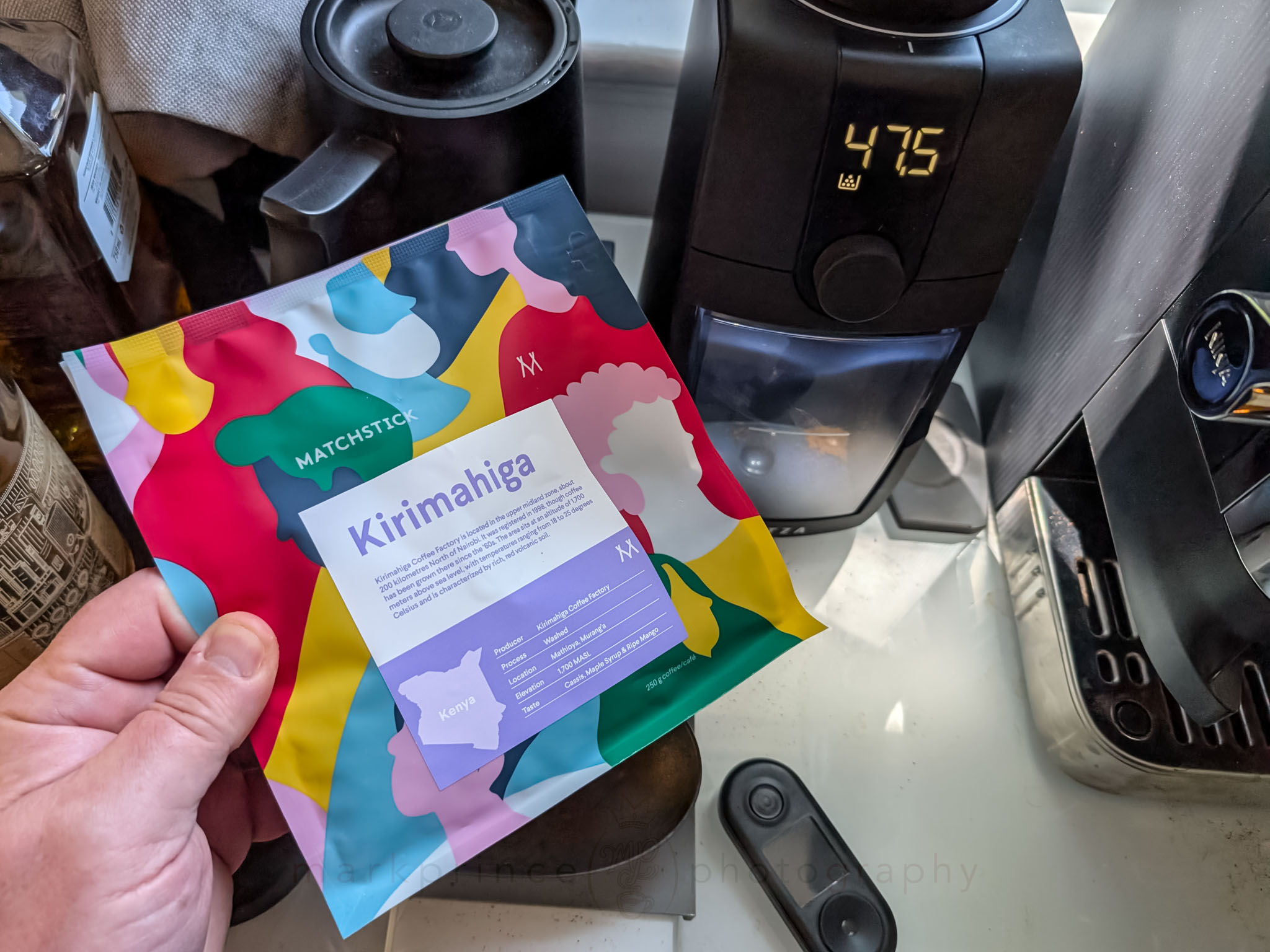
Baratza actually gave me some solid info on exactly how the grind adjustment works outside of the espresso range. Based on their guidance, I started at 47.5 for pour over. Using an Ethiopian from Social Coffee that was hitting on all cylinders as my morning cuppa, I hit the expected particle range, around 750 microns, but there were a lot of fines in my grind sample testing.
To be frank, this is where the Etzinger M2 burrs start to show their design age. I’ve been lucky to use better conical designs lately, like the Lagom Mini with its Moonshine burrs, so I could really see the difference. Once you get coarser, the M2s just aren’t in the same league if you’re chasing cup clarity.
The M2s are still decent for brew. Better than a lot of what’s out there. But this burr set was designed over ten years ago, and burr geometry and engineering philosophy has moved forward since then. Of course, RPMs play a big part too. The faster you spin, the more fines you get with conicals, and I believe the Encore ESP Pro spins faster than previous Encore models.
Right now, Moonshine burrs are my gold standard, followed by the 1Zpresso X-Ultra and J-Ultra. Those burrs are tuned for clarity at low RPMs. M2s? Still solid for espresso and AeroPress, but never great at Chemex or French press. Early tests on the ESP Pro confirm that.
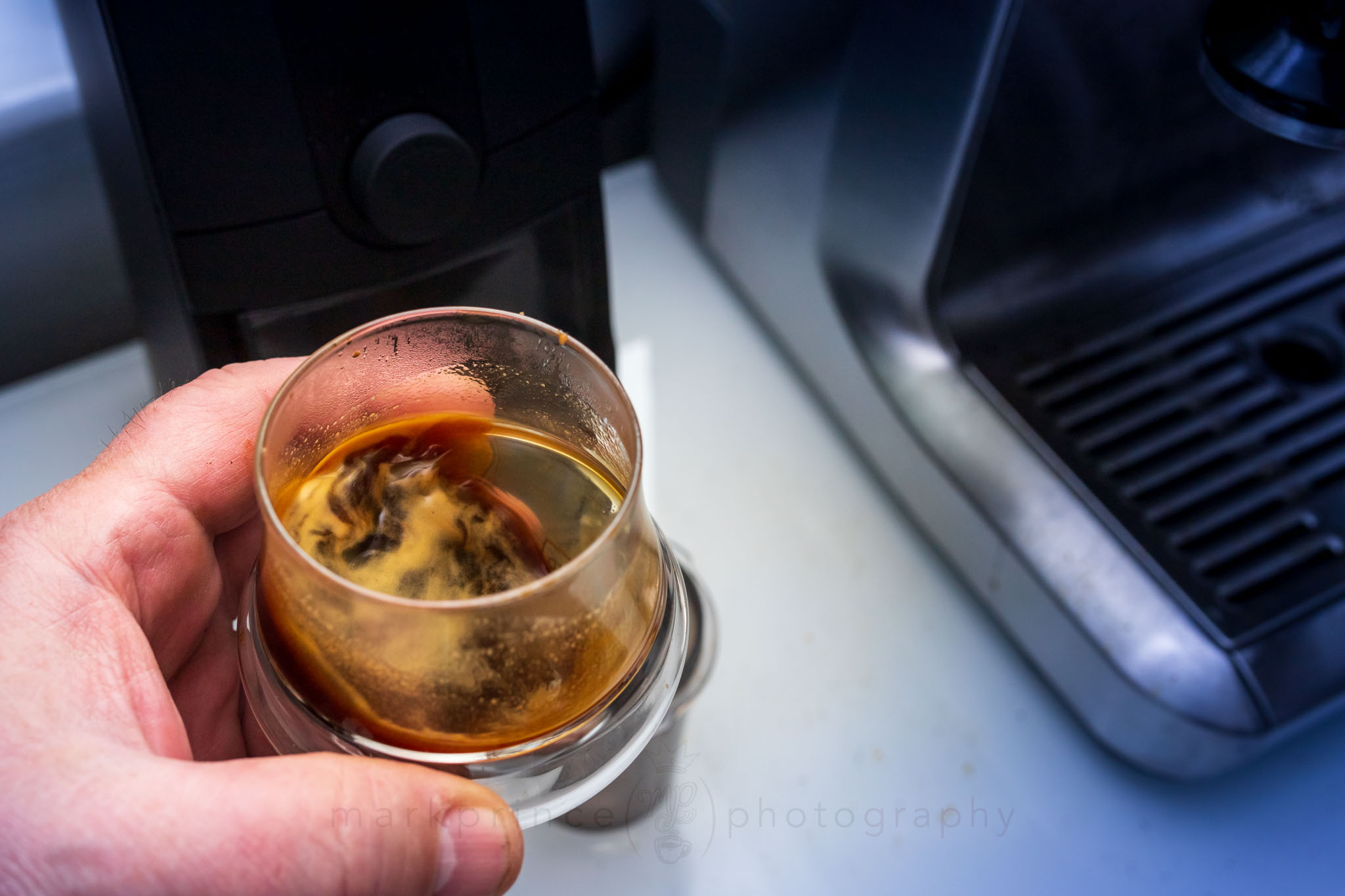
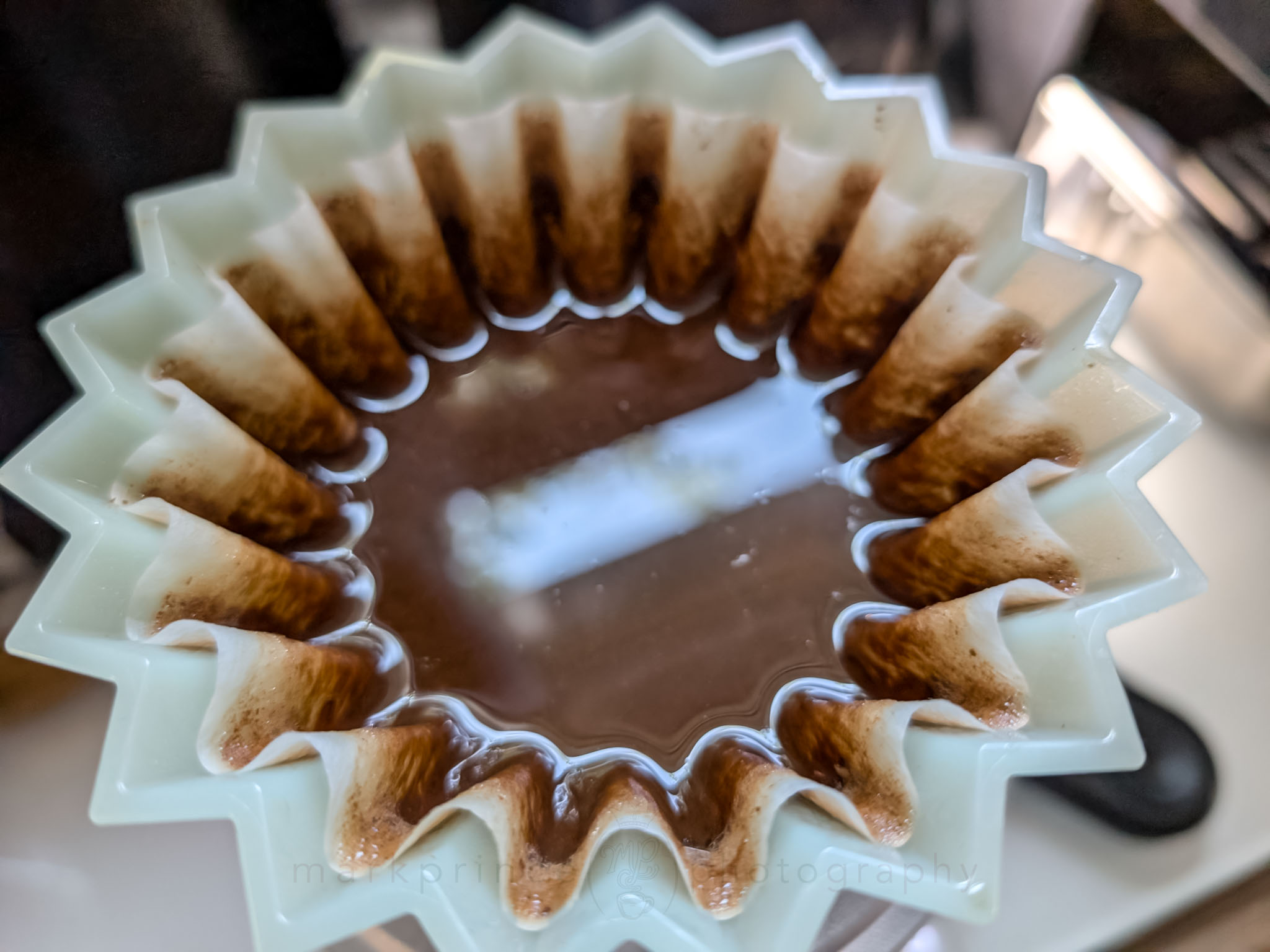
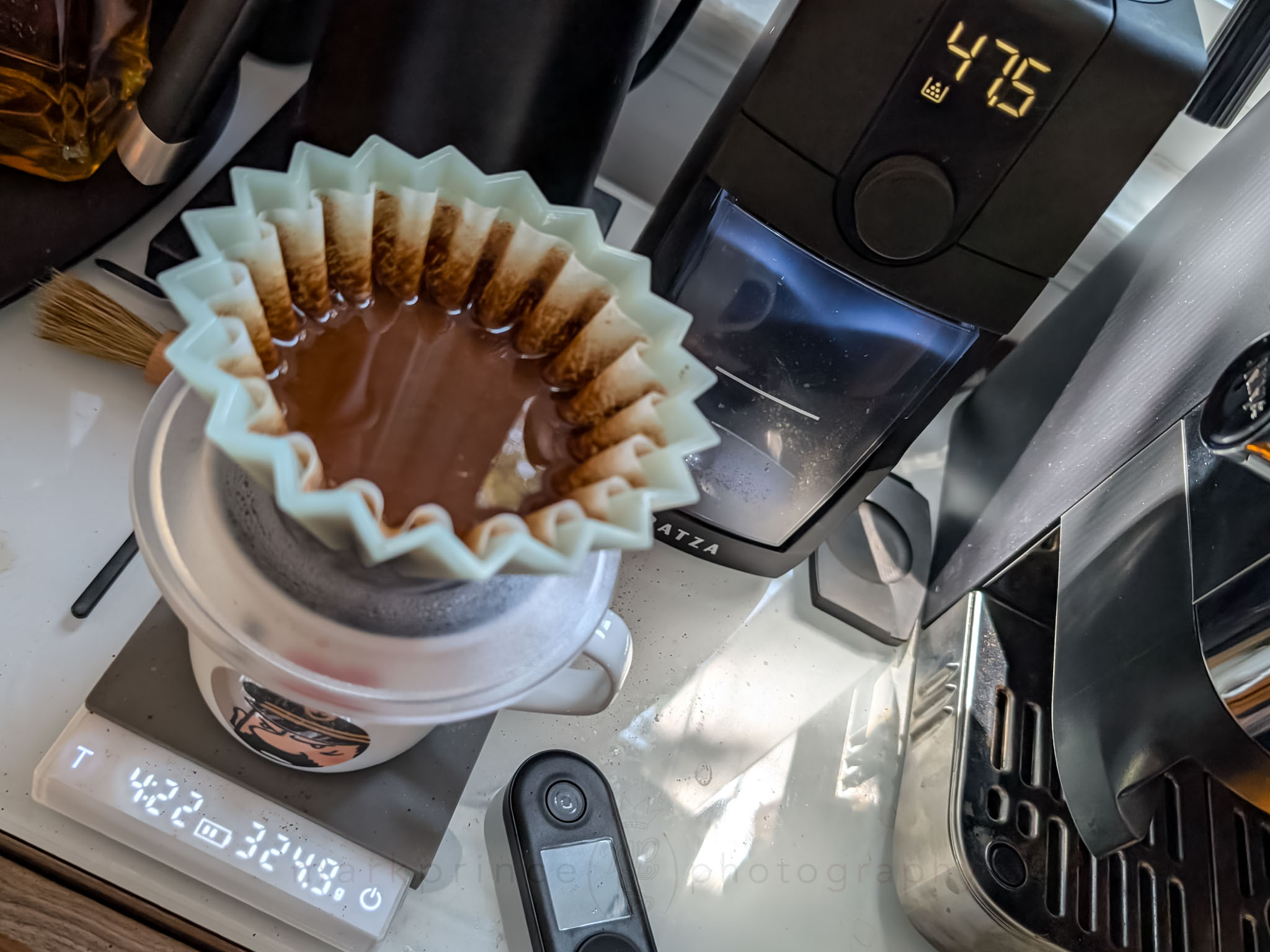
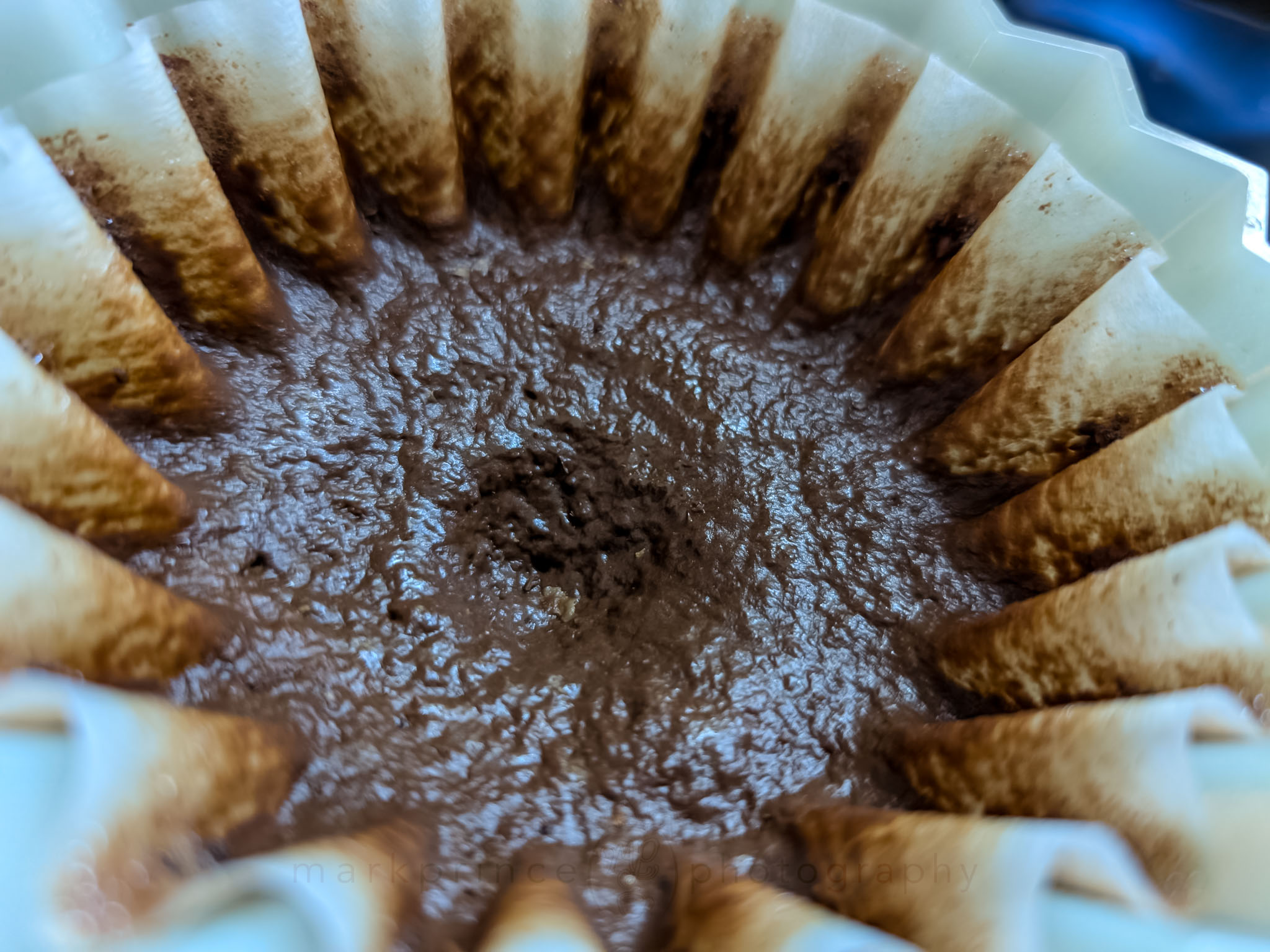
For instance, producing a 750 micron mid point grind for V60, brews would take about 30-45 seconds longer to drain out than with a similar micron mid point produced by the Lagom Mini and its Moonshine burrs. The spent coffee bed in the V60 was more visibly muddy with the Baratza as well. More to come about this in the full review. In the meantime, here are some photos of the process, and my apologies for the unappealing nature of them.
Encore ESP ProOther Observations
I’m happy with the grind noise of the Encore ESP Pro. Not only that, but the motor sounds better too. It always sounded like the Encore ESP and Virtuoso+ struggled in the motor department when grinding (the motors in both weren’t actually struggling, it had to do with how the grinder was geared); the EEP sounds more smooth and consistent. It’s also quieter than those other two grinders; more so in single dose mode, but also with the on demand hopper in place (as long as you have the lid on).
The built in plasma coil does the job. I’ve seen others report some static issues, but I think they were confusing chaff flying around with actual grinds static (there is not a single grinder on the planet that can prevent chaff flyout). Both with the single dosing cup, and the bin, static is at a minimum, and I have tested a variety of coffees in a variety of conditions (hot, humid, hot, sun exposed, cool morning, late evening) to see how static is handled.
The grinder does side-load the coffee a bit (always to the right side), so if you don’t have the single dose cup perfectly lined up (or don’t use the included silicone base plate under the cup), some grinds can miss the cup. The output is fluffy, generally uncompacted, and the best I’ve seen from any Encore or Virtuoso grinder.
Because this is a plasma coil anti-static grinder, you should not do a RDT (Ross Droplet Technique) on your beans fed into this grinder. Doing so will gum up the anti-static coil inside, rendering it inert. It will also clog up the grinder. This rule holds true for any grinder with a plasma or ionizer system.
The EEP is pleasingly fast in its output, faster than the Encore ESP, and even faster than the Virtuoso Plus. As of publication date, I haven’t completed my timer tests for grind ranges on the grinder, but the speed is good, and an improvement over the older grinders.

Support CoffeeGeek
If you enjoy and learn from this resource, please consider making a one time or recurring donation to help support our work and fund purchases for future reviews.
ConclusionEncore ESP Pro
There was a time when the words “Baratza” and “Encore” (and going even further back, “Maestro”) meant one thing: an entry-level, capable grinder you could snag for under $150. And that’s still true; as long as Baratza keeps selling the original Encore, or you find a used one online. Given how repairable and easy to maintain they are, buying second-hand isn’t exactly a gamble.
Now we have an Encore that costs $300; entry-level doesn’t quite fit anymore. It’s a bit like calling a craft beer just a refreshing, cold drink. This grinder is squarely in premium territory, loaded with advanced features. It’s the spiritual successor to the Virtuoso line, only it’s been dragged into the present with upgrades like an ionizer, an excellent auto-off function, and enough UI and UX polish to make tech companies jealous.
The build quality? Outstanding. The attention to touch points and user feel is better than anything I’ve seen at this price point. The display nails it: subtle, legible, and clean. It wouldn’t feel out of place on a gadget designed by a certain turtleneck-wearing design perfectionist from Cupertino.
That said, the one part that’s starting to show its age is the burrset. Baratza’s been using the M2 conical burrs from Etzinger for over a decade now, and they’re fine. Great for espresso, solid for pour over. But compared to the moonshine conies in the Lagom Mini or Mini 2, the M2s are outclassed. They struggle with coarser grinds and don’t handle Chemex or French press as gracefully.
Honestly, with everything else modernized, it’d be nice to see Baratza nudge Etzinger toward developing a next-generation M2. This new Encore ESP Pro deserves it. Is this a deal breaker? Heck no. In fact, given Baratza’s history of after sales service and upgradability, I wouldn’t be surprised to see down the road a new iteration of the Etzinger burrs that will not only be backwards compatible with the Encore ESP Pro and ESP, but also sold without much markup. Both of which add years of serviceability to this grinder.
With all that said, everything you’re reading here is just a slightly learned opinion, borne of a few weeks’ use of the Encore ESP Pro grinder after a break in period. This grinder will continue to occupy a prime spot on our test bench, and a full review with scores will be out later this year. Stay tuned, but if you have any questions now, feel free to ask them in the comments below.
We use affiliate links to a) Amazon, and b) manufacturers only. Any links to vendors (including CoffeeGeek Sponsors) are not income generating links. Further details about our commission and affiliate link policies can be found on our Terms and Conditions Page. The use of any affiliate links have no effect on our editorial policy or review objectivity.
Subscribe to
Coffee Pulse
Join the 12,850 other coffee lovers who receive CoffeeGeek's premier newsletter. Each issue dives deep into one coffee or espresso based subject. Subscribing is free, and your personal information is never shared.
By submitting this form, you are consenting to receive marketing emails from: CoffeeGeek. You can revoke your consent to receive emails at any time by using the SafeUnsubscribe® link, found at the bottom of every email. Emails are serviced by Constant Contact
Mark has certified as a Canadian, USA, and World Barista Championship Judge in both sensory and technical fields, as well as working as an instructor in coffee and espresso training. He started CoffeeGeek in 2001.
- Mark Prince
- Mark Prince
- Mark Prince


5 Responses
Thanks for the review! I’ve got a Virtuoso (now for pour over duty) and an ESP (for espresso), that I’ve been using since they hit the market. I’m interested in the step-less fine adjustment on the ESP Pro. When will they be available to buy from Baratza?
Just what I’ve been looking for !!
Thank you for the review! So hard to find any information on EEP at this moment.
I’m from Singapore, likely to wait till last quarter of 2025 to be able to test one locally.
Meanwhile, can you kindly share more on the flavor profile of the EEP for espresso please? Let’s say if I’m grinding a medium to dark SO or blend, to find a syrupy, caramelly, rich, n textured espresso, can it be achieved with EEP?
And how does it perform for a lighter roasted beans? Possible to bring out the brighter fruitier notes?
Thank you!
Have they cancelled and moved the release date from July 28? That date disappeared from their website.
Hi Mark
Thanks for this terrific review. I have been very excited to get the Pro and very disappointed when July 28 happened with yet another delay. The $300 is the outside of my range, if my 46 year marriage is to reach 47 this August.
What’s your knowledge , guess and advice about a release by Baratza? Should I look elsewhere or hang in? Is this going to happen or have Trumps tarries blown up their advertised price and they are scrambling ( and degrading) the machine to keep the pricing? Im stuck without anything but my old Krups blade grinder in the meanwhile. Maybe an inexpensive hand grinder for espresso in the meanwhile if this will be a long time ? Your thoughts on this are appreciated and greatly respected. Thank you.